
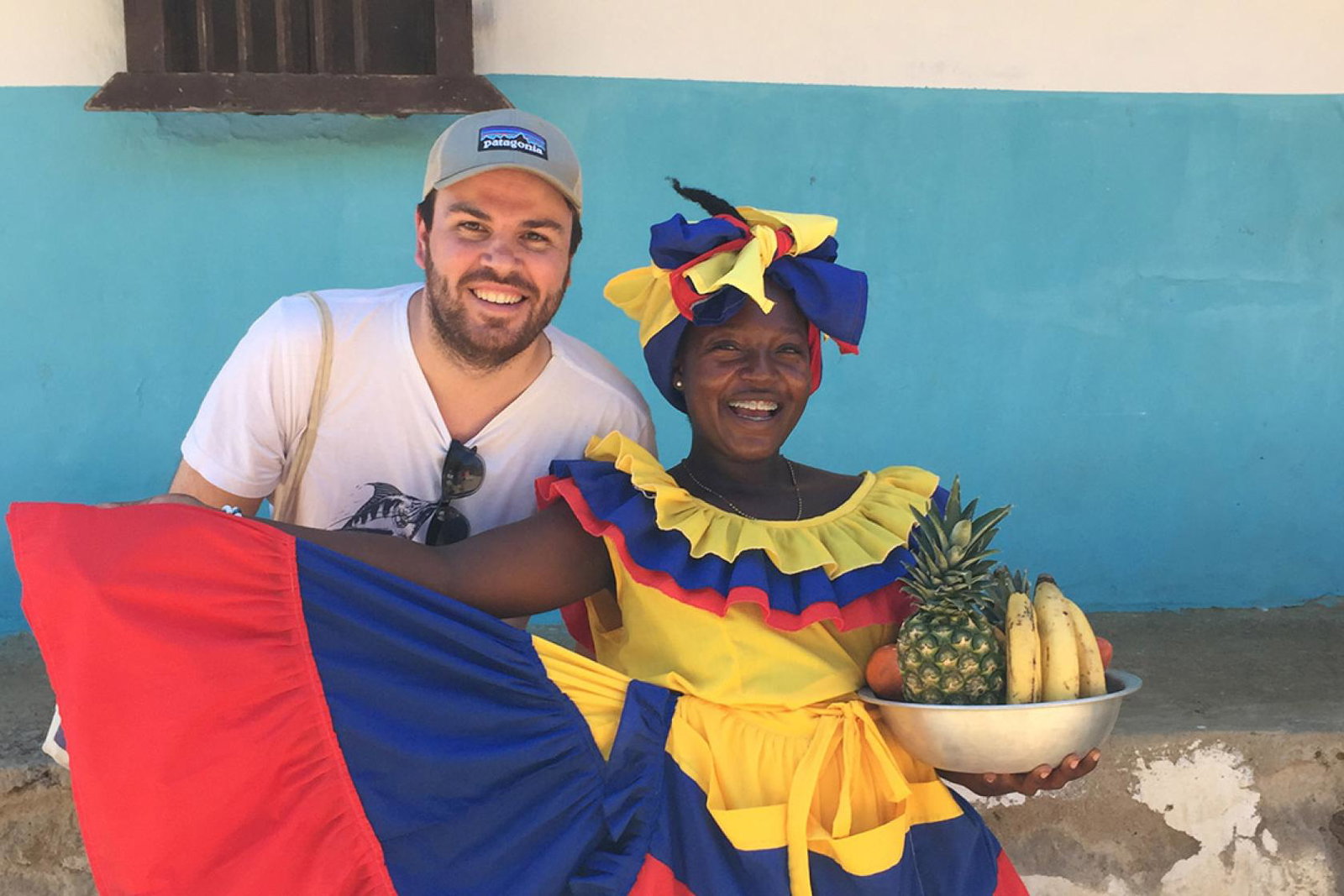
Check out the Colombia Selling Guide
There are few countries that possess the same diversity as Colombia. From Caribbean coasts to snow-capped Andes and the Amazon rainforest, its landscapes have shaped the story of the nation, bringing with it extraordinary contrasts in cultures and climate. Its flora and fauna, too, is outstanding, ranking first globally in the diversity of birds, orchids and butterflies, and among the leading countries for reptiles, mammals and palms.
“I don't think people realise how diverse Colombia really is until they actually visit the country,” says Charlie Thomas, Journey Latin America’s product executive and an expert on Colombia. Now, he now helps sell this enchanting destination through looking after the operator’s sample itineraries and organising fam trips. Here, he shares some of his top selling tips and destination expertise for agents.
Charlie’s first stop on his Colombia highlights tour transports us to the Caribbean Coast, an area he’s particularly fond of after calling the coastal city of Santa Marta home for a year. “It’s got a stunning colonial centre, a lovely selection of bars and restaurants and it's just a very nice and walkable city,” Charlie enthusiastically explains, saying it often gets overlooked by visitors who opt to visit its “more beautiful older sister”, Cartagena, further to the west.
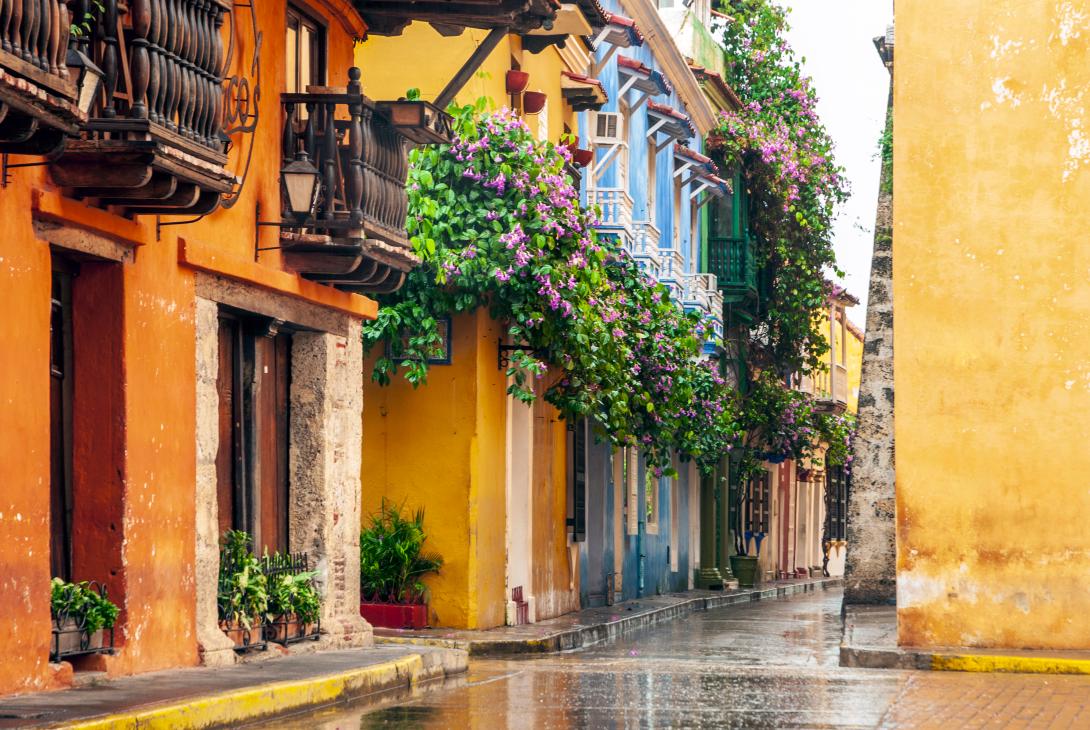
The Walled City of Cartagena is a Unesco World Heritage site
However, Santa Marta is also a great jumping off point for some of Colombia’s most stunning nature spots, including the Sierra Nevada de Santa Marta – the world’s highest coastal mountain range – and in its foothills, Tayrona National Park. A one-hour drive from the city, Tayrona is a protected area with palm-shaded coastal lagoons backed by jungles brimming with wildlife, including howler monkeys, macaws and caiman. “The beaches are beautifully wild, and the waves can be quite strong, but you'll also find some very secluded and safe beaches for swimming too, which is probably one of [the park’s] main drawers.”
For urban life, Colombia has remarkable cities of contrast. First, there’s Bogota, Colombia’s gritty capital and political heart based at 2,600 metres above sea level, and where most travellers stay due to its accessibility, but also for its spectacular Gold Museum and Museum of Modern Art. Next, Medellin, well-known for its temperate climate, is a “story of regeneration”, totally transformed from being a no-go zone in the 80s and 90s to a vibrant, modern metropolis. And finally, Cartagena on the coast is a gorgeous walled city which the Spanish built to repel pirates. “I don’t know another Latin country with cities so wildly different from one another,” Charlie enthuses. “You can go from the cold and drizzle of Bogota to the boiling hot sunshine of Cartagena – it’s amazing.”
Travellers can also get to know the real Colombia by visiting local communities. For example, Charlie described how Commune 13 in Medellin has transformed from having a notorious reputation to a safe, flourishing neighbourhood that welcomes tourists, with street art tours, street performances and lots of food and drink. Meanwhile on the outskirts of Cartagena, the Afro-Colombian community of La Boquilla – a small fishing village – is another tourism success story. “What essentially was the village's rubbish dump has been completely cleared out and is now a thriving mangrove, where you can go on a canoe with a local guide,” explains Charlie. “In the same village, you can also go to 'drum school' on the beach, so you can have a drum lesson and a bit of a jam – it’s great fun.”
Charlie’s list of trip highlights didn’t stop there – from Colombia’s coffee regions, where travellers can stay on fincas, go on coffee tours and see the world’s tallest wax-palm trees, to his personal favourite – the Unesco-listed Spanish colonial town of Mompos, now accessible via a river cruise along the Magdalena. For history enthusiasts, Charlie states the off-grid archeological park of Saint Augustin – known for its intricate megalithic statues carved by ancient civilisations – rivals the well-known Latin American hotspots of Machu Picchu and Chichen Itza.
Acknowledging Colombia’s reputation in the UK – particularly in the media – Charlie wants to emphasise how safe travelling around the country can be, particularly with a tour operator such as JLA who always abides by FCDO advice. “I think travellers who look beyond the headlines will be surprised with how friendly and welcoming people in Colombia are, and how proud and passionate they are about their home country.”
“They also like to party,” Charlie laughed. “They take partying to a whole new level.”
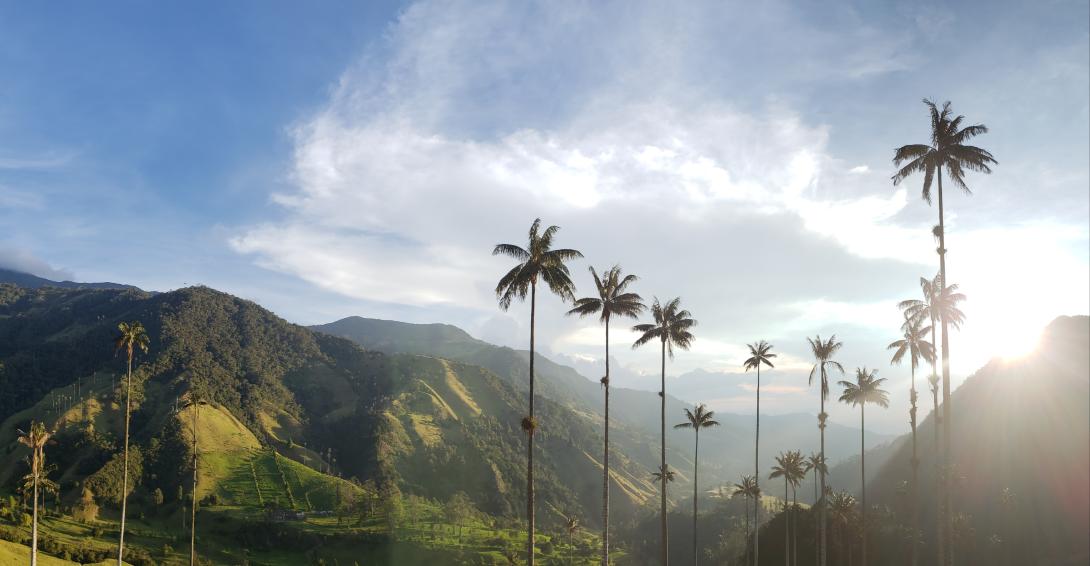
Cocora Valley, near Salento
“Open-minded and curious” is how Charlie describes the perfect client for Colombia, as well active travellers and those interested in wildlife and birdlife. “But Colombia is now opening up to a wider variety of travellers, and there are definitely increasingly more boutique and luxury options available,” he explains.
As for the ideal length of time to visit, two weeks is the minimum and the standard on a JLA itinerary, especially for first-timers wanting to experience all the highlights, from Bogota to the Caribbean Coast. The country is large, but it has an extensive domestic flight network helping your clients get conveniently from A to B. “But I still think if you can squeeze three weeks, you'll be able to travel more slowly and discover everything in between,” Charlie recommends.
Getting there is also easier than your clients might realise, too, with daily direct Avianca flights operating between Heathrow and Bogota, taking approximately 11 hours. There’s also plenty of flights via Europe or the US from airlines including LATAM, Air France, Iberia and more. Charlie suggests the option of flying directly into Bogota, but catching a KLM flight out from Cartagena, connecting to London via Amsterdam.
Check out the Colombia Selling Guide