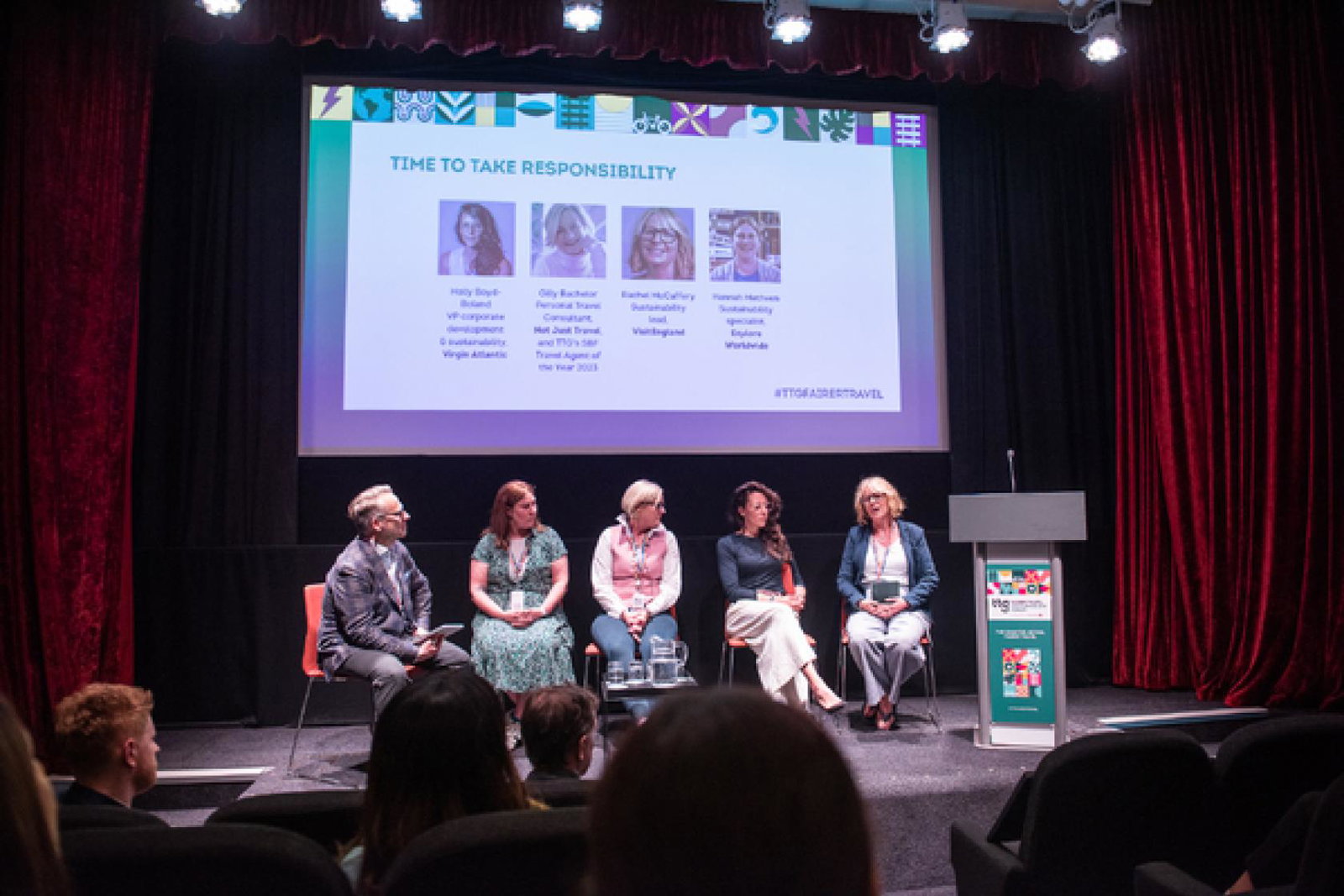
Part of TTG Fairer Travel Month, travel professionals gathered in London to highlight efforts designed to further travel’s journey towards a more responsible future, discuss what more needs to be done and establish how the industry can keep moving the dial.
- How can we promote the ‘destinations of tomorrow’ responsibly for both travellers and local communities?
- How can we avoid making missteps when it comes to making claims that can be cited as ‘greenwashing’
- Who can be a champion for change?
- And should we actually be using the word "sustainability" at all when it comes to promoting responsible travel options to consumers?
The forum explored the answers to these questions, and the actions that will ensure the industry continues on its journey.
1) Everyone can be a champion for change
Intrepid Travel’s B Corp impact manager Rochelle Turner emphasised how “everyone can be a champion for change, for a sustainable future and a just world”. Turner dived straight in with a stark assessment of the “climate emergency” the industry must address.
“The tourism industry has a front row seat to the crisis unfolding in many natural areas and destinations," Turner told delegates. "We cannot meaningfully address climate and societal change simply by talking about it, and we cannot do this on our own.”
She pointed to finding the “sweet spot” between the “joy” travel can bring, and the parts of the problem individual organisations can identify for themselves to help solve. Turner cited Intrepid’s decision in June to launch a dedicated rail range as one measure it is able to take as part of its commitment to decarbonisation.
Last year, the operator reviewed all trips with flights of less than 90 minutes, identifying 18 routes that could be replaced with “comfortable” land transportation. “That means this year we will have 4,000 fewer flights across our departures than in 2023,” Turner revealed.
2) ‘Let’s not let perfection be the enemy of good’
Speakers said the industry had to be careful not to let the pursuit of perfection get in the way of actually making incremental progress on sustainability and responsible tourism issues. Travalyst’s head of partnerships Brad West urged delegates “not to let perfection be the enemy of good”.
“We know things have to evolve and changes are coming down the line," he said. "We want to make sure everything we do is compliant, but let’s not let that slow us down so we don’t release anything or share anything.”
Holly Boyd-Boland, Virgin Atlantic vice-president of corporate development and sustainability, was emphatic in stating: “If there’s a debate around progress versus perfection, we’re happy to have that debate,” while Turner was another advocate.
“[Action] takes work, time and resources, and some businesses are able to move less quickly than others, but that’s OK. Progress is the name of the game here, not perfection.”
3) Don’t use the ‘S’ word
Panellists debated overuse of the term “sustainability” when promoting responsible travel to customers. Jesus Ruiz, the Spanish Tourist Office’s head of sustainability and impact, suggested the terms was perhaps starting to lose its meaning.
Explore Worldwide sustainability specialist Hannah Methven went further. "I don’t like the word ‘sustainability’ – not from a ‘let’s not use it’ perspective, but because it’s so broad."
Methven added: “Consumers want to do the right thing, but everyone is overwhelmed with life at the moment, so that holiday is so precious. Bring the positives forward, and take that word away because it freaks people out.”
Not Just Travel personal travel consultant Gilly Bachelor, TTG’s Smarter Better Fairer Travel Agent of the Year 2023, told delegates: “I’ve come to a strategic decision to focus on what I call ‘unconscious sustainability’, so I don’t overtly go out with the ‘S’ word.”
4) ‘We need to tell a better story’
Rachel McCaffery, Visit England’s sustainability lead, conceded travel “has a way to go” to get a cohesive message across to consumers. "People go on holiday to forget about their problems," she said.
"It can be difficult to align that with messages around responsibility, when it’s a product that’s essentially quite indulgent."