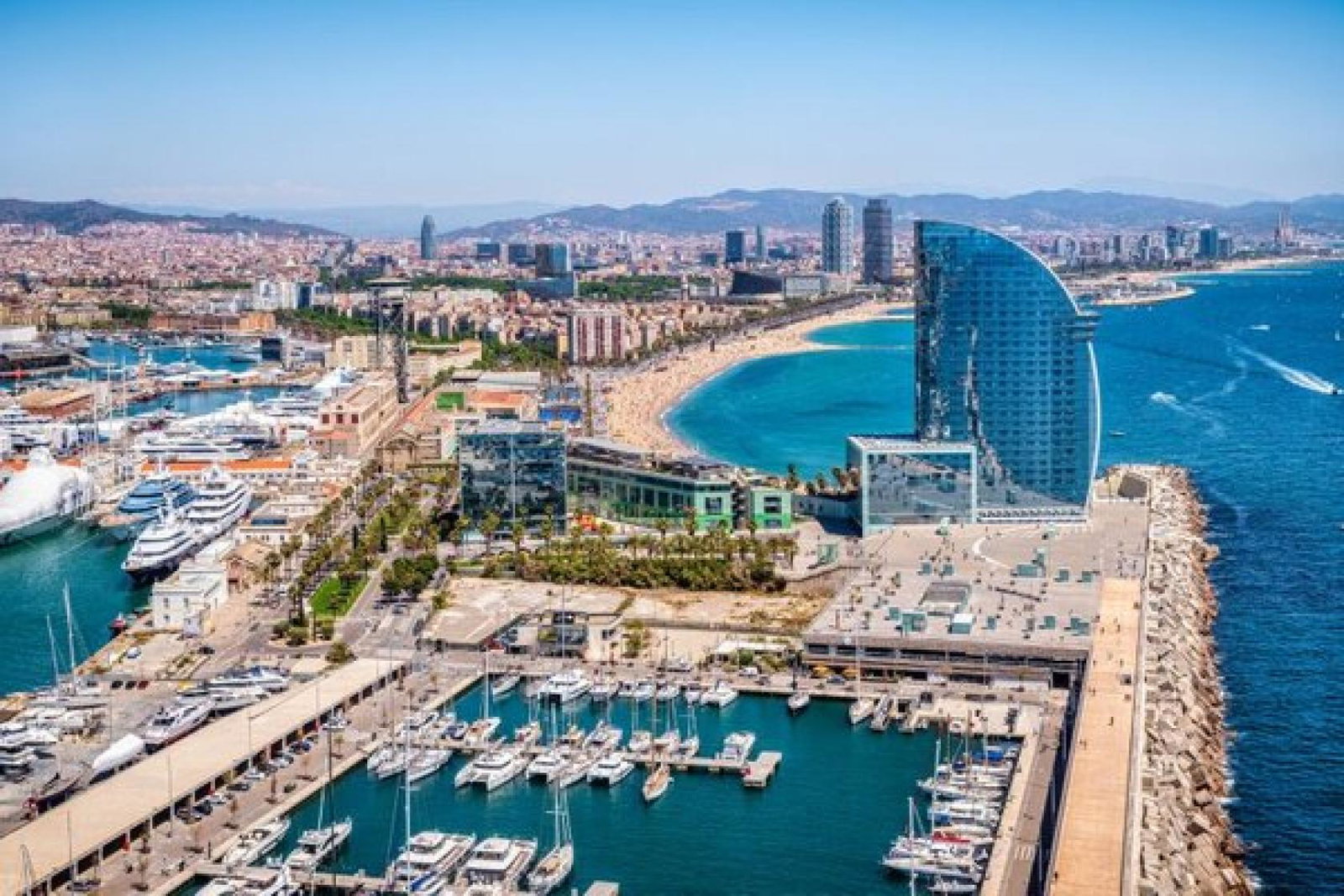
Some 12.2 million tourists visited the city last year according to data from the Tourism Observatory of Barcelona, down from 13.9 million in 2019, although tourism spend in the city grew to €9.6 billion, up by nearly 15% compared with pre-Covid levels.
Vueling, Barcelona’s El Prat airport’s biggest carrier, observes that besides being an attractive destination in its own right, the city – which counts the UK as its third largest international source market – is a gateway to the wider Catalonia region, not to mention the rest of Spain. It already operates eight flights a day to the city from Gatwick, and will launch a twice-daily Heathrow service in April.

This vast popularity and utility invariably comes at a price, although airlift is far from the only contributor to concerns that Barcelona is becoming – or has already become – heavily overtouristed.
The city’s port was named Europe’s most polluted in 2019 after welcoming more than three million cruise passengers, leading Gala Pin – then a city councillor – to compare visitors to “locusts”. Cruise arrivals grew to nearly 3.6 million last year, a new record.
Residents, meanwhile, have been beset by housing shortages and sky-high rents as more and more city properties are turned over to tourism accommodation and short-term lets. Fed-up locals have vented their frustration by graffitiing slogans like "tourists go away" and "tourism kills" on centuries-old buildings in the Rambla or in the city’s Gothic quarter.
"We don’t accept the use of ‘overtourism’ because it makes it seem like the phenomenon emerged spontaneously when instead it’s a product of people serving their own interests at the expense of the common good,” activists from the Assemblea de Barris pel Deicreixement Turistic – the Neighbourhood Assembly for Tourist Decline – told TTG.
"We prefer using ‘touristisation’ to define a process in which territories are exploited and undermined by their dependency on tourism.”
What’s being done?
Over the past few years, local authorities have enacted some measures to curb overtourism; former mayor Ada Colau restricted the number of licences available for short-term lets, opposed plans to expand El Prat airport, and increased the city’s daily tourist tax.
Her successor, Jaume Collboni, last October banned cruise ships from calling at the Muelle Barcelona Norte and the World Trade Centre docks, a mile away from the Gothic quarter. Instead, cruises must now dock at the Moll d’Adossat pier – a 30-minute bus ride from the historic centre.
Clia put a positive spin on the decision, claiming the move would allow passengers to enjoy the benefits of a new, more modern terminal, while reducing congestion in the city centre.
Efforts are under way too to ease the pressure on Barcelona by promoting the wider Catalonia region as a desirable destination to more widely disperse tourists.
"Tourists arrive in Barcelona because it’s still a hook, but they want to see more areas,” Aicard Guinovart, director of the Catalonia Tourist Board, told TTG. “That’s why we created the Grand Tour of Catalonia, a circular road trip highlighting the 72 most important places to visit inside and outside of Barcelona."
Vueling, meanwhile, says it has embarked on a ‘deseasonalisation’ strategy, which aims – in partnership with local tourist boards – to encourage travellers to visit "outside of the core tourist seasons”.
Protecting residents
These measures, though, have failed to satisfy Barcelona’s Neighbourhood Assembly for Tourist Decline, whose activists claim overtourism is still having a significant impact on the city and its residents, fuelling gentrification which they say is resulting in the disappearance of local shops and amenities.
Public health is another concern owing to steady increases in road, air and maritime traffic. City council data reveals the majority of Barcelona’s inhabitants are being exposed to higher-than-recommended levels of particulate matter, while more than two-thirds (68%) are breathing higher levels of nitrogen dioxide.