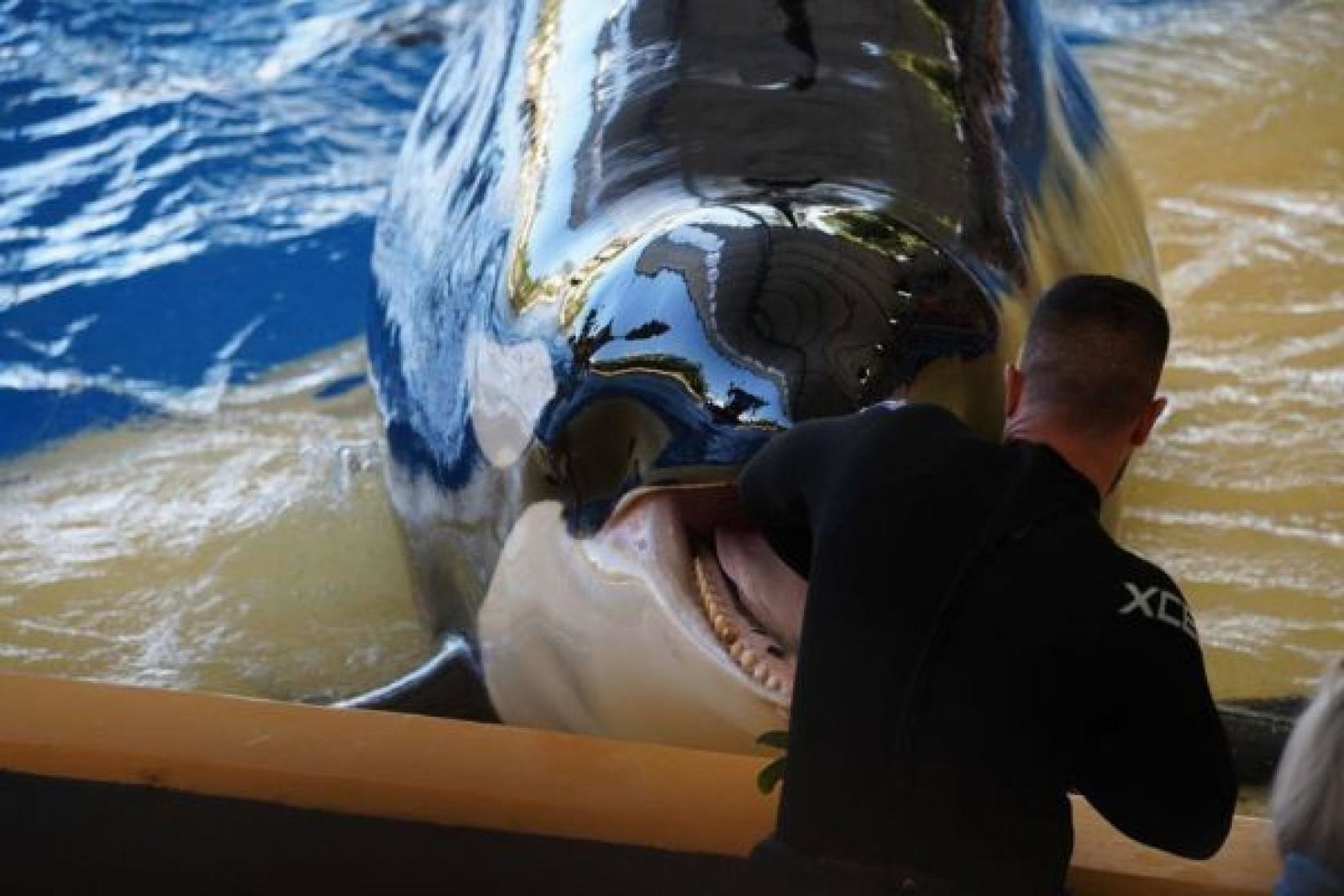
World Animal Protection (WAP) raised concerns after it discovered Morgan, Loro Parque’s only female orca, was still participating in shows as recently as the past fortnight.
Tui Group’s animal welfare policy prevents the business from promoting or selling attractions where animals are bred for commercial purposes.
"Our audits are designed to set a new benchmark for cetacean welfare in the tourism industry," it says. "They prohibit, among other things, breeding for commercial purposes, the use of drugs for behavioural modifications, the capture of cetaceans in the wild, and the use of food deprivation techniques."

WAP and other NGOs last week questioned Tui’s leadership team on its policy at the group’s AGM, where they claim the operator insisted it stood by its policy and would continue to sell venues that are breeding in contribution to "the natural composition of the social group".
WAP accuses Tui of exploiting “a clear loophole”, claiming the needs of cetaceans – whales, dolphins, orcas – "can never be met in a barren tank".
"Breeding only subjects more animals to a life-time of captivity and performances for tourists, with no guarantee that family groups will be kept together," said the organisation.
A Tui spokesperson told TTG: “Breeding may be deemed acceptable if it supports the natural composition of social groups, encourages positive behaviours, or serves conservation efforts.
“As part of our animal welfare audits, we carefully review breeding history records to ensure that animals remain within their established social structures or are relocated solely for welfare reasons.”
The spokesperson added: “If records show frequent breeding and transfers driven by commercial interests rather than animal welfare, this is classified as an unacceptable practice.”
WAP wildlife campaigns manager Katheryn Wise said there was "nothing natural" about cetacean attractions, and that breeding "condemned newborn calves to a life-time in captivity for the profit of venues and travel companies"
At a separate Tui Group briefing on Friday (21 February), Tui Group chief executive Sebastian Ebel was asked about the company’s cetaceans’ policy.
Ebel told TTG: “We do follow the regulations. We follow the directive. We have removed attractions where the independent regulator said it was not the right activity to be sold and that’s what we call upon.”
According to Loro Parque, Morgan was rescued by a Dutch marine park in June 2010 after being found "alone and extremely malnourished in the waters of the Wadden Sea".
Both WAP and Loro Parque agree the ultimate aim is for cetaceans like Morgan to be rehabilitated and then released. However, on its website, Loro Parque sets out lengthy reasoning why Morgan could not be released. WAP says she is being kept there in defiance of this aim.
“Morgan was never released and was taken to Loro Parque," the group says. "She has since had one calf there, Ula, who died before her third birthday.
“Morgan has a main part in the Loro Parque show where she is presented as a ‘saved’ orca rather than an orca stolen from the wild to perform for profit. The intention of Morgan’s original rescue and rehabilitation permit was never that she would be used in shows or for breeding.”
What is Abta’s stance?
Abta has stressed its guidelines are voluntary and must be used by travel businesses and suppliers “to drive up standards at attractions and to inform their own animal welfare policies, including their commercial decisions on the activities they do and don’t sell”.
However, following a review of its animal welfare guidelines in 2019, Abta took the decision to withdraw its supporting manual on dolphins, which was originally published in 12 years ago.
Tui’s animal welfare policy acknowledges there currently being "no updated Abta guidelines specific to cetaceans".
Abta adds: “Our guidance is underpinned by an overview manual which sets out basic animal welfare requirements, including providing appropriate food, veterinary care and any enclosures should support normal and diverse behaviour.
"The guidance also outlines unacceptable practices such as tourists holding or having a photo with wild animals where the animal does not have the choice to end the interaction or move away.
"It also includes performances or tourist interactions where training involves punishment or food deprivation, causes the animal fear, injury or distress, or the tasks are not based on normal behaviour."
What do agents think?
Nearly 350 independent agents have now signed a WAP open letter to Tui, including three TTG Sustainable Travel Ambassadors. Together, they are calling on Tui to stop selling tickets for cetacean attractions. WAP claims Tui continues to sell around 25 such attractions.
Marie Rowe said: “Greenwashing fellow industry partners is not a good way to build trust, but proactively breaching your own animal welfare commitments is even worse and does not bode well for engaging travel agents, earning respect or setting standards within the travel industry.
“What is currently happening at Loro Parque is deeply upsetting and is not something any travel agent who takes time to learn about the situation will feel comfortable with.”
Annika Nickson of Nickson Travel said: “For me, a tour operator selling captive cetacean experiences at all is extremely off putting. However, to reap the benefits and kudos with both agents and the public by having an animal welfare policy then going against it is greenwashing at best, immoral at worst.”
Helen Bateman added: “Why would I choose an operator who has been caught acting against their own policies? There is serious reputational damage here for both the operator, who is in the wrong, and the agent who has been misled."
Another, Bridget Perriman of World Class Adventures, said: "True responsible travel means supporting experiences that respect animals in their natural habitat, not in captivity. It’s time for the industry to move beyond exploitation and embrace ethical alternatives."