There’s no denying the global LGBT+ community is a growing one. According to market research firm Ipsos, 8.5% of the world’s population is part of the LGBT+ community, with marketing specialist Out Now reporting LGBT+ travellers spent $218 billion in 2019. By 2030, it’s expected this travel spending will have more than doubled to $568.5 billion.
“There’s huge potential here, so it’s definitely worth your focus”, said Jenny Southan, editor, founder and chief executive of trend forecasting agency Globetrender as she presented this research at the first of two TTG LGBT+ Travel Ambassador workshops.
The sessions are being run by TTG Media in partnership with Intrepid and Virgin Atlantic, for five travel agents who have been selected to take part in training, complete business-building tasks and attend an inclusive fam trip to India in order to become TTG LGBT+ Travel Ambassadors.
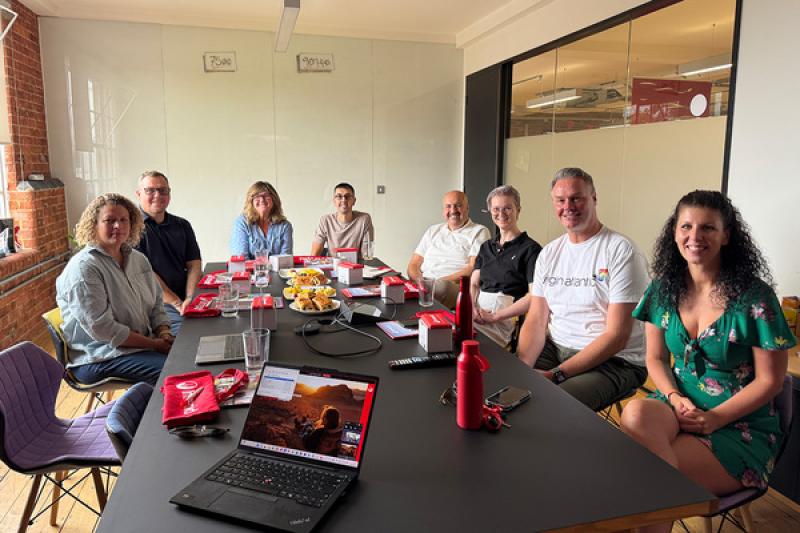
Pictured from left: Jenny Southan, Globetrender; Kris Roberts, Andrew Earles Holidays; Linda Reynolds, The Personal Travel Agents; David Knight, Swords Travel; Richard Lowrey-Heywood, Not Just Travel; Megan O'Leary, Travel Counsellors; Jon Hilton, Virgin Atlantic; Carrie Grant, Intrepid
Booking LGBT+ travellers’ holidays is one time it is acceptable to treat the community differently to heterosexual and cisgender people. Ask more questions. Do extra research. Don’t risk getting it wrong.
Even if you don’t have any LGBT+ clients currently, it doesn’t mean their enquiry won’t drop into your inbox – and when it does, you’re going to want to be prepared. Here are seven mistakes you could potentially make when selling LGBT+ holidays, and how to avoid them.
1. Thinking LGBT+ travellers are only same-sex couples
Gay or lesbian couples might be the LGBT+ travellers you most frequently encounter, but you could also craft the perfect holiday for a transgender person, a throuple, or an LGBT+ family with children.
“By 2021, 24% of female same-sex couples had children – and that was an increase of 40% since 2015,” said Southan, explaining how LGBT+ family travel is booming as it becomes easier for gay and lesbian couples to adopt or utilise IVF.
2. Not asking clients for their preferred pronouns
Never make assumptions about a client’s gender and always make “what pronouns do you use?” the first thing you ask – to decipher whether you should refer to someone as “he/him”, “she/her” or “they/them”. Whether it’s by email, on the phone or adding a pronoun field to an enquiry form on your website, this is a small, simple step that will instantly make members of the LGBT+ community feel at ease – and it will help build trust.
3. Overlooking which destinations will (or will not) welcome LGBT+ travellers
A 2024 survey by Booking.com found 67% of LGBT+ travellers from the UK had suffered discrimination during trips in the past year, so make sure you’re clued up on the most (and least) LGBT+ friendly destinations so your clients don’t fall into this group. Transgender activist Jake Graf recently told TTG which destinations and resorts made him and his wife Hannah feel safe, while Carrie Grant, head of industry partnerships for the UK and Ireland at Intrepid, highlighted a Statista map during the workshop.
She explained: “There are roughly 40 countries in the world where same-sex marriage is legal, and I think this [can also be] a really useful barometer of where queer people will be more safe to go,” she said. Intrepid’s trending destinations for LGBT+ travel include Bangkok, Bogota, Sydney, San Jose, Taipei and Lisbon.