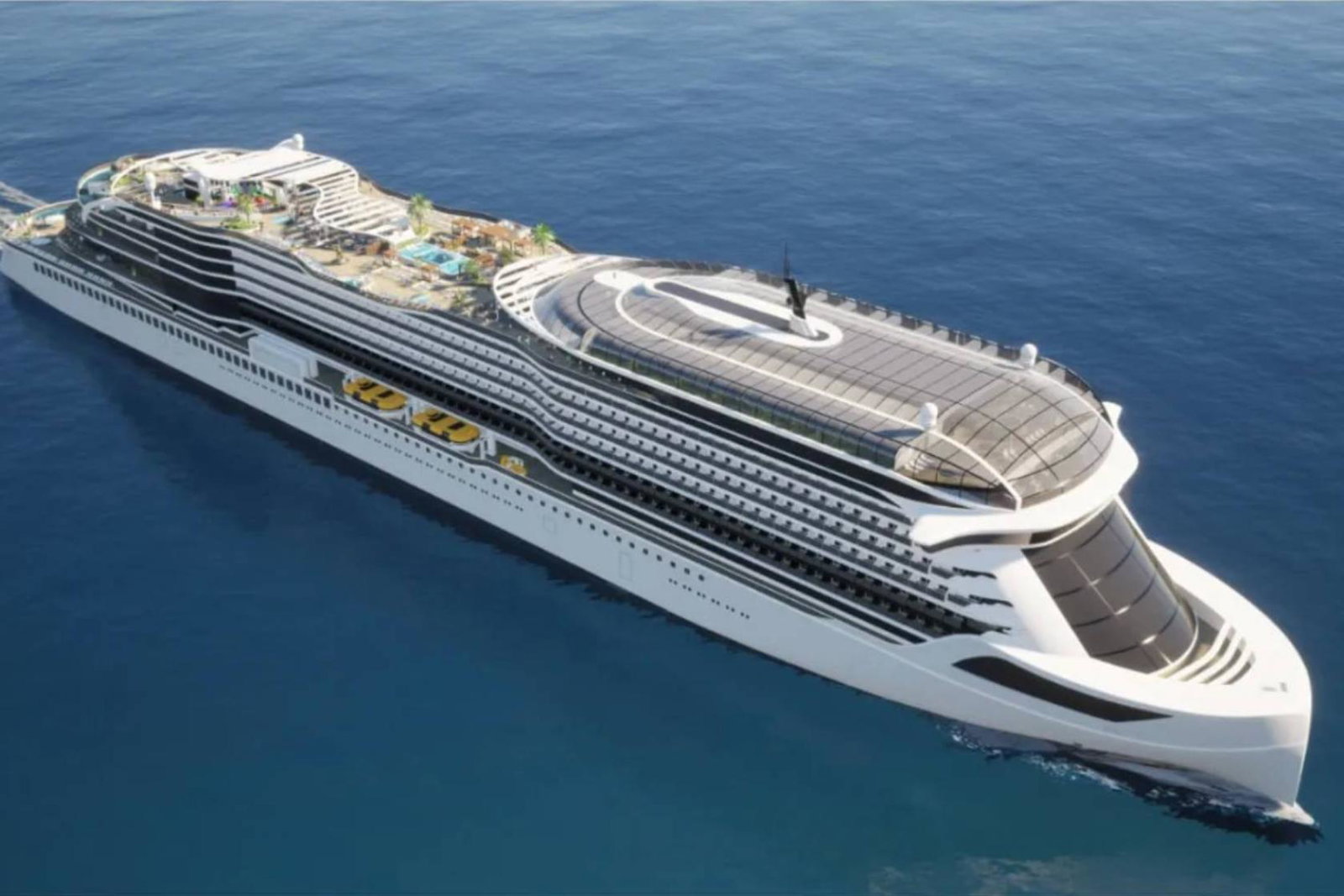
Project Vision outlines what Meyer Werft claims would be the world’s first fully electric cruise ship of its size, signalling a potential step change in the sector’s decarbonisation efforts.
At around 82,000 gross tonnes and 275 metres in length, the vessel would accommodate up to 1,856 passengers and operate using battery technology already available today, according to the company.
Tim Krug, from Meyer Werft’s concept development group, said the project was designed to accelerate emissions reductions within the cruise sector. "We asked ourselves how we can use innovation to reduce carbon dioxide and contribute to decarbonisation – not in 50 years, but much sooner," he said.
Johannes Bade, who leads the development programme behind Project Vision, said battery-electric ships could offer a commercially viable solution for cruise lines. "We are opening up entirely new opportunities for our customers to operate sustainably and profitably in the long term," he said.
The vessel would be powered by battery systems supplied by Norway-based Corvus Energy, which has already equipped a significant proportion of the world’s hybrid and fully electric seagoing vessels.
Thomas Weigend, chief sales officer at Meyer Werft, said the timeline for delivery could be as soon as 2031 if an order were placed this year. Corvus Energy chief executive Fredrik Witte added that scaling battery technology to cruise ships marked "a defining moment for the cruise industry".
According to Meyer Werft, the concept would be capable of operating a large proportion of European itineraries on battery power alone, citing routes such as Barcelona to Civitavecchia as an example. Around 100 ports across Europe are expected to have suitable charging infrastructure in place by 2030.
For longer voyages, including transatlantic crossings, the design could be adapted into a hybrid configuration with supplementary generators.
Project Vision also reimagines onboard design, removing the need for a traditional funnel and introducing a vertical shaft for exhaust treatment. This allows for an expanded sun deck with unobstructed views, alongside fully enclosed, weather-protected public spaces.
Features include an indoor aqua park located at the stern, enabling year-round use, as well as reduced onboard noise and vibration due to the absence of conventional engines.