New Zealand has long been a bucket-list destination for thrill-seekers, but now it’s setting the gold standard for accessible adventure travel. With breathtaking landscapes, outstanding outdoor experiences and a growing commitment to inclusivity, it’s proving that adventure is for everyone.
For wheelchair users, the biggest barrier to a New Zealand trip is the flight. But television presenter and paraplegic Sophie Morgan – who has just been confirmed as moderator at the Advantage Travel Conference later this year – urges disabled travellers not to be put off by the journey time. “There’s no better airline for looking after disabled passengers than Air New Zealand,” she reassures me. “The airline has a refreshingly different attitude to welcoming people like us onboard.”
Rooted in the Kiwi concept of “manaakitanga” or hospitality, that starts from the moment you board. “When this first barrier to travel is removed, it makes all the difference for wheelchair users,” Sophie says. A key player in that experience is Ed Collett, Air New Zealand’s senior programme manager and passionate disability advocate. “He’s just gets it. He’s a magical man,” Sophie beams.
After landing, the people on the ground continue to make exploring this stunning country a seamlessly inclusive experience. Luxury DMC Ahipara curated Sophie’s itinerary for her 10-day trip to New Zealand last year, going beyond just removing barriers. “It wasn’t just about making sure I could get to places, they made sure I could fully experience them,” she explains.
Starting with South Island, Sophie stayed in Headwaters Eco Lodge on the shores of Lake Wakatipu, which has step-free, universally designed access and in Flockhill Homestead in the Canterbury high country, which offers a working station experience (the Kiwi name for ranch).
A highlight of her time in North Island was going deep inside Ruakuri Cave in Waitomo, made accessible with adapted pathways, and seeing the twinkling glowworms that light the cavern walls like subterranean constellations.
It was a learning curve to make sure that someone with mobility impairment could do Ahipara’s itineraries. But, in addition to Sophie’s access needs, they made sure that as a person, her interests were met too. “There was an extraordinary amount of thought and attention in that process. I got the best of the best of New Zealand.”
From staying in some of the most beautiful locations to venturing off the beaten track in the most authentic ways, she was immersed in the essence of New Zealand, not just as a tourist, but as an adventurer. She enjoyed money can’t buy experiences, like spending a day on a working farm, herding sheep and caring for orphaned lambs, and learning from a master carver of pounamu, as the “greenstone” that holds immense cultural and spiritual significance for Māori. “That’s what Ahipara offers. Access not just to places, but to the heart of New Zealand,” she says.
Accessibility advisor, Jeremy, also known as “Jezza”, Williams, former adventure guide, ensured no adventure was off limits. After sustaining a spinal-cord injury himself in 2010, Jezza has dedicated his life to redefining what’s possible for disabled adventurers, designing adaptive equipment and consulting with tour operators across New Zealand. Sophie even used one of his inventions, a specially designed harness, to go white-water rafting in Turangi. Jezza also advises Ahipara and tour operators on best practices for lifting wheelchair users, ensuring experiences are both possible and safe.
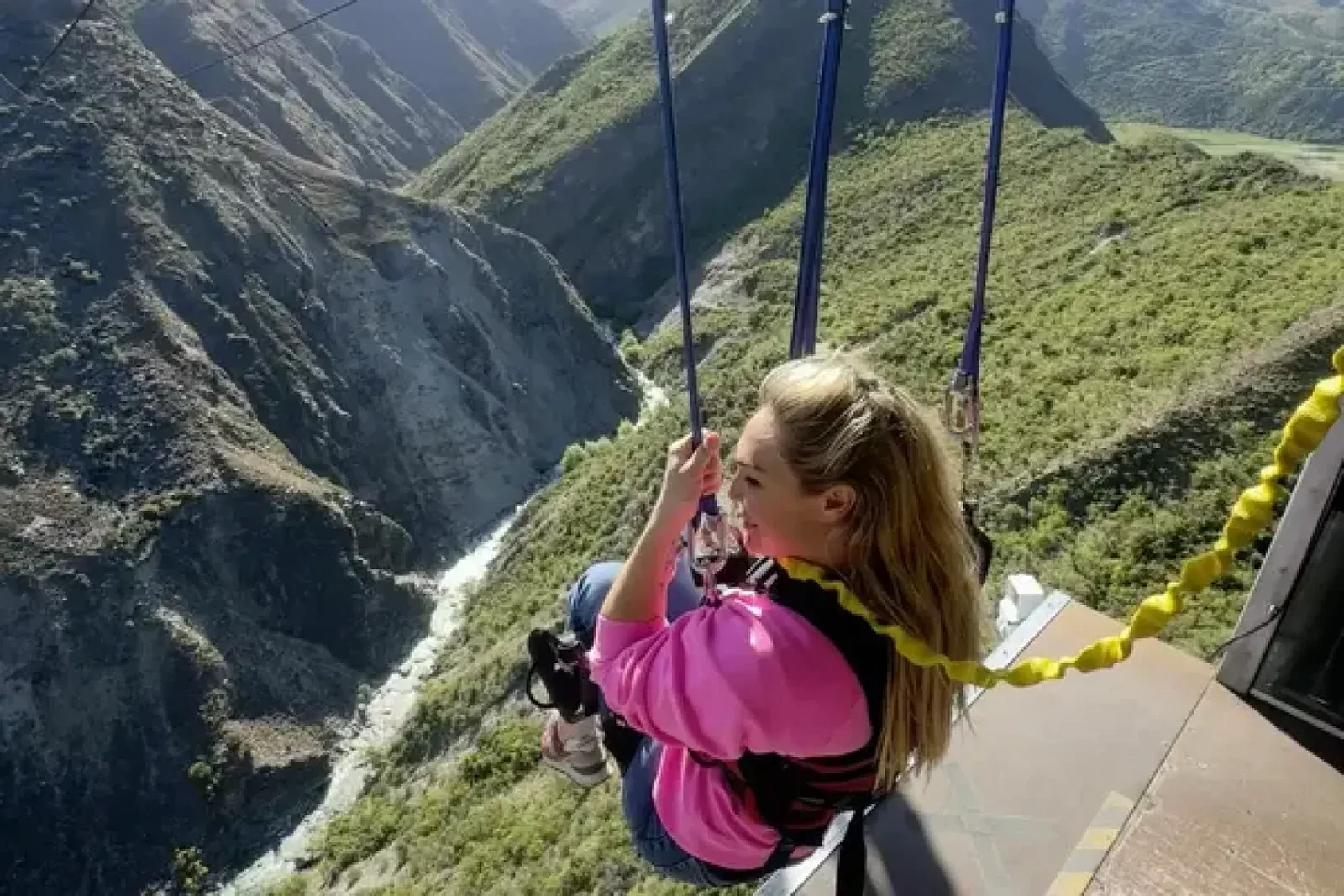
This expertise enabled Sophie’s unplanned bungee jump in Queenstown. That sort of spontaneity, being able to just go and do what you want is a privilege that few wheelchair users or paraplegics get. “Bungee jumping maybe not be accessible for some, I needed carrying at some point, but it was still doable,” she says. The travel industry often takes an all-or-nothing approach, assuming that if something can’t be made 100% accessible, it shouldn’t be offered at all. “But it’s up to us to adapt and modify how we travel,” Sophie asserts.
When it comes to this kind of travel, having people who say “yes”, problem solvers and open-minded thinkers like the Ahipara team and Jezza, makes the trip. In the environment itself there’s always challenges, but in the right hands it was completely accessible to Sophie. “They made what New Zealand had to offer limitless.”
However, not all tour operators want to work in this space. While physical barriers can be removed, attitudinal barriers remain. Jezza is working on the ground to push for change, demonstrating the need for inclusive adventure. “Not everyone is receptive,” Sophie acknowledges. “We just need to keep showing that we want what people can offer us. If they build it, we will come.”
For travel agents looking to support disabled customers, Sophie’s message is simple: ask the right people for the right training. She warns against well-meaning but unqualified individuals jumping into this space. “There’s a danger in people saying ‘Oh, I can do that. I’m just going to start helping,’ without the proper knowledge.” There needs to be an understanding of the challenges intimately to be able to help us remove them. “Don’t just think that because you have an interest or a bit of lived experience you can do it”. Training, she stresses, is key. “Don’t be afraid. Just get trained.”
To help drive change, Sophie and Jezza are working together to create resources that will better equip the industry to make travel more inclusive. “And any questions, send them my way,” Sophie adds with a smile.
Agents, check out Sophie’s itinerary here