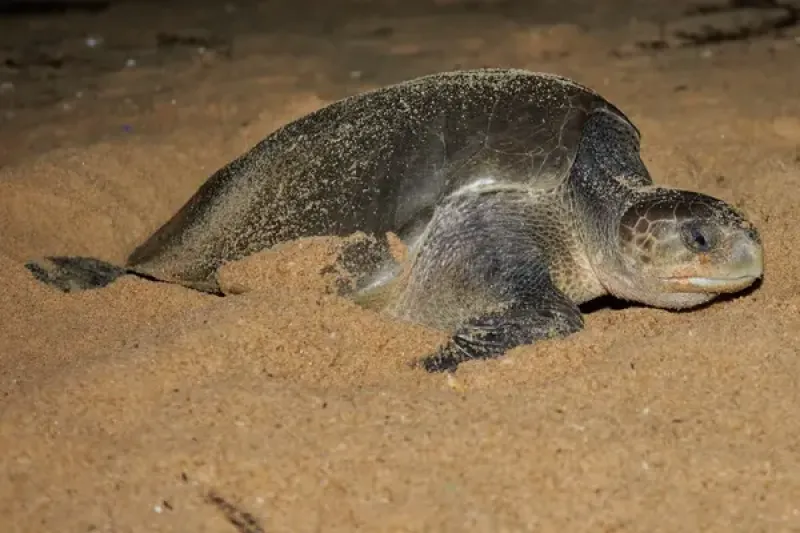
It is just after midnight on a beach on Sri Lanka’s east coast and one of nature’s miracles is occurring. A pregnant olive ridley turtle has emerged from the Indian Ocean and is using her flippers to create a shallow nesting pit for her eggs. Female turtles return to the beach where they were hatched to nest and deposit their eggs.
“It’s like an in-built GPS system,” environmentalist Mahanama Dhanushka whispers. “They line their carapace up with the sand and know exactly where to stop.”
That turtle eggs are on this beach in the coastal village of Panama, at all, is a miracle of sorts. Dhanushka is chairman of WORC (Wildlife and Ocean Resource Conservation) and is involved in projects including coral reef, mangrove and turtle conservation. Until a few years ago these nest eggs would have been taken and sold for food. Under WORC’S guidance, this project involving 400 families along a 17km stretch of coast, has created safe habitats for turtles.
I’m in Sri Lanka with Kuoni’s parent company Dertour to see sustainable tourism initiatives in action. Through local partnerships, like the one it has with WORC, the not-for-profit Dertour Foundation has helped implement more than 100 projects in 28 countries (as of March the Dertour Foundation is a registered UK charity). For clients, it’s an opportunity to see a destination from a new perspective, to get hands on and interact more with locals.
“We try to find projects that have an educational aspect and that clients can get involved in,” said Laura Steden, director, corporate responsibility, Detour Group.
Sri Lanka is among Kuoni’s top five performing destinations, with the average length of stay around 11 days. Beach-fringed coastline, tea and cultural trails, and wildlife including elephants and leopards are complemented by a diverse range of accommodation.
“We’re seeing a good balance of multi-centre private-chauffeur itineraries and single or twin-centre beach escapes, including Maldives combinations,” said Claire Ross, director of sustainability.
Like other precious ecosystems, some of Sri Lanka’s habitats and species are at risk. One of WORC’s primary projects involves the restoration of mangrove ecosystems at lake Koggala, close to the country’s south-coast surfing beaches. As well as being a highly effective carbon sinkhole, mangrove ecosystems are vital to biodiversity. Two of Sri Lanka’s 21 mangrove species are critically endangered. Through its partnership with WORC, Dertour has facilitated the planting of around 15,000 mangrove trees and offset 6,000 tonnes of CO2.
A tea break with villagers
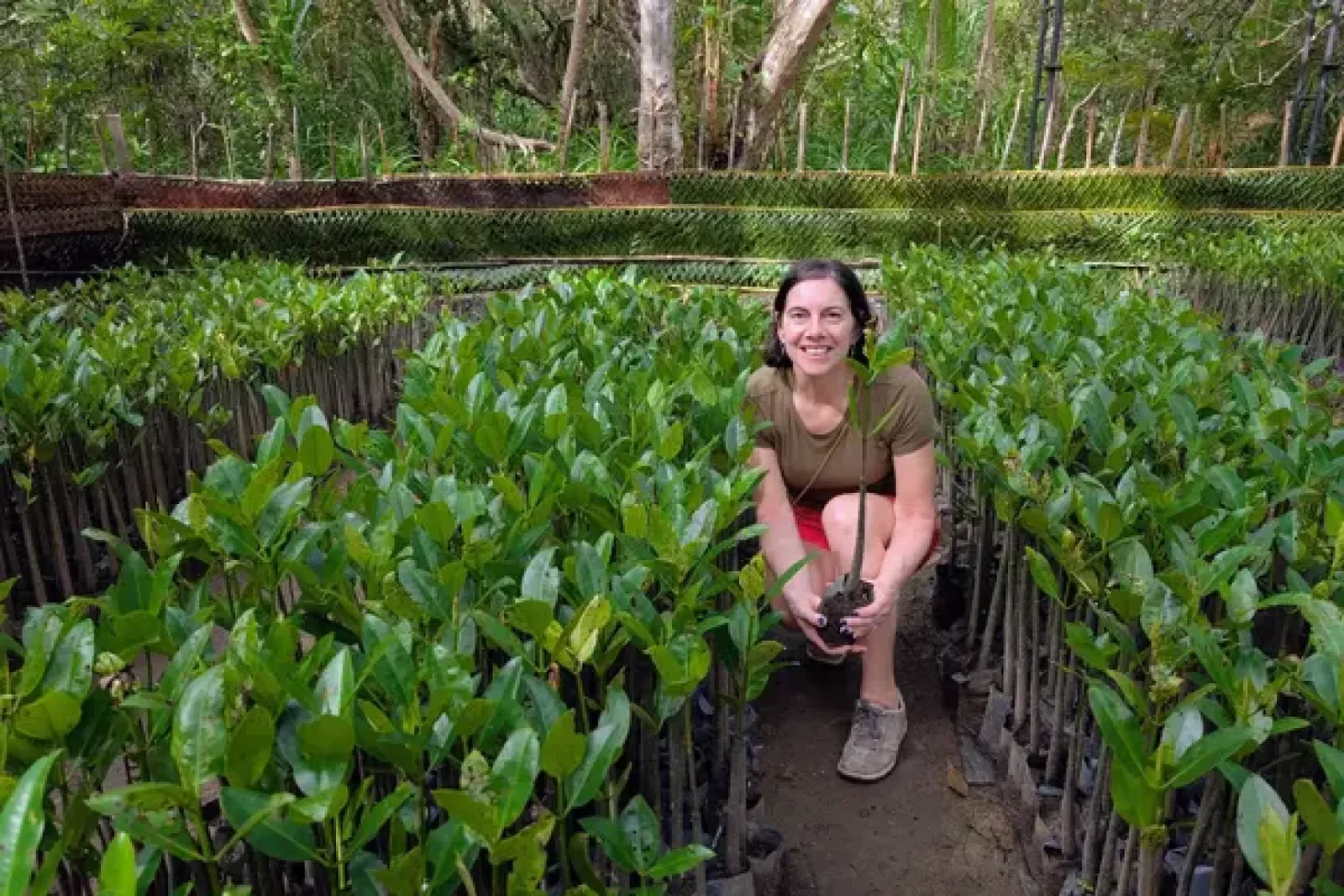
Small boats take visitors around forested islands where kingfishers perch, white-bellied sea eagles swoop for food and glossy peacocks pose. We cross a footbridge to Kurulu Duwa island, where we meet women from Koggala village at a plant nursery. Taking our lead from them, we sit in a circle to scoop soil into small rectangular bags and pack it tight, ready for seeds. It’s a fun way to engage. There are friendly exchanges and laughs, despite the language barrier, and before long over 200 bags are filled. We take a 20-minute break, drinking tea together and snacking on spicy samosas and rolled coconut roti.
Community engagement is key to success. Later, we meet the head of the island’s Buddhist temple, who takes a keen interest in the mangrove project. “Our goal is to offer innovative, long-term solutions for species preservation, but we can’t protect the resource if the community isn’t on board,” says WORC’s special project director, Ajantha Palihawadna.
Once the root of a mangrove system is embedded it must be protected for seven years. By trial and error WORC’s scientists have developed a technique that uses open-ended cement pots, made on site, to take mangroves from seedlings to healthy plants. “It’s a solution we’re incredibly proud of,” says WORC chairman Mahanama Dhanushka. “We hope it will be copied worldwide.”
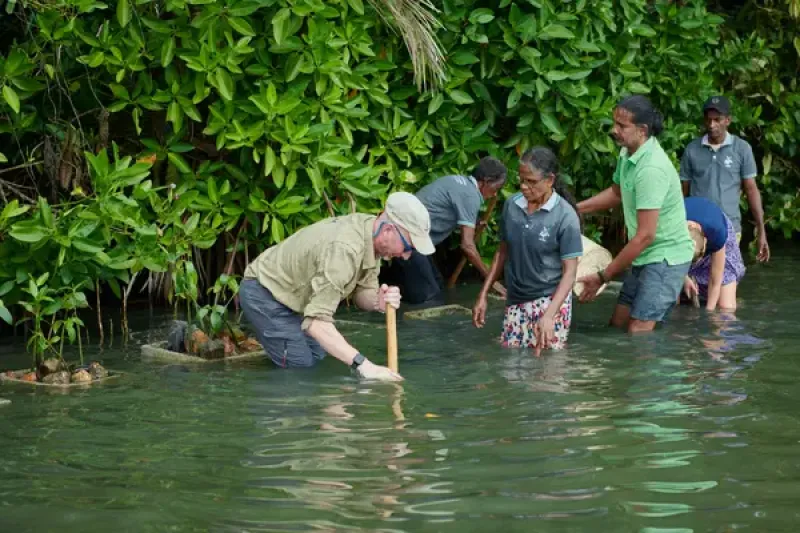
Boarding boats we head to a planting site at the edge of the lake. Already thigh-deep in water, and being bossed about by a smiling elderly woman, are three volunteer students from Cardiff University. “By the time guests cruise the lake, they’ve planted saplings and visited the island’s monastery and now they get to jump in the mud,” says Ajantha.
Wading in I help sink the heavy pots into the soft, silty mud. Dhanushka shows us some three-year-old plantings whose roots are starting to form a natural shore barrier. “Without the start-up aid for saplings, none of this would be possible,” he says.
Restoring elephant habitats
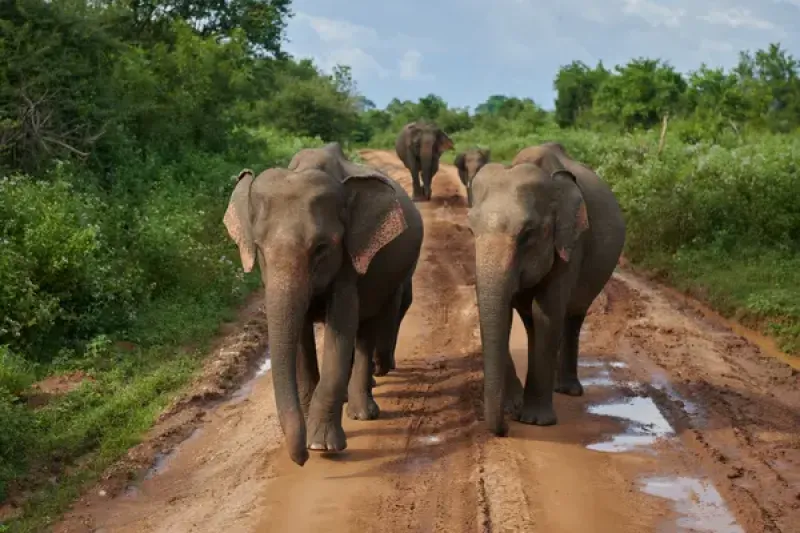
Another of the destination’s draws is its national parks. During visits to Yala and Udawalawe parks I see more elephants than I’ve seen on previous visits to Asia combined. In parks they are protected but there is an ongoing conflict between farmers and local elephant populations, whose migration routes have been lost to roads and other development.
One morning our guide takes us to the rural smallholding of forest specialist and pioneer ecologist Ajith Lokuge. Ajith has developed a business model that aims to restore habitats for wild elephants in human-occupied areas.
As we walk along a former elephant track teeming with butterflies Ajith explains: “Elephants love to eat paddy (rice)” he says, “but there at least 60 seasonal crops that they won’t touch, including pepper, citrus fruits, legumes and cinnamon.”
With assistance, Ajith hopes to trial a farming technique that will help villagers cultivate elephant-friendly farms and protect family incomes whilst increasing the habitat for wild elephants. His enthusiasm for the protection of wild elephants is contagious.
Sustainable stays
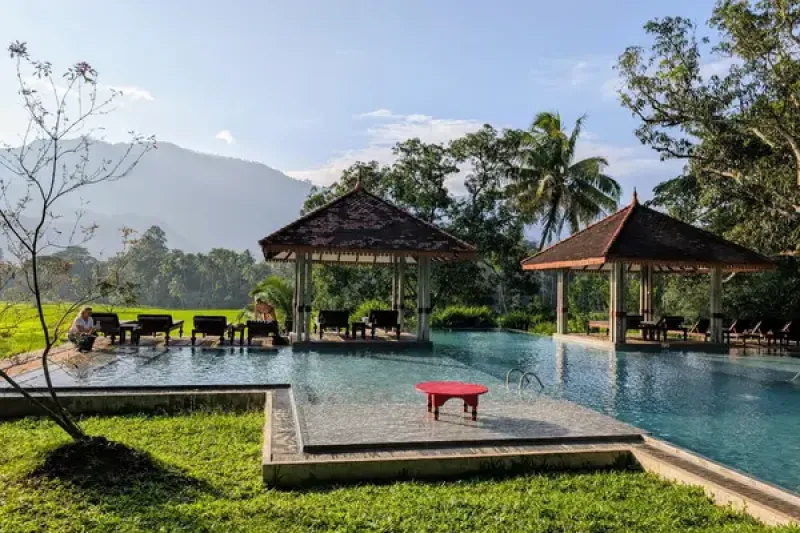
Hotels we stay at demonstrate a proactive approach to sustainability. Rice paddies at the Jetwing Kaduruketha in Wellawaya are cultivated by 17 local farmers, using traditional methods. I tour the property’s iridescent paddies and hear how the harvest is shared between farmer and hotel. Kaduruketha and other Jetwing properties feature these nutritious rice varieties on their menus.
In the garden of the Hotel Sentido Heritance in Negombo, north of Colombo, I watch a “toddy tapper” climb a coconut palm. Using a network of ropes between trees, the tapper cuts coconut flowers, releasing a sap into a clay pot. It is later processed into arrack, providing the tapper with an income.
Back on the beach, in the coastal village of Panama, we wait and watch as the turtle lays. Dhanushka knows by the number of times the turtle moves her head that this is a big clutch. After almost an hour she has laid around 150 eggs. Her flippers sweep sand onto the chamber and she presses it flat with her belly. It’s 2am, rain is falling in torrents and our group couldn’t be happier. Not only have we witnessed something extraordinary, but these hatchlings will emerge and scuttle into the sea, just like their mother did.
Book it: Kuoni offers a seven-day package to Sri Lanka with flights on Emirates, a private chauffeur from arrival until the last night, accommodation and visits to the Elephant Transit Home and a jeep safari in Udawalawe National Park from £2,395pp travelling in September. Secure the best rates for clients from May to September (excluding school holiday period); kuoni.co.uk