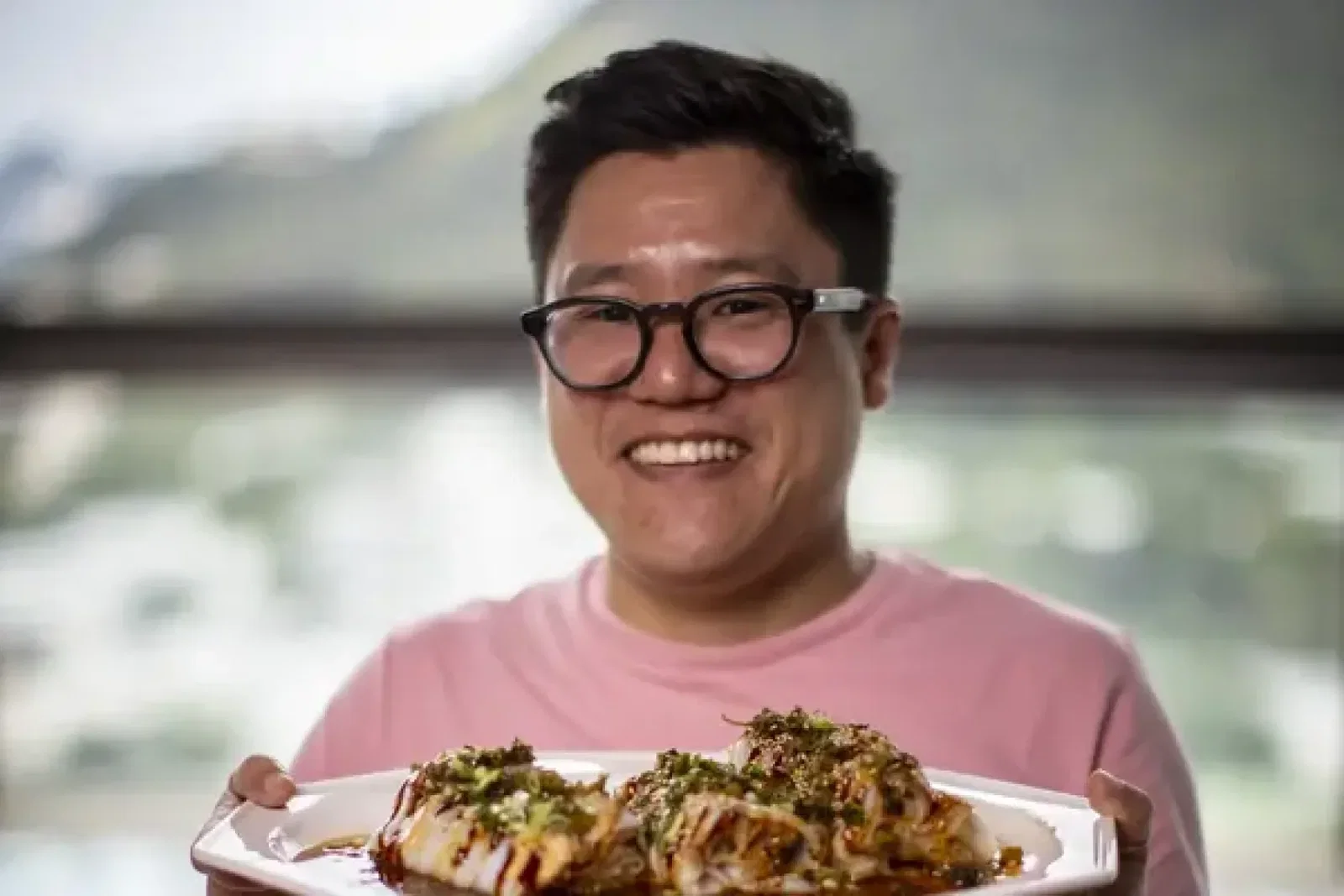
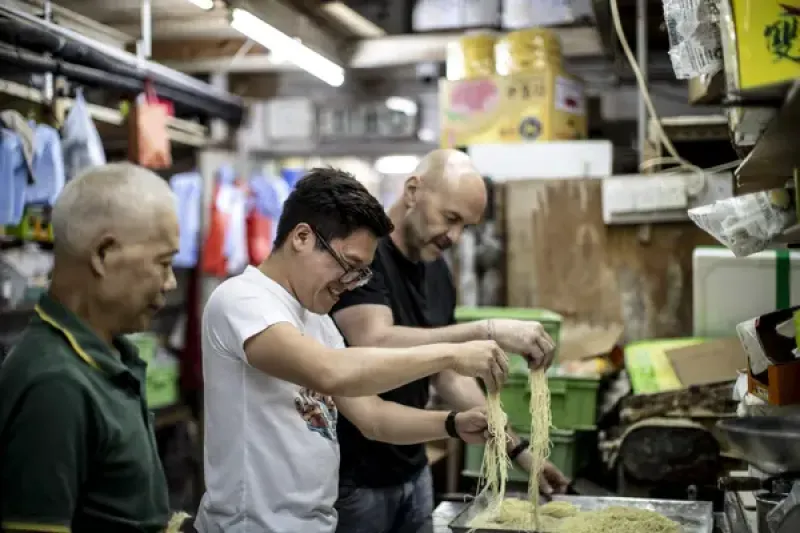
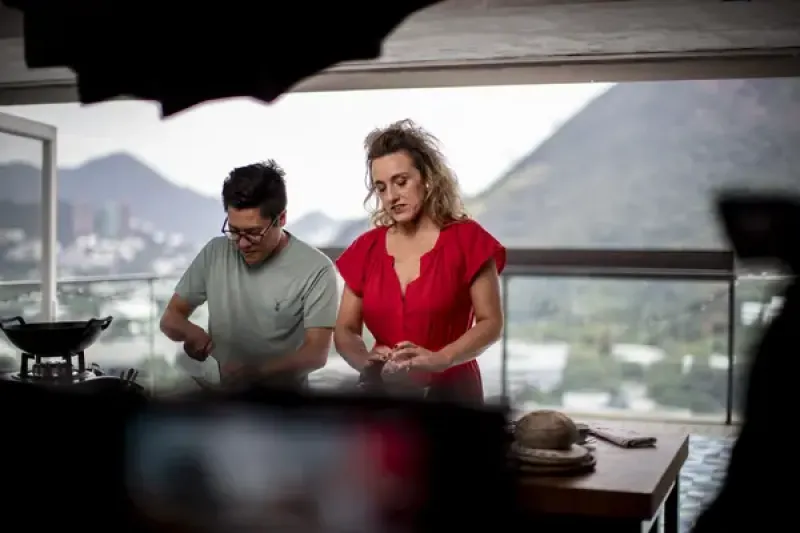
Third-generation Chinese chef and School of Wok founder Jeremy Pang hopes his new television series will go some way towards reminding people why Hong Kong is worth a visit, by putting a spotlight on its local culinary experiences.
UK visitor figures to Hong Kong hit a high in 2018, with 572,740 arrivals. Social unrest in 2019 had already had repercussions for Hong Kong’s tourism industry before the fallow years of the pandemic, when UK visitors slumped to 677 in 2021. Recovery was delayed by the slow lifting of restrictions, but UK numbers have now risen to 291,394 in 2024.
We chat to Jeremy Pang about his Hong Kong heritage and his favourite experiences from the TV show:
What is your connection with Hong Kong?
My parents were born in Hong Kong and moved to the UK in the 60s. From when I was about 12, my dad worked a lot in Hong Kong, China and south-east Asia, so we would travel to Hong Kong two or three times a year. It was a strange mix of feeling like tourists there but it also being like a second home to us. It’s a lovely way to enjoy a destination, spending long summer holidays there.
What are your earliest memories of Hong Kong?
When I was about five or six years old, I remember landing at the old Kai Tak airport (which closed in 1998). It was a famous runway in the middle of the city and it felt like you were going to land in the harbour itself between the buildings. The terminal was a small building and so crowded, and the aroma of roast meat, sesame oil and five spice would hit you. That to me is the smell of Hong Kong – lots of people and roasted meats!
How did you become a television chef?
My career started in marketing – my dad had wanted me to go into the restaurant world, but I resisted because of the low pay and anti-social hours. However, in 2009, I started teaching people to cook Cantonese food in their own homes, which I called “School of Wok”, Now we are located in Covent Garden and train up to 10,000 students a year in Asian cuisine. Dad passed away in 2009 (he’s buried in Hong Kong) so he never knew I actually did follow his dream for me, which is bittersweet. And of course, 15 years later, I realise as an entrepreneur, the hours are always antisocial because you’re constantly working!
I got invited on to shows like Channel 4’s Sunday Brunch and Ainsley’s Food We Love, then I did Ready Steady Cook, and that was an incredible crash course for working in television. It was fast-paced and the mess I made in that kitchen was unbelievable…! In 2022, I made my debut ITV series, Jeremy Pang’s Asian Kitchen in the UK. It was 10 episodes and more food-based. Now we’ve gone down the travel food vlog with Jeremy Pang’s Hong Kong Kitchen.
Why did it feel like the right time to film in Hong Kong?
It was hugely important to film this series – it became apparent while we were there, that popular tourist attractions, such as Hong Kong Ladies’ Market and the Big Buddha on Lantau Island, were quieter than I remembered. We filmed a year ago, when Hong Kong had only been open for a year or so post-pandemic. The locals were so welcoming and they could not understand why people didn’t want to experience Hong Kong any more. It just shows how politics can get in the way of everyday people’s lives without needing to.
That said, flight prices are becoming more reasonable and the long-haul market is picking up, so the message is that now is the best time to go, because you have a rare opportunity to see Hong Kong as the locals enjoy it. It’s easy to get around because the transport system is very efficient and it’s such a safe place – on a night out, one of our crew left their wallet on the table of an outdoor beach bar and it was still there, in exactly the same place, the next morning, untouched.
What does your show Jeremy Pang’s Hong Kong Kitchen entail?
For each of the six episodes, I take a different celebrity on a personal tour of Hong Kong. We spent five weeks filming and every four days I was joined by a new guest. We visited five or six locations in a day, but that’s just TV, you’re switched on the whole time. It meant I appreciated the odd nap in our van between locations!
Each celebrity had a different reason for wanting to come to Hong Kong.
TV presenter and comedian Mel Giedroyc’s parents lived in Hong Kong in the Sixties but she’d never actually stepped foot there, so it was very nostalgic for her to visit the Kowloon City area, where her mum and dad worked, which she only knew through family stories and photos.
Businessman and TV personality Tom Skinner, a former contestant on The Apprentice, is known for his breakfasts and so we moulded his episode around the Hong Kong breakfast scene, which is a big thing. He was most touched by how open Hong Kong people are, and how green it is. He kept saying: “I can’t believe there are this many mountains and beaches.” And he got stopped a lot for selfies!
Simon Rimmer and I are good friends already so that felt like a jolly to us, two mates drinking beers in Hong Kong. But he’s used to the high-end dining so I wanted to take him to places that were more personal to me.
Nisha Katona, founder of Mowgli Street Food, is a hard person to impress. She said she didn’t like sweet and sour, so I made her sweet and sour prawns, and she literally would not let anyone else touch the plate because she loved them so much.
With renowned food critic Grace Dent, I wanted her to see the juxtaposition of the Hong Kong’s food scene, where you can go from breakfast or lunch in a Michelin star restaurant to snacking on street food for dinner. We visited a well-preserved ancestral Hakka village together, which had only just opened to tourism, and it was lovely to see Grace’s demeanour change as we explored the village and ate their traditional food.
TV presenter Chris Bavin is a produce expert, and I took him to Hong Kong’s organic farms and out fishing (although we didn’t catch anything!). He arrived in Hong Kong at 6pm, and we got him up at 4am the following day to see the last place where they roast pork in underground pits, at Red Seasons restaurant on the outskirts of Hong Kong. Now that is dedication to a TV food show, but from an experience perspective, it really was once-in-a-lifetime.
What do you hope viewers take away from the series?
Every episode has a different feel. From a production point of view, it was a huge team effort but I was heavily involved in the planning, because it’s my upbringing and culture. I really wanted to show the versatility of Hong Kong and the juxtapositions it offers as a place to visit. Most tourists land in Hong Kong for a stopover and fly on somewhere else in the world, but really it needs to be a destination in its own right. There aren’t many places like it in the world, where you can blend incredible street food with Michelin-star meals on rooftops. Or you can be in the city and a 20-minute taxi ride later, you’re at a beautiful beach with no one else on it. Everyone I brought to Hong Kong – the crew and celebrities – were gobsmacked by that, and really enlightened by it.
And I want people to see that food is such a big part of the Hong Kong experience. I don’t like being stuck in a kitchen talking only to food. I love seeing people interact with food, and that to me is the joy of Hong Kong. Their open kitchens and windowless restaurants are not for show, that’s just the way it is, but it makes dining far more interactive. You can see what everyone is eating in a restaurant and that draws you in, which is very motivating for a chef too. It’s a very different atmosphere to how we go out for dinner in the West.
Even on my days off, when the cameras were switched off, I’d go for these lovely hikes – because Hong Kong has incredible trails – and people have little shops attached to their homes by the trails. They sell food they’ve made themselves, like fresh fruit ice lollies and soya bean milk because it’s hot and people like to cool down. They’re very resourceful like that. Hong Kong really does revolve around food, and it needs more credit for that.