A dark bump in the water rolls, exposing a pink belly. The hippo’s forelegs flail as it manoeuvres and to my delight, it appears to be waving. Five minutes from the airstrip, this is my welcome to Serengeti National Park.
I’m heading for Nyarboro Hills in the park’s western corridor where luxury brand Elewana has a new lodge. Addressing a safari market gap, Serengeti Explorer, the first of a new collection, is pitched as mid-range. It’s swiftly apparent, however, there’s no skimping on the experience.
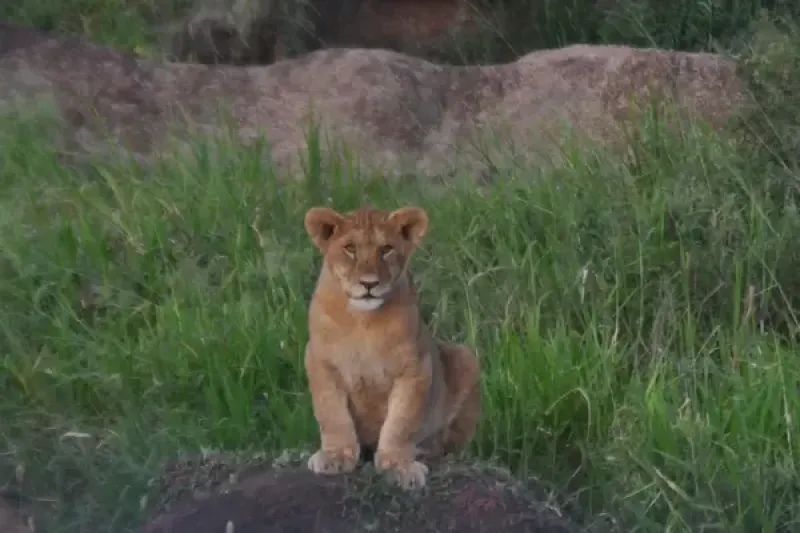
On our first game drive, I watch a lion in an acacia tree licking his wounded leg and rubbing his face between his paws. He’s the picture of self-pity, though our guide tells us he’s likely been fighting. As I snap pictures under the raised roof of our Toyota Landcruiser his brother arrives to check on him.
The next morning we’re avoiding lions. The long grass checked, we relax beside a flamingo lake over a bush breakfast. We’re engrossed in fruit and fritters when our guide sees a leopard grab a flamingo on the opposite shore.
A more contemporary design
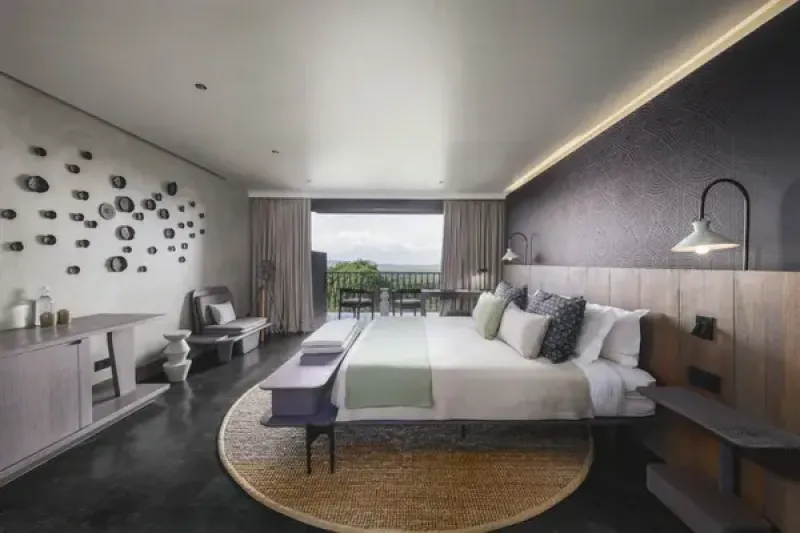
Back at Serengeti Explorer, I consider my surroundings. Modern and minimalist, the lodge rejects rustic décor and the uncomfortable romanticising of colonial times. Elewana purposely chose an architect without a safari background. For me, the result recalls stylish Thai beach resorts.
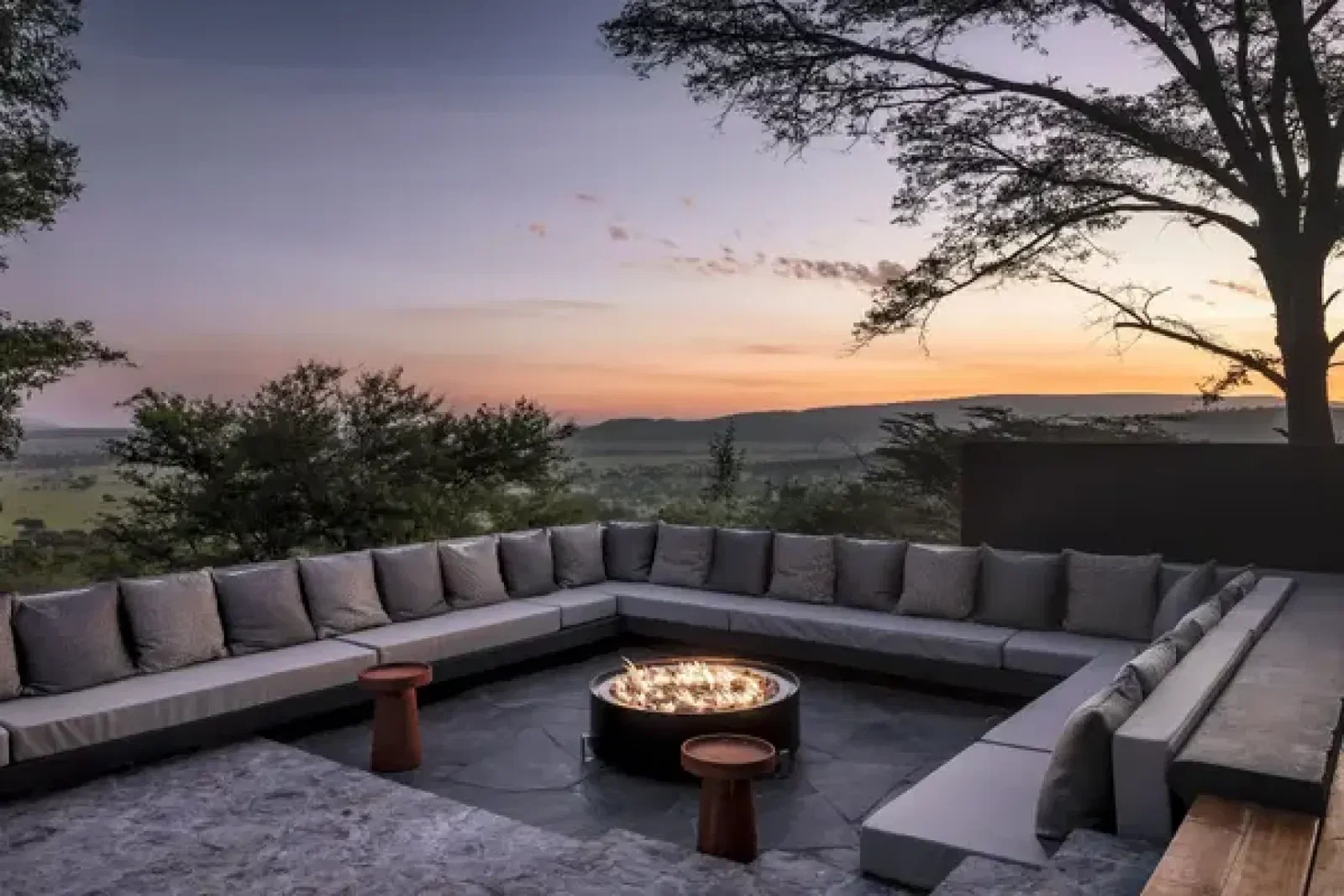
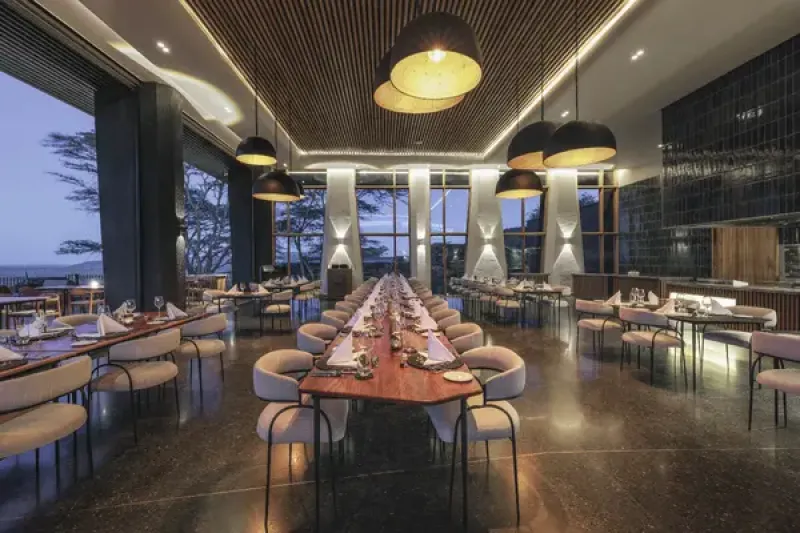
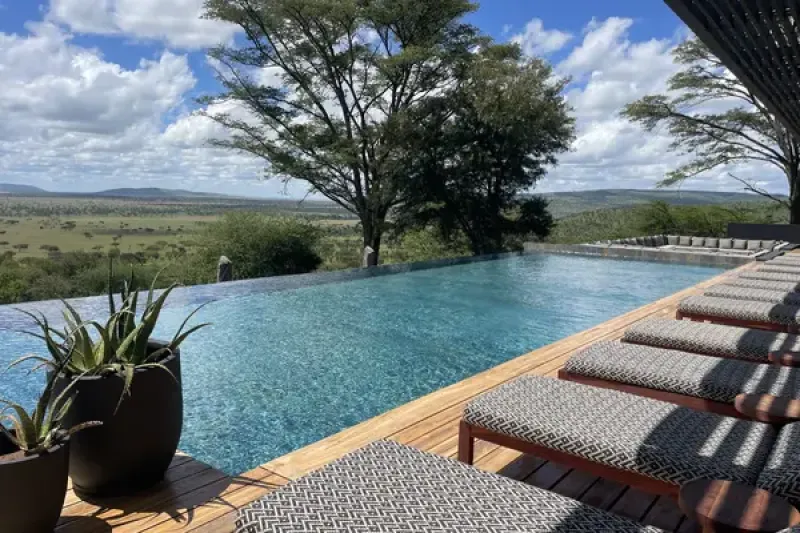
From the ample reception, doors a giraffe-and-a-half high open onto a wooden deck with savannah views. A black staircase leads to an infinity pool and fire pit. Open-sided restaurants on both levels have roofs as high as churches.
Towering grasses flank the path to the 74 rooms. My two-floor family suite comprises two spacious standard rooms with designer lighting, pottery wall art and illuminated mirrors. Elsewhere huge Savannah suites include free-standing baths. Remote-controlled fly screens enable guests to sleep with their terrace doors open to the sound of cicadas. There’s no air conditioning, though with a fan, I sleep comfortably.
My next dawn game drive begins with a silhouetted giraffe. Her back bristles and a dozen mite-picking birds lift into the golden sky. An hour later we’re amongst hundreds of wildebeest journeying from the Southern Serengeti to the Masai Mara.
The males grunt a mass mating call somewhere between a cow and a bullfrog. Individual wildebeest and their zebra companions stare down our cameras. Amid the seething throng we spot a baby so fresh it still has its umbilical cord.
We’re witnessing part of the world’s most famous migration, yet our two vehicles stand alone. Our advantage? Serengeti Explorer lies between two wildebeest routes but secluded from other accommodation. Secondly, it’s low season; the higher grass and chance of rain dissuade some, despite rates almost 50% lower than peak months at the lodge.
Not every wildebeest makes it. Later, we see one felled by the mud around a watering hole. Bloody-beaked vultures and marabou storks squabble over entrails. 24-hours later we hope the stench will have brought lions to feed. Instead, we find a pair mating. It’s yet more luck on a day we’ve already watched gleeful elephants enjoy a mud bath.
A Serengeti first
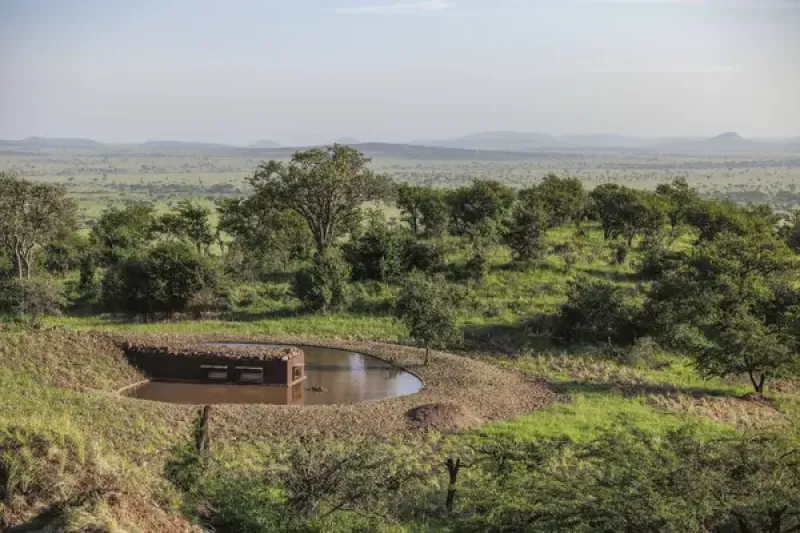
Guests can also view wildlife from Serengeti Explorer’s on-site hide, a lodge first in the park. Approached by a tunnel, it features swivel armchairs set before a waterhole. A turtle and baboon grace my visit, but recent callers include lions, leopards and a honey badger.
The lodge rents out huge camera lenses and offers photography tuition. Other diversions include a gym and a two-room spa which also lays on alfresco yoga and sound bath classes. A bushcraft kids’ club, besides the solid hotel-style rooms and easily accessible hide, make it a good sell for families.
The restaurants serve international fare at breakfast and lunch with more local dishes each evening. The night I dine fireside at the roofless Boma I’m impressed by the range of vegetable dishes and barbecued meats. Another evening, I enjoy the seven-course tasting menu in a wine room decorated with masks. At US$145, including international wine pairing, the memorable curried dishes are a fine showcase for Tanzanian cuisine.
“This is not a normal lodge... we’re very good value for money but it’s [also] all the facilities… I think we’re standing out in what we offer,” general manager Emile Muller tells me, adding: “The location is phenomenal, untouched by other operators.” Serengeti Explorer was rebuilt around the previous Sopa Lodge. Its black walls and solar panelled roofs blend into a construction-free landscape.
Muller highlights a relaxed ‘always open’ policy from late breakfasts to 24-hour hide access. He adds: “A lot of people change their itinerary when they arrive... they say: ‘I’ve done my game drives, done my rush, maybe I’ll lie by the pool.’” I realise myself; a safari holiday here could be relaxing enough to forgo the traditional beach add-on.
A unique combination
For those wishing to combine a tented experience, Elewana’s Serengeti Pioneer Camp is 30 minutes’ game drive away. On my own night here, the bush feels closer. Impalas cluster near my large ensuite tent, caught in my armed escort’s torch beam. Dinner is enjoyed alfresco, romantically lit by lanterns.