“Why garlic?” I question on my first day in Georgia’s capital Tbilisi, when I notice bulbs adorning souvenir socks and parodies of famous portraits.
“Not garlic, khinkali!” I’m told. I’ve failed to recognise the national dumpling dish. There’s lots to learn about this destination with new direct UK flights.
Tbilisi is set around Mtkvari River, overlooked by a restored fourth century fortress and the huge Soviet-era Mother of Georgia statue who welcomes and warns, wine in one hand, a sword in the other.
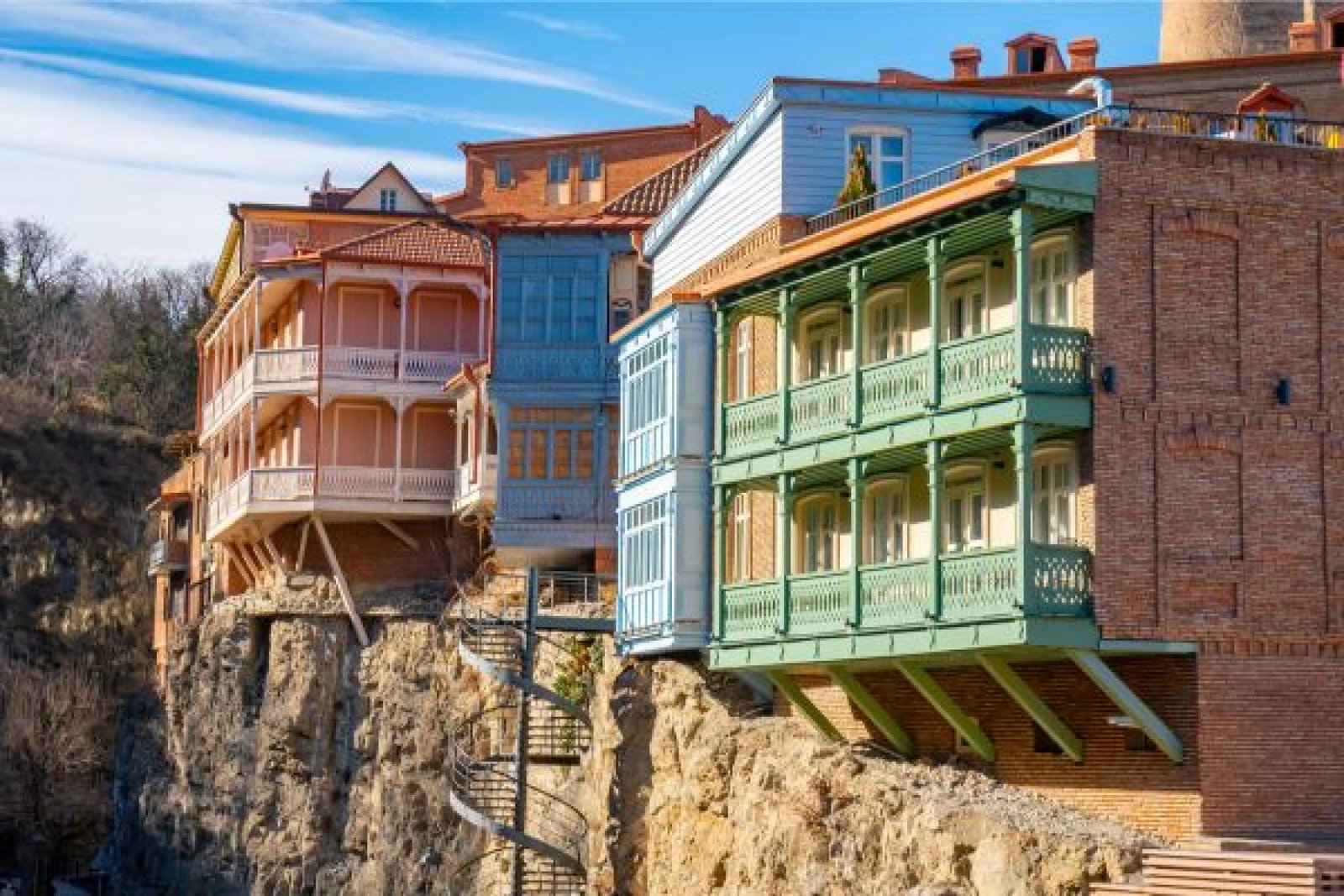
The old town is the main draw. I start in popular Abanotubani district passing brick domed thermal baths then pomegranate juice sellers in a gorge overhung by carved balconies.
Later, I formally meet khinkali at Kiketi Farm, kneading and rolling dough then pleating the dumplings into shape in a cooking class. Under an hour from Tbilisi, this former collective farm hosts guests in vintage greenhouse dining rooms and relocated traditional Oda house accommodation.
The spectacular valley view rolls on for miles, a taster of what could be enjoyed in the Caucusus Mountains. I drink it in along with my first of Georgia’s famous wines. The country still ages many in earthenware pots called qvevris sunk into the ground, a Unesco-listed 8,000-year-old method.
Back in Tbilisi I criss-cross backstreets enjoying 19th century enclosed wooden balconies, and courtyards strung with washing and grapevines.
After browsing a cellar bazaar, I arrive at Rezo Gabriadze puppet theatre just as an angel chimes the hour on its Dr Seuss-style crooked clock tower. My luck holds when I slip into a church on vertiginous Betlemi Steps and find myself among a congregation of four. A woman chants under a priest’s direction as my eyes adjust to colourful, candlelit frescoes.
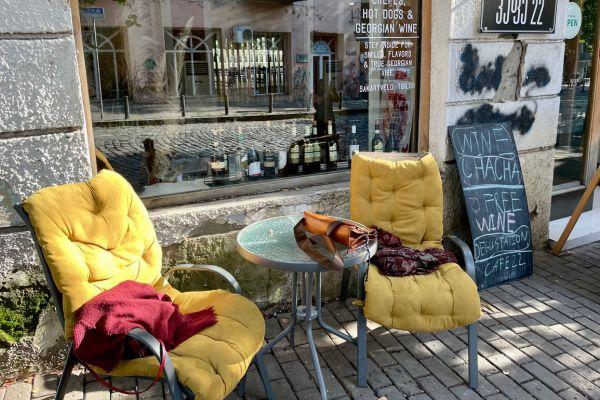
For secular pitstops, there’s coffee and wine to enjoy in heritage buildings and cellars or, beyond the old town, the bar-lined courtyard at Fabrika, a street art-covered former Soviet sewing factory.
Exploring beyond Old Tbilisi
easyJet introduced Luton-Tbilisi flights in April. UK country manager Kevin Doyle says: “Tbilisi was previously unserved with a direct route from London and with its welcoming hospitality and unique local cuisine and wine tourism, as well as being a new, great value frontier for European ski, we saw growing demand from both leisure and business travellers.”
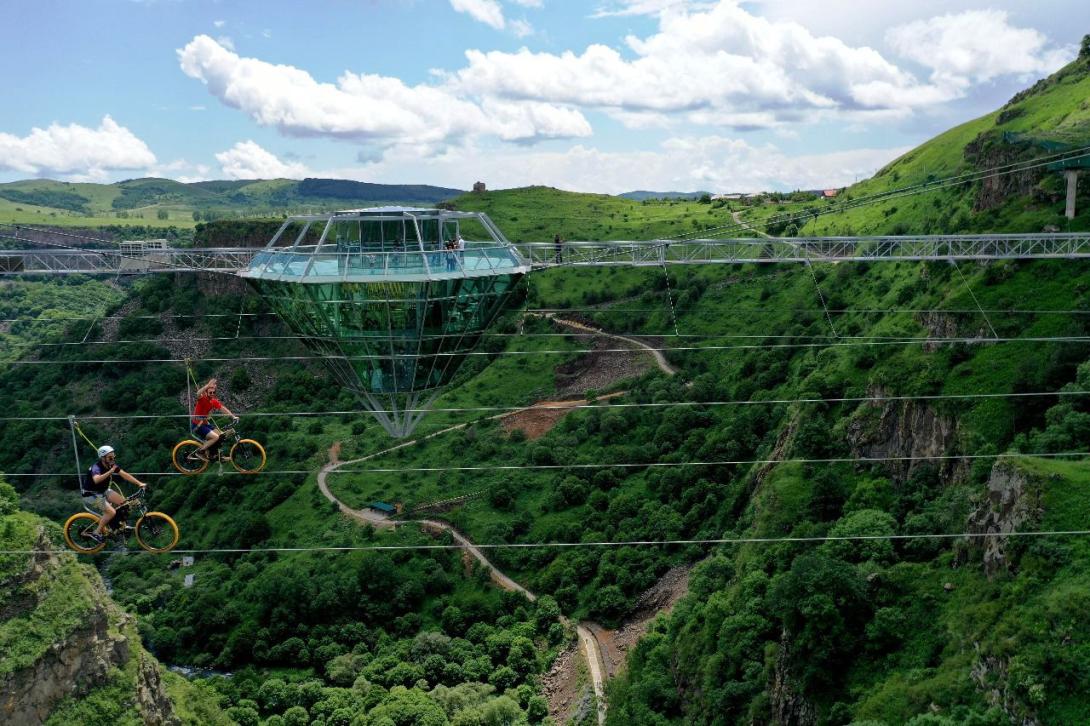
While Georgia is relatively undiscovered by Brits it already attracts Asian coach parties, something to factor in at the most popular sites. These include Tsalka Canyon, which since 2022 has been spanned by the Diamond Bridge, a glass-floored, selfie-lover’s dream with a bike zipline alongside.
‘Qvevri or shepherd hole?’ I test myself as, the next day, buffeted by winds I roam Uplistsikhe Caves, a very different human-adapted landscape. Our guide, Guro has taught us the shapes of hollows dug into this high plateau’s rock indicate their use either by winemakers or by shepherds protecting fires or themselves from the elements.
From the Iron Age to medieval times, this site of simple carved dwellings was important for Pagans, then Christians. I smile at a dog snoozing beside a pit where animals and humans were kept for sacrifice. A church nearby dates to the 10th century, there are also remains of an apothecary, blacksmith and carved-ceilinged theatre.
The caves, 77kms from Tbilisi and just £4 entry, combine well with Mtskheta, a red-roofed former capital. The medieval Svetitskhoveli Cathedral here was Georgia’s first and is Unesco-listed, its interior an astonishing riot of frescoes, including a towering Jesus. Tombs underfoot inscribed in Arabic, Russian and Georgian indicate the eras it has stood through.
The Uplistsikhe and Mtskheta daytrip route also passes neatly through Gori, birthplace of notorious Soviet dictator Joseph Stalin.
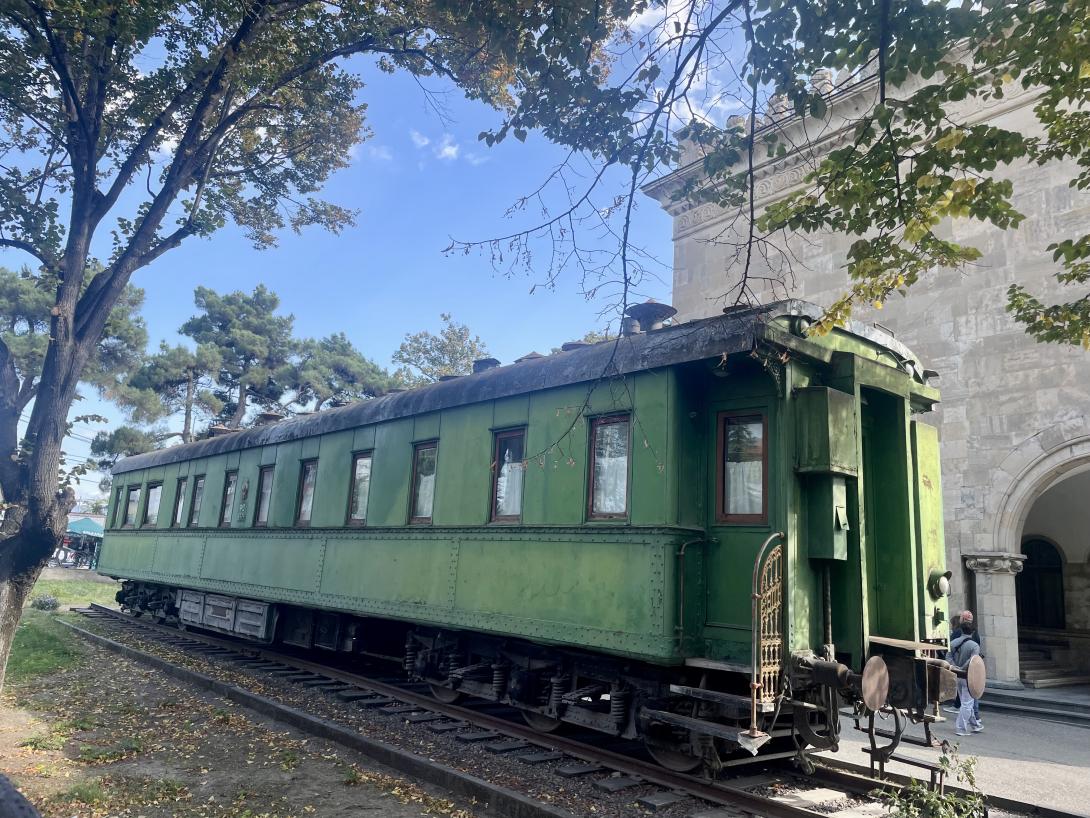
His humble home, protected by a marble pavilion, is closed for restoration but nearby stands the armoured train carriage which transported him to World War II summits. An uncomfortably deferential museum, built in his lifetime, contains personal artefacts. “I’ve been in many times… to use the toilet,” Guro laughs.
The Soviet era casts a long shadow. Returning to Tbilisi, we glimpse a distant army base edging land Russia occupied in 2008. Protests continue over its alleged interference in Georgia’s elections. I see Putin’s name graffitied with swear words.
Georgia’s culture holds strong in its wonderful food. Khachapuri, an oozy circular cheese-stuffed dish that’s part-pie, part-pizza is popular for sharing. Open and boat shaped, khachapuri becomes adjaruli, filled with beans it’s lobiani. Grilled meats feature on many menus alongside salads topped with pickled flowers. And of course, there are khinkali, filled typically with meat or mushrooms.
Best of all, eating out is great value. Even in elegant heritage restaurant Keto & Kote main courses hover under £10 for vegetables, £15 for meat.
Visiting new countries, I often make mental comparisons. As I discover Georgia, the odd sweeping view recalls Uzbekistan. The grapevines twisted over country gates remind me of Moldova. Certainly, the faded grandeur of some Tbilisi back streets suggests Havana. The thin khachapuri dough is like Mexican empanadas, the language sounds vaguely Arabic.
Yet my parallels remain slippery because, I realise, Georgia feels entirely original. That is what makes it exciting.
Book it: easyJet flies Luton-Tbilisi up to twice a week from £137 return. Tbilisi’s main roads are traffic choked so book central hotels like Courtyard by Marriott Tbilisi or stylish Rooms Hotel Tbilisi or those, like the Sheraton Grand Tbilisi Metechi Palace, near metro stops. For more information see georgia.travel.