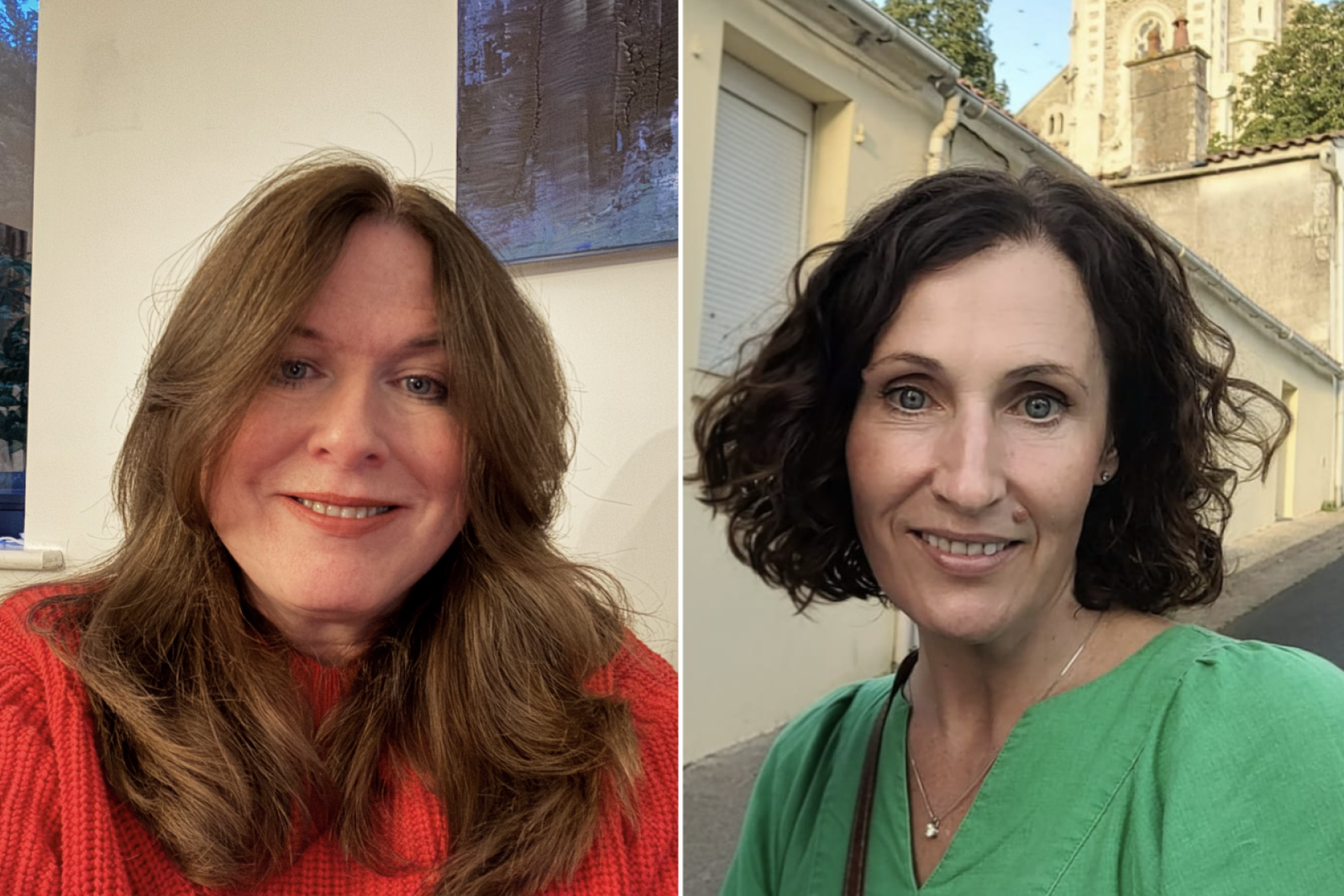
Almost exactly one year ago, Denise Carter was diagnosed with breast cancer.
She first learned that something was wrong en route to Manchester for the Travel Counsellors Annual Conference, when she received a call about the results of a recent mammogram.

Doctors had found signs of cancer in the routine screening, and wanted her to come in for further testing. Surprised but not alarmed, Denise scheduled the appointment for the following week and continued her journey to the event.
“I was not concerned in the slightest,” she told TTG. “I'd had this over the years, so I was just like, ‘Oh, it'll be nothing.’ I didn't give it a second thought.”
It wasn’t until the Midlands-based agent attended the follow-up screening, which involved both an ultrasound and a biopsy, that she began to worry.
“I saw the radiographer's face and asked, ‘Is this something I need to be concerned about?’ She replied: ‘I think it's cancer.’”
A week later, the news was confirmed. Denise had Stage 1 cancer and would need surgery to prevent the disease from spreading to her lymph nodes.
She was offered surgery on 24 December, but, having been assured the tumour was unlikely to progress rapidly, she decided to reschedule the operation for the New Year.
“I thought, ‘If I do this on Christmas Eve, I ruin Christmas for everybody’,” she admitted. “I also wasn’t ready to tell my son.”
One person Denise did tell, however, was best friend and fellow Travel Counsellor, Sarah Jennings.
Having both joined the company in March 2020, the pair have grown extremely close and today, despite living more than two hours apart, they talk “all the time.”
It was a no-brainer, Sarah says, that she’d be there for Denise throughout her treatment.
In the weeks following the surgery, Sarah took care of everything her friend needed – from managing enquiries for luxury holidays to basic administrative tasks. This also saved Denise from having to inform clients of her cancer, something she feared might deter them from booking.
“I didn't want word to get around, in case people thought, ‘Don't bother her with your holidays’,” she said. “Sarah could do the work in the background, which meant people didn’t need to know.
“We also have access to each other's systems [on Phenix], so we could jump in and out whenever we need to sort something.”
Denise added that Sarah’s support was essential to her mental wellbeing during this time, as it allowed her to continue working on her business without feeling overwhelmed.
“It was a great distraction,” she said. “I wanted to be busy and not have time to sit around and think too much about my cancer.”
After recovering from the operation, Denise was given the all-clear. Doctors confirmed that the cancer hadn’t spread to her lymph nodes and that, aside from precautionary radiotherapy the following May, she wouldn’t need any further treatment.
“It was an ‘Open the Champagne’ moment!” Denise recalled. “I was also pretty positive throughout, if I’m honest. I had a good feeling everything would be okay.”
Sarah's diagnosis
Unfortunately, the celebrations were cut short when, in April of this year, Sarah found out she, too, had breast cancer.
Like Denise, it was a routine mammogram (offered every three years to women aged between 50 and 71) that detected the abnormality.
But unlike Denise, Sarah was far less optimistic about her prognosis.
“I panicked straight away and thought something's not right,” she told TTG. Further tests revealed that Sarah had DCIS (ductal carcinoma in situ) cancer, and that it had aggressively spread about 9cm across her breast. She went on to have a mastectomy, which was immediately followed by a breast reconstruction using fat tissue from her abdomen.
“It was quite an invasive operation, it lasted about eight hours,” she recalled. “I was feeling like pants for quite a while after.”
Three weeks on from surgery, Sarah was told the positive news that the cancer hadn’t travelled to her lymph nodes. She remains cautiously optimistic, however, knowing well that recovery from the illness isn’t always linear.
“I didn’t really celebrate,” she said. “I was happy, but I suppose I just have that underlying feeling of, ‘I’ve got another breast’.” Sarah also still struggles with mobility in her arms, shoulders and chest, and has concerns over the risks of not taking hormone blockers (which starve cancer cells of the hormones they need to grow).
“I know that the side effects can be horrible, but then there’s an element of me that’s like, ‘If I was on them, I wouldn’t have any estrogen.”
Sarah also said that Denise was integral to keeping her spirits lifted during this difficult period.
Not only did Denise step in to handle her bookings, but she also provided a much-needed emotional booster on those darker days.
“We’d start off chatting on the phone feeling fed up and rubbish,” Sarah said. “But by the end of it, we’d have managed to laugh ourselves out of it.”
Denise echoed this sentiment, noting that although Travel Counsellors offers a cancer support group, she prefers to turn to Sarah for reassurance: “She’s my counsellor!”
Get screened
Denise and Sarah hope that, by sharing their story, they will encourage others to attend their screenings – regardless of whether they have a family history of breast cancer.
It’s also crucial to remember that not all people will have symptoms; many breast cancers are detected on a routine mammogram without any visible or palpable signs.
“I didn’t even have a lump or tumour,” said Sarah. “It just showed up on the X-ray as a white line that went across the breast. I didn’t feel anything, and I wouldn’t have felt anything.”
Nearly 36% of invited women in England didn’t attend their breast cancer screenings between 2022 and 2023, equating to roughly one million missing out on potentially life-saving checks.
“I think there's a lot of fear, while other people don't think it's going to affect them,” Sarah added. “But it could happen to anybody. So that's why it's so important to get screened.”
Having survived an incredibly tough year, the Travel Counsellors duo are now ready to leave behind the past 12 months and start anew in January.
“Last year, we didn't know what was ahead of us,” Denise said. “But here we both are today: Loving life again.”
Sarah, too, is ready for a fresh start: “I sometimes can’t quite believe all that's happened in the space of a year. But I’m looking forward to 2026. Hopefully there will be no drama!”
Agents who need support are urged to contact Abta Lifeline. In a statement the charity said it supports travel industry employees “through life’s unexpected twists – illness, redundancy, relationship breakdown, bereavement, and many other difficult situations”.
It offers practical, financial, and emotional assistance to travel industry colleagues who are really struggling, giving them the help they need, when they need it most.
Those who do use it can rely on complete discretion and total confidentiality.
For more information contact lifeline@abtalifeline.org.uk
To find your nearest breast cancer screening service, visit https://www.nhs.uk/service-search/other-health-services/breast-screening-services
For more information on breast cancer, visit https://www.nhs.uk/conditions/breast-cancer-in-women