Gazing out over Tbilisi from my vantage point in Mtatsminda Park, I’m struck by the many mountains surrounding the city.
Georgia’s capital sits in a gorge created millennia ago by the Kura River, which now runs through the city centre.
With new direct flights to Tbilisi and the opening of a new luxury hotel, there’s never been a better time for agents to get to know more about this gem of the Caucasus region.
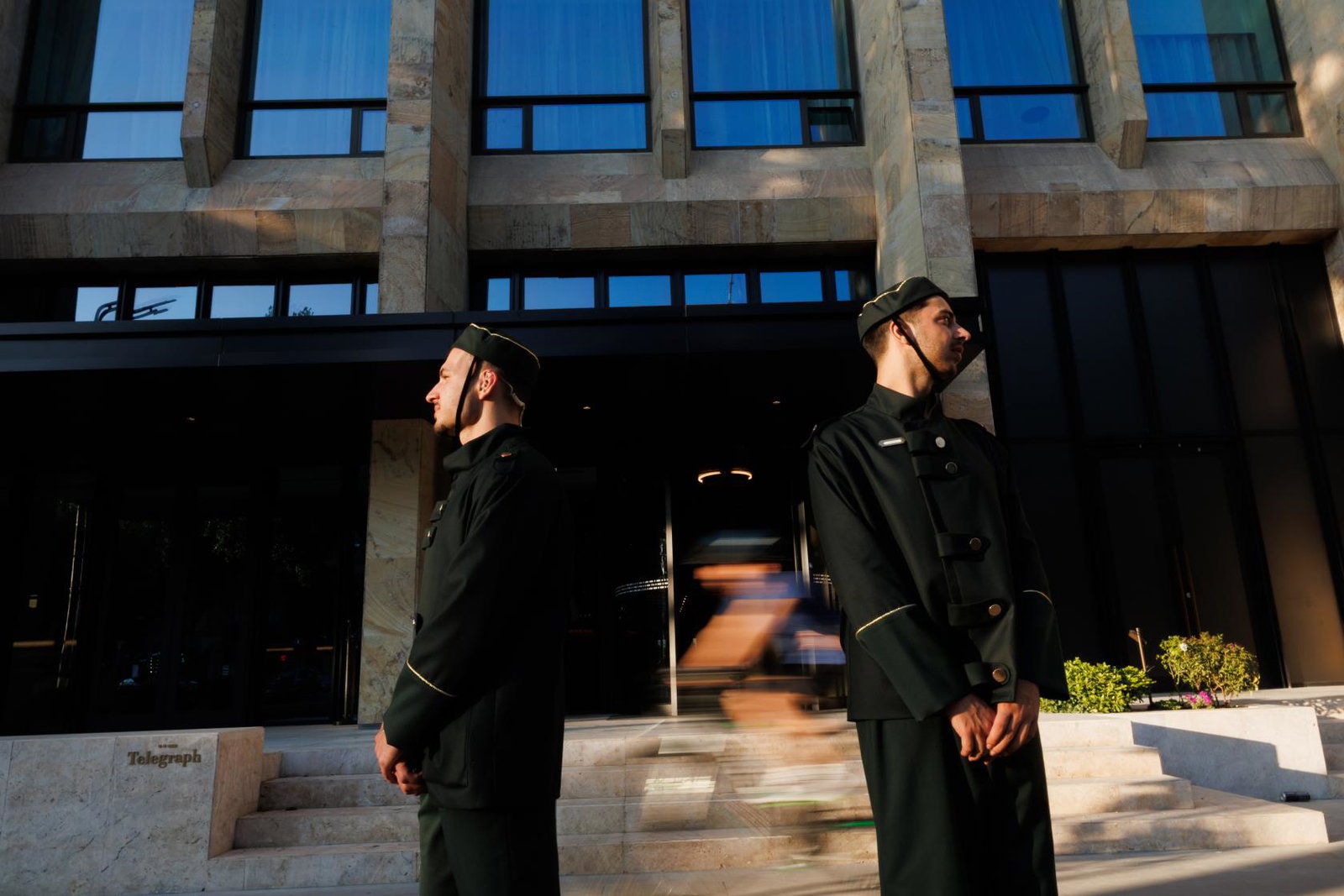
The Telegraph Hotel is the first hotel in Georgia to join Leading Hotels of the World
Gazing out over Tbilisi from my vantage point in Mtatsminda Park, I’m struck by the many mountains surrounding the city.
Georgia’s capital sits in a gorge created millennia ago by the Kura River, which now runs through the city centre.
Get unlimited access to the latest travel industry news and analysis, comment on articles and sign up to newsletters.
Register for free
Already registered? Login here or below.
Having difficulty logging in? Try these tips, or contact support@ttgmedia.com
With new direct flights to Tbilisi and the opening of a new luxury hotel, there’s never been a better time for agents to get to know more about this gem of the Caucasus region.
The Telegraph Hotel is the first hotel in Georgia to join Leading Hotels of the World
Gazing out over Tbilisi from my vantage point in Mtatsminda Park, I’m struck by the many mountains surrounding the city.
Georgia’s capital sits in a gorge created millennia ago by the Kura River, which now runs through the city centre.
And while many Georgians feel most at home in the mountains, Tbilisi itself is becoming a very attractive and increasingly fashionable place to spend a few days.
From up on high, I spot a mix of churches, soaring, modernist, steel-and-glass office blocks, and low-slung, angular buildings, testament to the country’s past rule under the Soviet Union.
And at the park itself, reached by an exciting, if brief, cable car journey, local families are enjoying its many amusements, which include a Ferris wheel, carousels, shooting galleries and even a water slide.
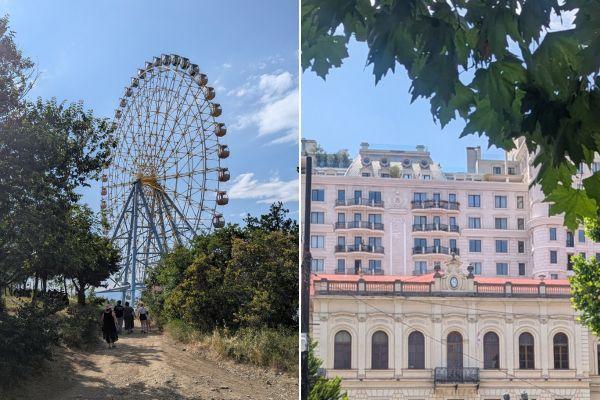
Mtatsminda Park's ferris wheel, left, and right, Tbilisi's striking architecture. (Credit: Laura Millar).
Interest in the city, and the wider region, has been growing of late, thanks to the recent launch in April this year of direct flights from the UK by both British Airways and easyJet, which has made it a much more accessible place.
In addition, Georgia’s Tourism Strategy 2025 is focused on driving sustainable growth to the country, focusing on cultural preservation, eco-tourism and infrastructure development.
Recent figures show a rise in international visitors to the country of 37% between 2022 and 2024, and new luxury hotels are springing up all over the place in response to this spurt, including the one I’m staying in – The Telegraph.
Opened this June in the city’s historic former post and telegraph office, the hotel site on the elegant, tree-lined Rustaveli Avenue and is a must for architecture fans. Not only that, it now has the lofty title of becoming the first Leading Hotels of the World member in the Caucasus.
Originally designed in the 1970s, from the outside the building is a magnificent example of Brutalism, and its original facade, clad in honey-hued tuff quarried from the country’s Bonisi region, has been perfectly preserved.
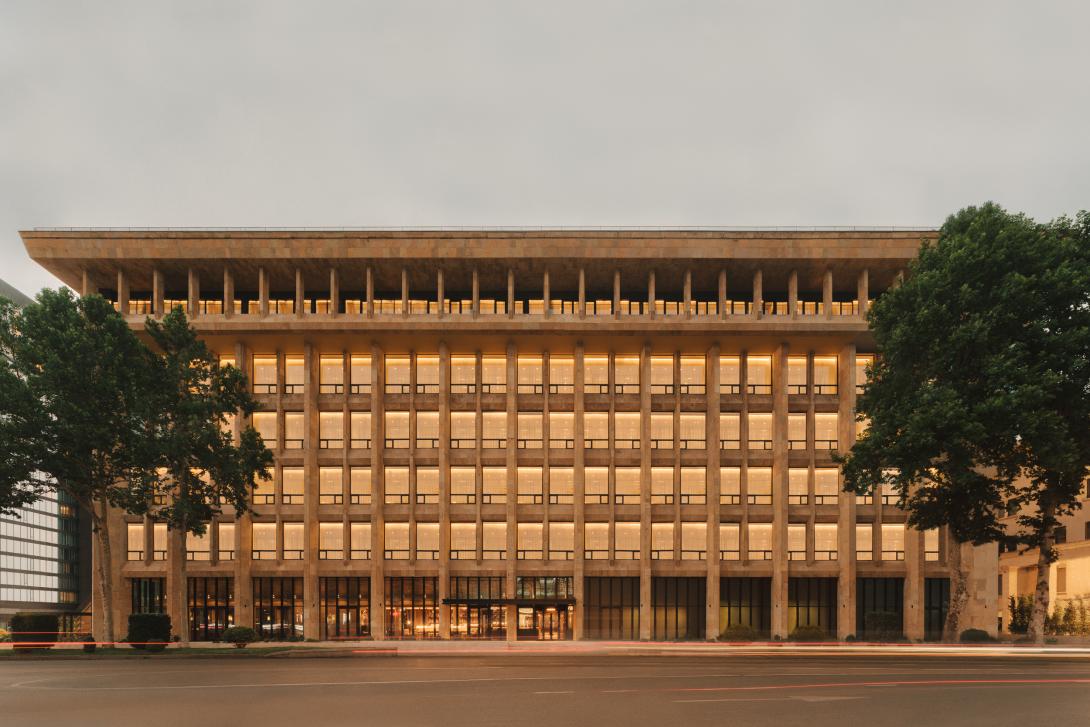
The Telegraph Hotel in Tbilisi occupies the city's former telegraph and central post office.
Inside, the six-storey structure has been completely revamped by Shanghai-based design firm, Neri & Hu. Key features have, however, been kept intact, such as the structural concrete pillars in restaurant and bar Bell & Gray.
Floors are arranged around a central courtyard, the atrium space reaching up to a vast skylight in the roof, with greenery draped over the interior ironwork balconies, adding a modernist, New Orleans feel.
There are 239 rooms in nine categories, starting with the generously-sized classic and deluxe, and skyrocketing up to the 600-square-foot presidential suite on the sixth floor, with two bedrooms and a vast wraparound terrace with outdoor jacuzzi that seems made for private parties.
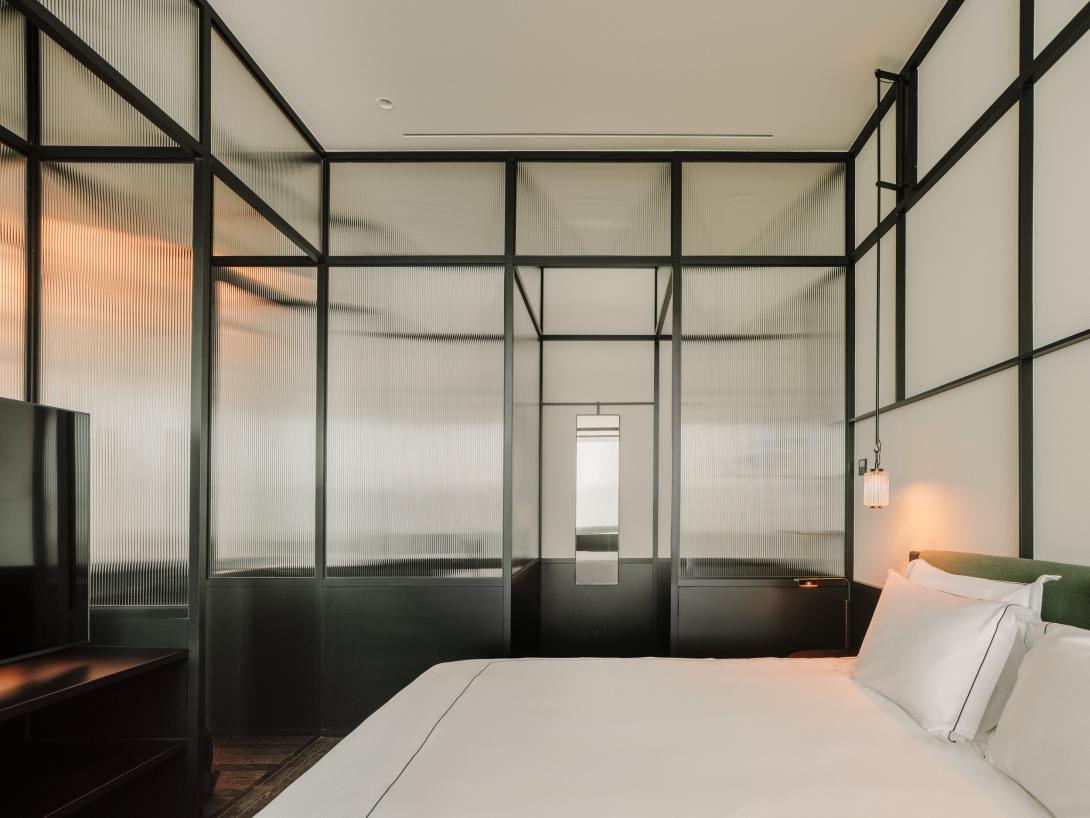
The Telegraph Hotel has 239 rooms across nine categories
Decor throughout the accommodation is largely monochrome, with each differently sized and shaped space partitioned by modular black steel framework and panes of reeded glass (a nod to the private telephone booths which were used in the post office), while deliciously scented Diptyque toiletries uplift the bathrooms.
This is a place guests and locals will zoom in on as a desirable dining destination, given there six different bars and restaurants to choose from.
These include Laan Thai, with a menu overseen by Bangkok-born chef Rose Chalalai Singh, and The Grill, which puts its open-flame cooking to good use on a range of fresh fish, meat and seafood, and there are plans to open more, including a live music bar overseen by the Rolling Stone brand.
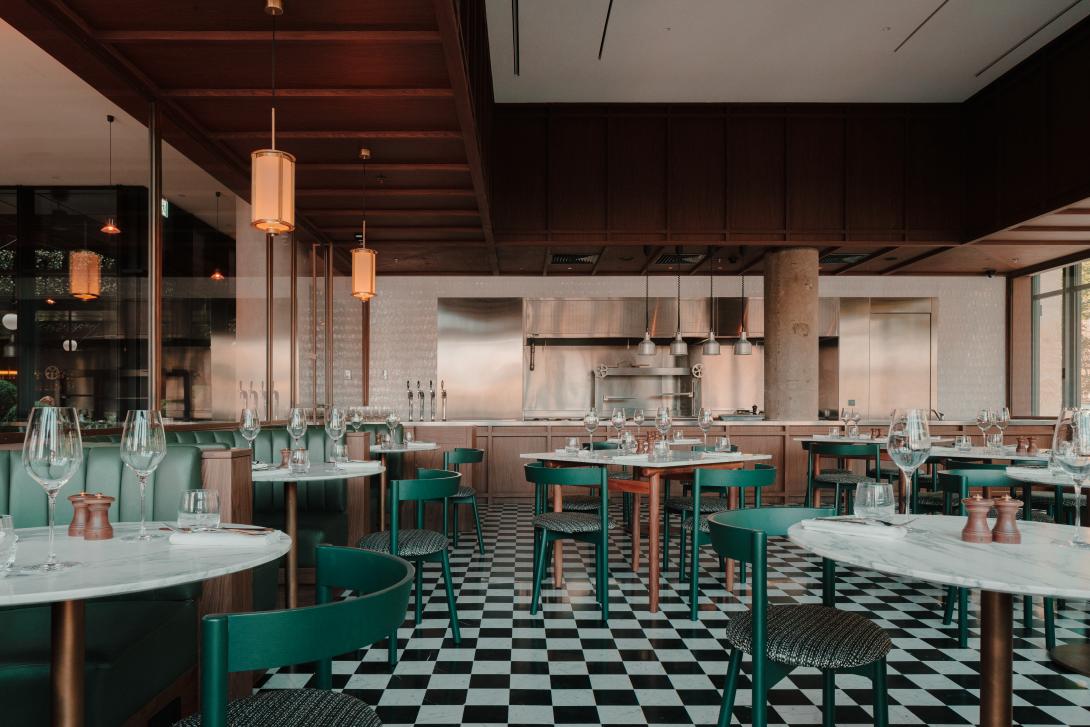
Inspired by classic steakhouses, The Grill serves seafood and meat dishes and open-flame cooking
The hotel is perfectly located for exploring the city, too, with Rustaveli being one of Tbilisi’s main arteries, and lined with dozens of fascinating heritage buildings, such as the Moorish-styled Opera House, which dates from 1851, and the baroque National Gallery.
With my magnificently moustachioed guide Zura, I stroll down to Liberty Square, where a gilded statue of St George – often said to have given the country its name – replaced that of Lenin (removed after Georgia declared independence from the Soviet Union in 1991).
We continue through the city’s charming, narrow streets, towards Gudiashvili Square, one of Tbilisi’s oldest, lined with beautiful, pastel-coloured buildings. From here, there’s a great view up onto a hill crowned with an imposing statue of Mother Georgia.
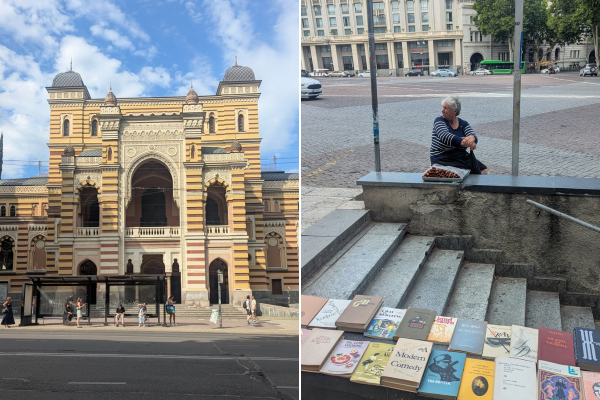
Left, National Opera House of Tbilisi (Credit: Laura Millar)
Further on, we reach the river Kura; on one side sits the ancient Narikala fortress, built in the fourth century, which overlooks the city’s sulphur baths that have harnessed the thermal waters beneath the ground for centuries.
I leave a dip for another time, preferring to explore the range of independent shops, boutiques and wine stores which line the streets on the way back to the hotel.
Wine, it’s believed, was first produced in Georgia 8,000 years ago, and formerly stored in giant clay jars called qvevri.
That evening at the hotel’s Grand Cafe restaurant, I sample some – a dark, rich and velvety red made with saperavi grapes. It’s complex, fascinating, and leaves me wanting more – much like Tbilisi itself.
Rooms at The Telegraph start from £193 per night for a classic king or twin. British Airways flies from Heathrow from £174 return; easyJet flies from Luton from £103.99 one-way.
• Highlight the city’s unique cultural blend: At Europe and Asia's crossroads, Tbilisi fuses Persian, Ottoman, Russian and Georgian influences with striking architecture and rich diversity.
• Promote Tbilisi as great value: Boutique stays, fine dining, bars, and wellness all offer luxury experiences at far lower prices than comparable UK options.
• Emphasise food and wine tourism: Georgia’s ancient winemaking and hearty cuisine shine in wine tastings, marani [wine cellar] visits, and hands-on classes like making khinkali.
• Sell it as an adventure hub: Use Tbilisi as a springboard for trips to Kakheti’s vineyards, Caucasus hikes or ancient cave towns like Uplistsikhe.
• Highlight the city’s cool, creative vibe: Tbilisi attracts younger, digital or style-savvy travellers with its cafes, street art, nightlife and concept stores.
Take our Matchmaking quiz to discover the agencies who are best-suited to your requirements. Select the option that describes your current situation below:
New to travel New to homeworking Travel trade professional Experienced homeworker