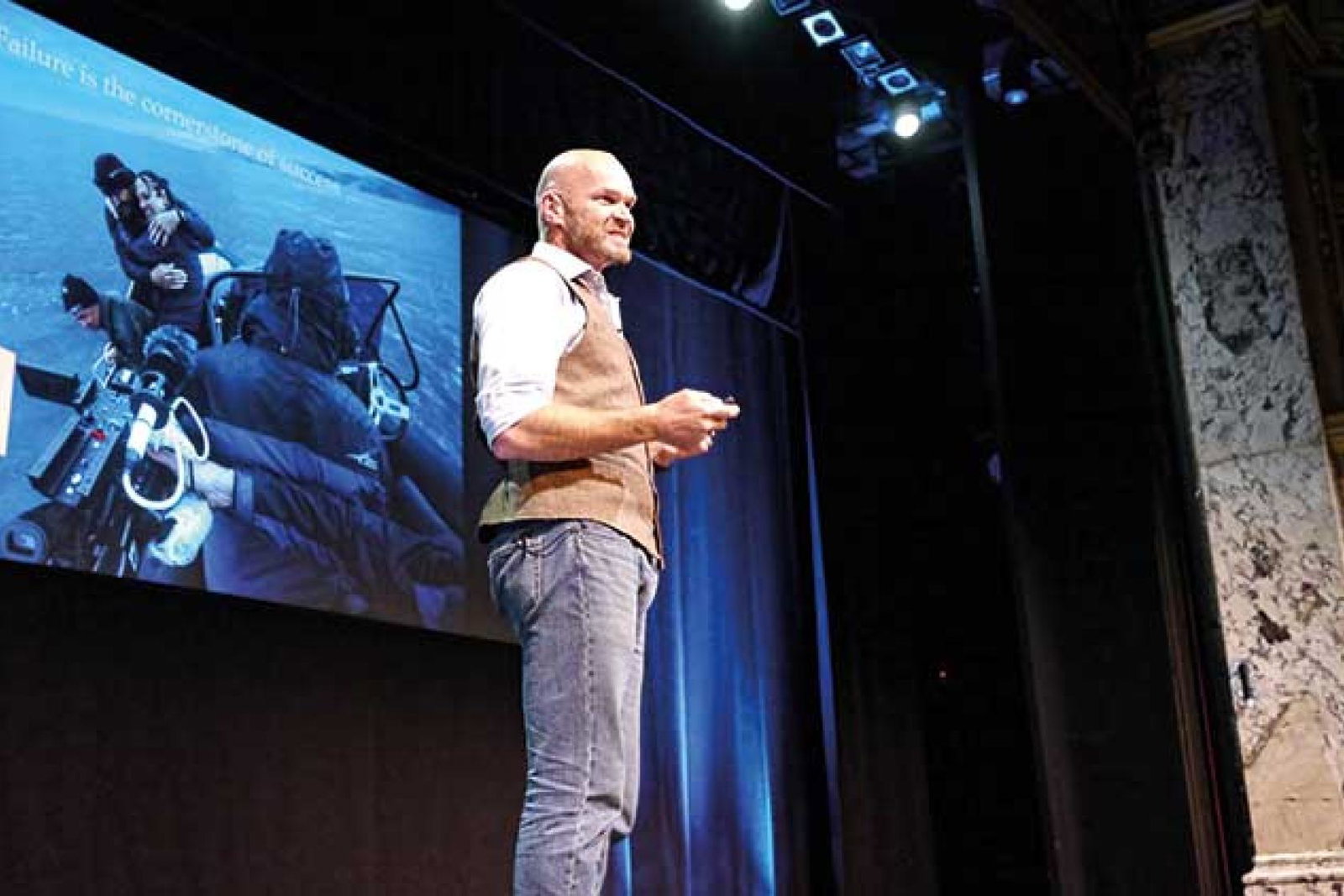
The former Royal Marine was a guest speaker at the new Wildlife & Safari Travel Show, which took place in Harrogate at the end of September.
“There is a groundswell of interest in living more responsibly because of Blue Planet II – it’s almost unprecedented,” he said.
“Twenty years ago it wasn’t high on the list for travellers, but now people want to go to places responsibly, and it’s really important for the enablers of those who go on holiday to play a part. Any agent who ignores the trend is a fool unto themselves.”

The adventurer, who has presented TV series including My Family and The Galapagos, Great Barrier Reef, Lost Worlds and Monty Halls’ Great Escape, said that by selling wildlife tourism, travel companies can make a significant contribution to conservation.
“There is a very good conservation argument for taking tourists to some of the most remote and delicate ecosystems around the world – to create ambassadors for those places and give that wildlife value,” he said.
“Travel companies can also do a huge amount to support local conservation work through funding and logistical support,” he added.
“There can be a very happy marriage between the two. That’s the future, I think.”
With children critical to the future of our planet, he said, travel agents should focus especially on encouraging families to take nature-based breaks.
“We think kids need theme parks and indoor ski-slopes to have fun, but all they really need is a beach or a forest and the opportunity to come back covered in mud.
“I’ve seen it time and time again with children; put them in the wild and, regardless of upbringing and background, they simply come alive.”
However, Halls – who is president of the Galapagos Conservation Trust – sounded a warning note about tourism to the Galapagos, where annual visitor numbers have risen from the 8,000 per year limit set in 1978 when the national park was created, to 220,000 per year currently.
“It’s not so much the volume of visitors, it’s that the style of travel is changing. The Galapagos used to be visited only by the well-off, staying on a boat or in one hotel, but now it’s really opened up to backpackers, hopping between the islands, which has increased the dissemination of invasive species into the islands and between the islands,” he said.
“[Backpackers] have just as much right to visit, of course, but invasive species is the number-one threat facing the Galapagos. I’m not saying don’t go, but visit responsibly.”