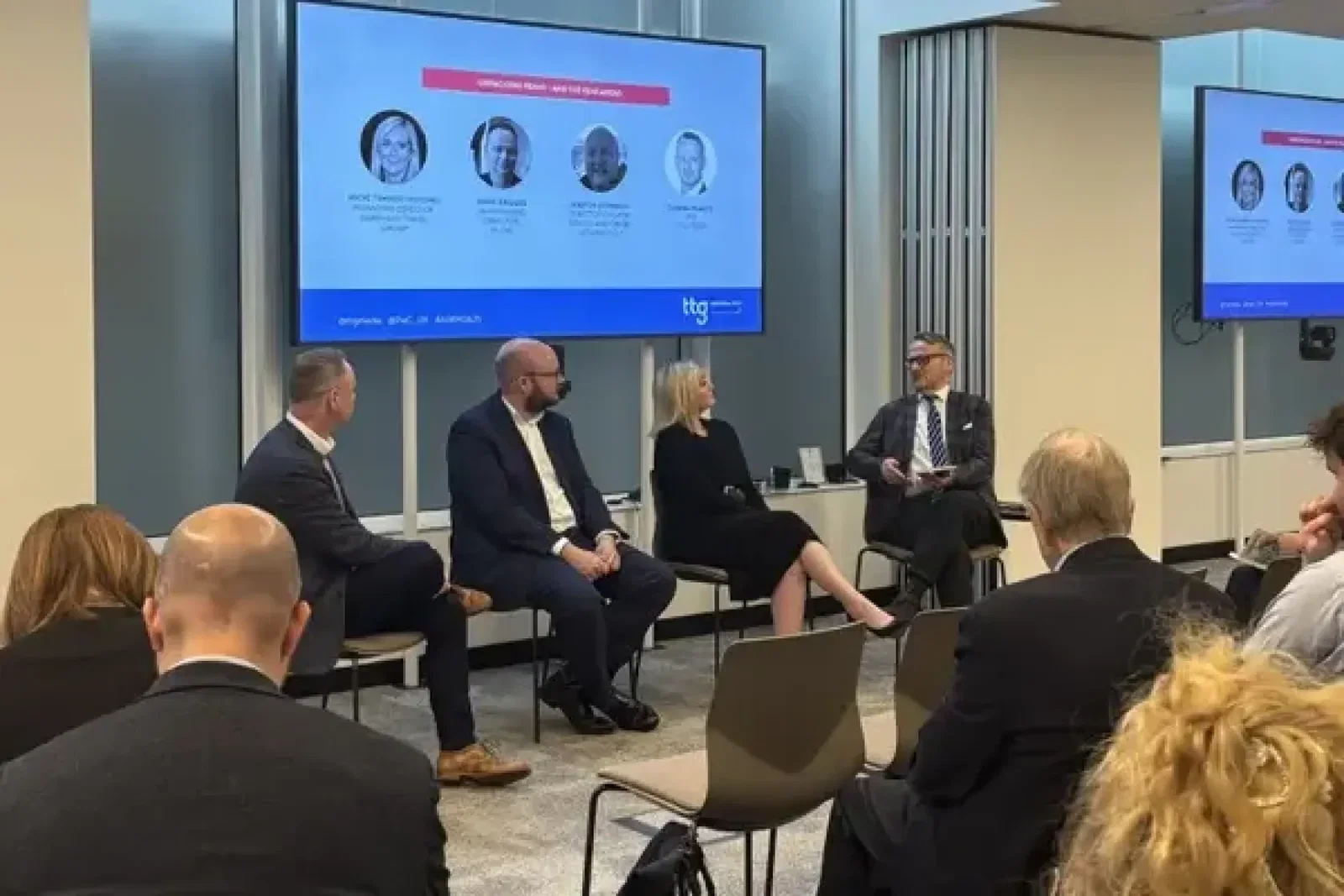
There was broad agreement among the panel that sales had so far been solid and that customers were looking to book more adventurous trips, but they also raised concerns about the impact of a second Donald Trump presidency and the "sameyness" of product options in certain sectors.
So here are four takeaways from the panel discussion exploring some of the challenges the travel trade looks set to face over the coming months and in the rest of the year ahead.
Peaks performance solid, albeit ’as expected’
The panel agreed sales had been strong in January and February, while noting growth had been largely in line with expectations.
Martin Johnson, director of specialist operators Latin Routes and Polar Routes, said while there had been “some spectacular weeks and some unspectacular weeks”, his brands had still enjoyed year-on-year growth in January and February.
“It is double-digit [growth], but we’re a growing business so that’s probably in line with where we would expect to be,” he added.
Mark Duguid, Kuoni’s UK managing director, said the operator had enjoyed “a consistent run” in the early months of the year, when Kuoni was running above-the-line marketing activity, but that sales had dropped off in March when it reverted to digital marketing alone.
Barrhead Travel Group managing director Nicki Tempest-Mitchell shared how the Scottish independent had experienced a “really good peaks", albeit one "not without its challenges”. She said January and February sales typically make up around third of annual revenue, adding the business was heading towards double-digit growth this year.
Long-haul and more adventurous breaks are back
Barrhead Travel saw long-haul destinations such as Barbados grow this year, but also witnessed a significant resurgence in demand for mid-haul destinations such as Morocco and the Red Sea.
“After the pandemic, people were staying closer to home, with destinations like Spain being a bit of a comfort blanket, but now the mid-haul piece is really strengthening,” said Tempest-Mitchell. “Customers are a little more adventurous, going further afield, and willing to pay more for that.”
After healthy growth in touring and adventure sales last year, +40%, Tempest-Mitchell added that trajectory had also continued into 2025 for Barrhead.
For Latin Routes, the core destinations of Argentina, Brazil and Chile remained the top-sellers, but Johnson said Peru was back “with a bang” after several difficult years, and that customers were wanting “something a bit different” even within those core destinations.
Kuoni’s Duguid said growth in Africa and the Far East - alongside Kuoni’s top-selling region of the Indian Ocean - had driven up booking values and margins this year. “We have also seen increased demand for more experiential and tailor-made trips, but that’s also been our business strategy,” he noted.
US selling well, but Trump impacting supply chains
Duguid revealed the region seeing the biggest growth for Kuoni this year – somewhat surprisingly – is North America. “That’s even since the new president,” he pointed out. “I’m surprised it has been as robust as it has."
Tempest-Mitchell agreed the US was up, with customers increasingly likely to venture beyond city hotspots like New York. She said multi-centre trips and destinations such as Memphis and Nashville were proving popular.
However, Duguid warned some parts of the industry were already experiencing wider repercussions of President Trump’s controversial administration. “The US is not a source market for Kuoni, but we’re starting to hear of ripple effects through the supply chain,” he explained.
Cruise lines heavily reliant on the US market have seen the economic uncertainty in the States reflected in real-time trading, he said, while the Caribbean is also apprehensive. “Our Caribbean partners are engaging with us in a way we’ve never seen before - they’re nervous about their North American market,” he added.
Customers – and agents – want differentiated product
Latin Routes has tapped into demand for exclusive experiences by building differentiated product, including a preferred hotels list to ensure exclusive benefits for its customers. “It’s those tangible extra bits that help us demonstrate value to our clients,” Johnson explained. “Clients want it to feel tailor-made and not the same holiday their friends took last year.”
Johnson and Tempest-Mitchell agreed that in certain sectors, there are lots of brands offering a very similar thing. “In expedition cruise, there’s been an issue with lots of companies having ships of 150-200 capacity, and going to the same places,” Johnson reported.
However, Johnson continued: “But the ones that are starting to thrive now have strong USPs, whether that’s the size of their ships, them doing something innovative onboard or going to unusual places. Our clients are really buying into that."
River cruise faces a similar problem, said Tempest-Mitchell. “A lot of river cruises look very similar,” she admitted. “We need the brands to be clearly labelled for us as travel agents, then we can be really clear with our customers [about which suits who]”.
Johnson underlined that a brand’s USPs don’t have to be “big and flashy”. “It can be as simple as communicating who is the product for, and who is it not for," he said. "Then as soon as you get that enquiry, you can match the product."