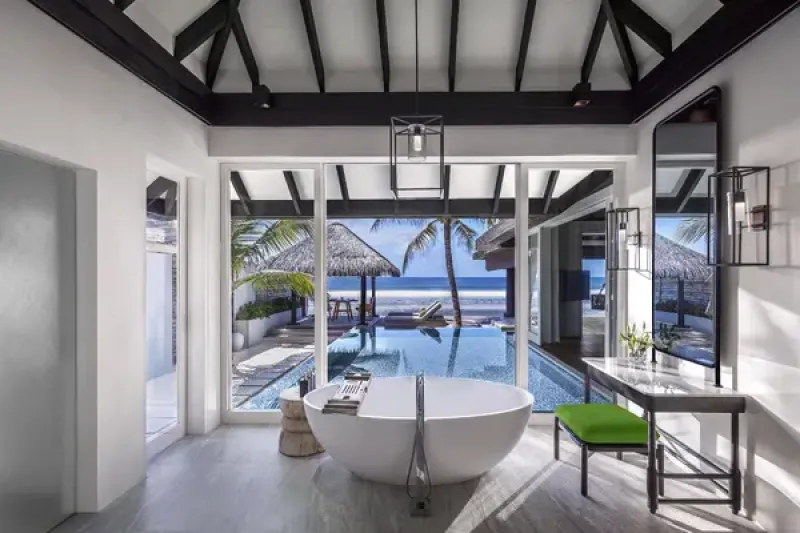
It’s 10 pm in the Jo Loves House, Naladhu Private Island Maldives. I’m up to my neck in a deliciously zingy Jo Loves Green Orange and Coriander fragranced bubble bath, having just enjoyed an evening of similarly flavoured cocktails and canapés. Maybe it’s because I’m three Jo Loves spritzers in – prosecco, bergamot, and green olive – but I’m feeling wonderfully fruity. Better chuck those coriander green scatter cushions off the bed, husband...
The first resort globally to offer the luxury scent brand’s Green Orange and Coriander amenities, Naladhu has celebrated by transforming one of its villas into a one-off Jo Loves House. A novel twist on the industry’s flirtation with fragrance, the linked package includes products, themed treats and activities.
Elsewhere, luxury hotels are increasingly utilising bespoke ‘signature scents’ to set mood, enhance guest experience, and boost brand recognition and recall. But how can a mere aroma achieve so much?
“Our sense of smell is processed in the primary olfactory cortex – the exact part of the brain that processes emotions and creates emotional memories through learning and associations. No other sense has this direct, unique link to these structures,” explains neuroscientist and expert in the psychological science of scent, Rachel Herz. “That’s why smell has such a distinctive emotional and evocative quality; it’s unlike any of our other senses.
“Although we’re born with a fully functioning sense of smell, our emotional responses to individual scents aren’t inbuilt, but learned, based on personal experience. Crucially, it’s our first exposure to a smell, combined with our experience at that time, that typically determines how we’ll respond to it in the future. It’s those first associations that are most strongly imprinted in the brain. They can only be overwritten if a later association has more emotional significance.
“If a hotel’s signature scent is initially experienced alongside those other elements that make a hotel feel immediately special – a friendly doorman, a beautiful lobby etc – the scent will imprint an instantly recognisable, positive, and memorable association,” Herz continues. “Vitally, that scent must be unique to the hotel/brand, so something guests haven’t smelt elsewhere – yet not so utterly alien or at odds with its surroundings that it’s unsettling. Additionally, if a chain wants to create a brand through its scent, it must use it consistently across its hotels. If it’s just creating ambience, it doesn’t.”
Mina Vardar, vice-president of brands at Langham Hospital Group, agrees: “Scent is one of the first details guests experience upon entering our hotels, and it’s part of their memory long after they’ve departed. Our Ginger Flower fragrance is more than a scent – it’s an integral part of The Langham’s identity,” Vardar explains. “Its use across all properties is key to creating that emotional connection and instant brand recognition.”
CAPTURING A BRAND’S CHARACTER THROUGH SCENT
Leading scent marketing agency Air Aroma has been designing custom fragrances for more than 25 years, for clients including The Langham Hotels and Resorts, Capella Hotels and Resorts, Ritz-Carlton, Four Seasons Hotels and Resorts, Sofitel Hotels and Resorts, Fairmont Hotels & Resorts, IHG Hotels & Resorts, Hyatt Hotels, and The Savoy.
“We translate a brand into a unique, inviting olfactory logo that encourages guests to return,” explains Lara Baker, marketing manager. “The collaborative process starts with an in-depth brand analysis that examines everything from a brand’s interior design to its targeted audience and how it wants guests to feel. Next, we create a scent design brief detailing the fragrance families, characteristics, and overall vibe we’re seeking. From this, our in-house perfumers create several scents from scratch – essentially painting a picture with scent, it’s just the most exciting thing!
“Creating a universally pleasing scent isn’t easy; fragrance is subjective, and clients’ personal preferences may not align with what’s best for their brand. The safest scent notes of white and green tea and citrus are popular in hotels worldwide (although citrus must be carefully blended to avoid the cleaning product effect).
“But for a truly memorable scent, it pays to take risks: for The Standard Hotels, we used unusual notes of pepper and raw earth to really pique the senses.”
Air Aroma’s comprehensive service includes scent production and on-site installation utilising its patented cold air diffusion technology, along with ongoing supply and maintenance on a contractual basis.
“It’s important to ensure the perfect ‘subtle but noticeable’ strength,” says Baker. “Guests should appreciate the scent almost subconsciously, but still get that ‘Wow, I feel so special’ sensation, the minute they enter the lobby.”
Whether developed by a master perfumier, iconic fragrance brand, or scent agency, that wow factor doesn’t come cheap. (Air Aroma’s scent development starts at $5,000, while monthly project costs range from $100 to $10,000, depending on complexity.) However, sales of signature-scented products, like room sprays or toiletries, can yield a significant ROI while boosting brand awareness. Baker’s clients typically earn $30K per hotel annually from candles alone, while EDITION hotels’ collaboration with Le Labo is so coveted that even ‘unused’ bathroom amenities fly off eBay.
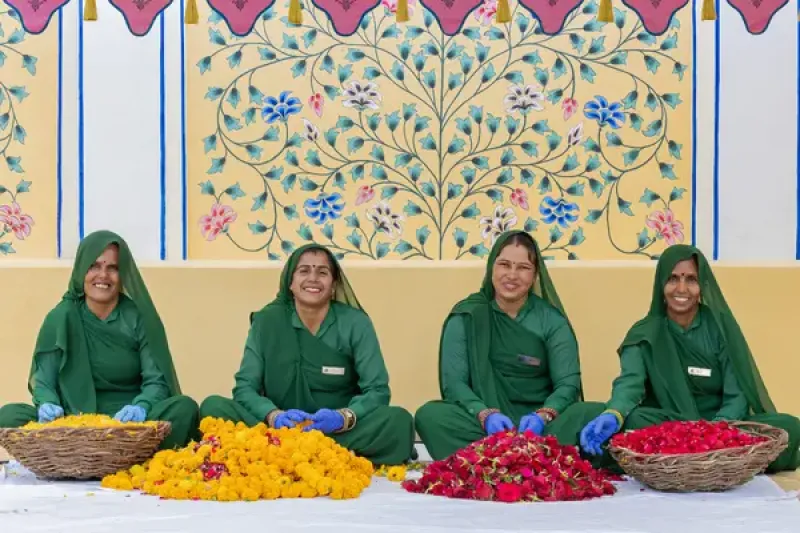
Conversely, scents offer an opportunity to give back. Made entirely from ingredients sourced directly from small independent farms, Fairmont’s Classic Black and Iconic White fragrances are the world’s first sustainable-certified hotel signature scents. In India, The Leela has partnered with Phool – a social enterprise employing over 300 marginalised women – to ‘flowercycle’ its discarded blooms into handcrafted incense infused with its signature fragrance, for use across Leela’s properties. To date, the sustainability initiative has transformed over 2.5 metric tonnes of flowers into incense.
SCENT CAN GIVE A DEEP SENSE OF PLACE
Where fragrance is woven into daily life, inspiration comes easily. La Mamounia’s slightly spicy scent, Dattes, echoes the custom of offering dates to guests. Meanwhile, Royal Mansour Marrakech’s immersive experience involves three signature scents:
“We believe scent is one of the most powerful tools for creating an immediate emotional connection, and as essential as architecture, light, or music in shaping the guest experience,” says PR Manager, Ghita Elfouiri. “Each fragrance is rooted in Moroccan nature and tradition, from bitter orange trees to cedar forests and rose valleys.”
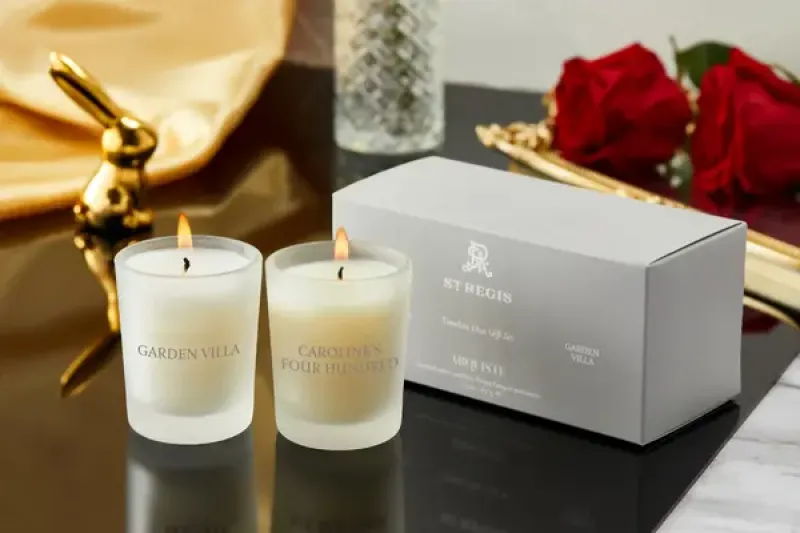
St. Regis’ signature scent features blooms aplenty, too. Inspired by an unforgettable ball held by Caroline Astor (matriarch of the hotel’s founding family), Caroline’s Four Hundred celebrates all the flowers, including American Beauty roses and white lilies, that adorned the ballroom that night.
But it’s not all petals and prettiness. Paris’ Hôtel Dame des Arts captures its Latin Quarter’s surroundings with a smoky, bohemian scent featuring notes of blonde tobacco. And at San Francisco’s Hotel Emblem, the city’s nonconformist history is evoked with a crisp and woody scent reminiscent of fire, cedarwood, moss, birchwood and burning paper.