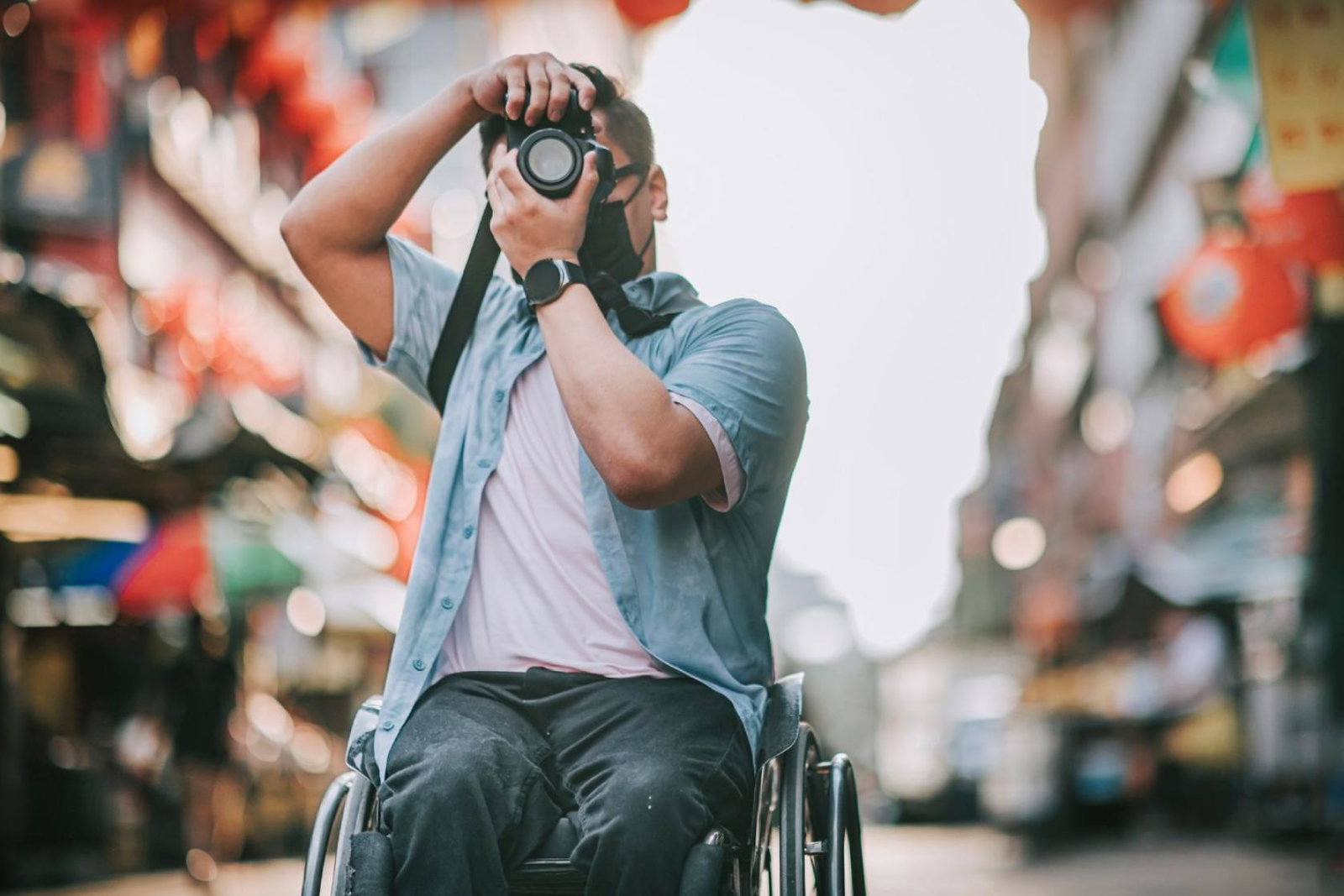
At some stage of our lives, most of us will be affected by some form of disability or health issue which mean that we will require assisted travel support. We all have a vested interest to ensure that all of us can have access to travel and holiday arrangements.
Here at Abta, we want everyone – regardless of circumstance and ability – to be able to travel with confidence and for the experience to be as smooth as possible. However, if you are disabled or have other assisted travel needs, this can turn out to be easier said than done.

Abta has done a lot of work over the years with our members and tourism services in destinations on accessible tourism, and it is a big focus of our work for the coming year.
When we talk about accessibility and assisted travel, we mean looking at both visible and non-visible disabilities – and how it can be considered across the whole customer journey, from planning to enjoying the holiday itself.
Conversations about accessibility often revolve around mobility, which is a very important issue and one where work still needs to be done.
But we also need to make sure other needs are being considered. In February, we’ll hold our annual Accessibility Conference, and I’m really looking forward to hearing from Victoria Boelman from RNID, who will share insights on travel for those who are deaf or have hearing loss.
Focus can't just be aviation
Members are central to our work on accessibility. Over the past 12 months, we’ve brought together a wide range of members to help shape our thinking on assisted travel and look at how we can further develop our existing resources to support members and their customers.
Their feedback was extremely valuable for our involvement in the government’s Aviation Accessibility Task and Finish Group.
Chaired by Baroness Tanni Grey-Thompson, the group brought together experts in accessibility from airports, airlines, tour operators and regulatory bodies with the aim of developing practical and achievable actions for industry, government or the regulator to improve of aviation accessibility.
Through the group, we were able to share insights from members to help inform the conversation. The group concluded in June, with one of the outcomes a new taskforce implementation group, in which Abta is involved.
While the government’s group focused on aviation, for travel to be truly accessible for all, we need to look at it from every angle.
Abta is exploring assisted travel across the whole experience or journey door to door and back again including transport, accommodation (land or sea) and access to facilities, resort areas and taking trips or excursions while you’re away from home.
'Sound business sense'
We’re also discussing assisted travel with destinations and are part of the Spanish Tourist Office expert advisory panel for its "Spain for All” campaign.
We are reviewing all of the current materials we provide members and customers to refresh the content. This is an ongoing project and we’re using feedback from members, specialist stakeholders and people with lived experience to support this vital work.
Members who have an interest in accessible travel are welcome to get in touch to share their thoughts, experiences and feedback.
Catering properly to people’s assisted travel needs also makes sound business sense as disabled persons represent a significant proportion of the public which companies cannot and should not ignore.
As an industry, adopting a proactive and collaborative approach to removing barriers to travel demonstrates our commitment to inclusion, and to sharing the delight of travel as far as possible.
Susan Deer is director of industry relations at Abta.