Hundreds of InteleTravel agents headed to Porto at the weekend to not only find out how their efforts are powering the business's growth, but also to understand the current travel landscape.
Over two days of conference sessions, delegates shared where they are seeing sales success, and heard too about what should be on their radars for 2026 (and beyond) – as well as what's next on the homeworking outfit's agenda.
Sessions also explored some of the dramatic leaps in AI-enabled technology set to power travel over the coming years, current key market trends and the holiday hotspots of the future.

Itinerary builder in the pipeline
The conference was an opportunity for InteleTravel to lay out its stall for the coming year, including some notable uses of AI. These include an in-destination activities offering advisors can promote to their clients.
The tool will allow advisors to promote specific activities or excursions to their clients while they are in destination, with the technology designed to account for weather conditions and who is taking the trip.
Another major development is an itinerary builder, which will allow agents to address their system directly with details of their clients, the type of place they want to visit and the time of year they want to travel.
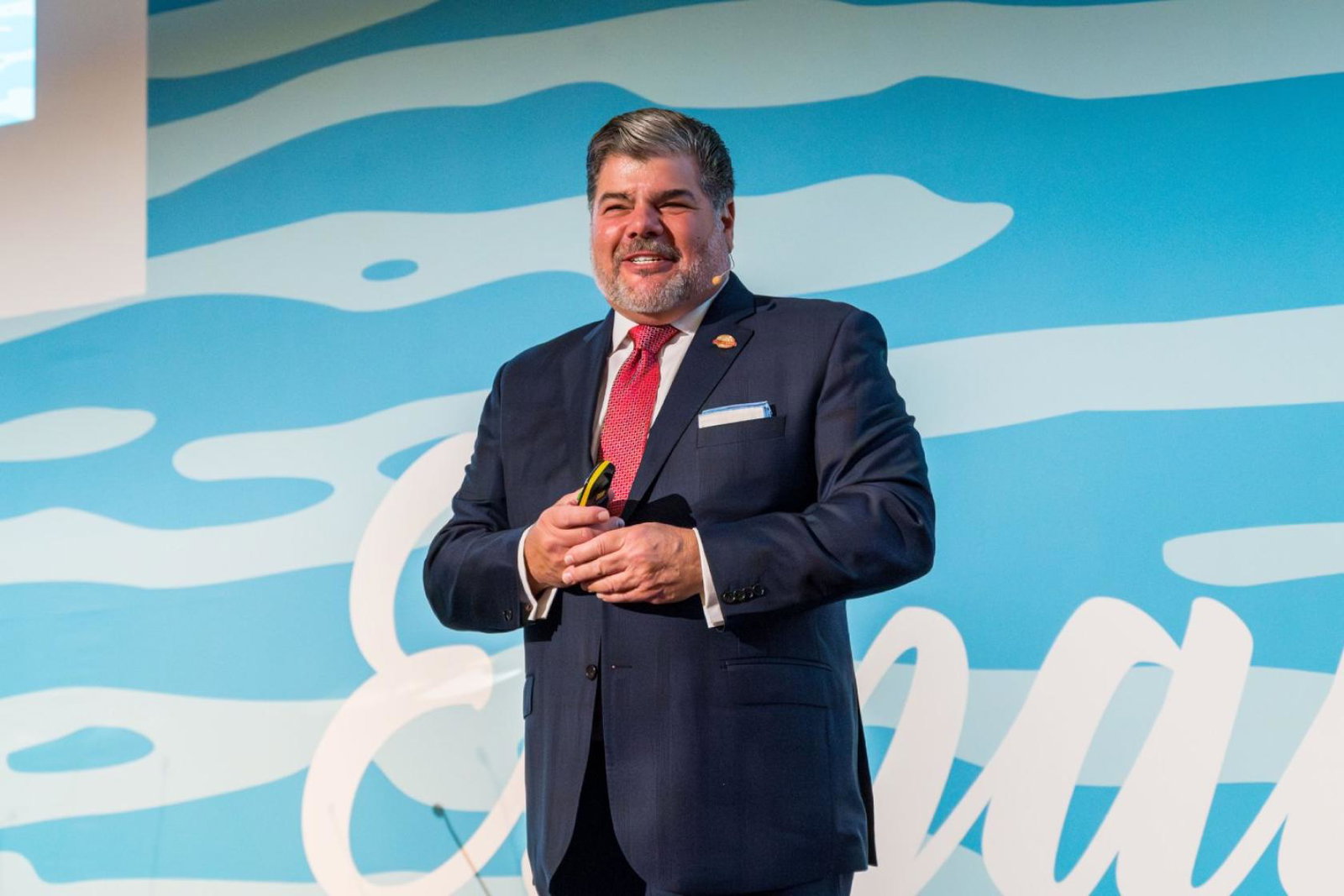
Founder and chief executive James Ferrara told delgates: "Itinerary Builder will do this for you – flights, activities, insurance – in minutes when it might have taken you a day to assemble options for your customers."
He insisted technology "cannot replace you, but can serve you”, adding Itinerary Builder would not become a customer facing product.
Susan Petrillo, InteleTravel's chief information officer, further revealed Itinerary Build would be interactive, allowing agents to go through it with their clients. The platform is being beta-tested by InteleTravel agents in the US, with agents in the UK and Ireland likely to get their hands on it next year.
Ferrara told TTG technology was the “second biggest line item” in InteleTravel’s budgets. “We’re not going to send [agents] out there to tell friends and family they’re a travel advisor and then leave them non-competitive," he said.
"We’re going to make them fiercely competitive and technology plays a big role there, in terms of inventory, pricing and creativity."
New opportunities to package events
InteleTravel plans to start leveraging ticketing platform Tickitto, which it acquired earlier this year and has now fully-integrated into its platform. Tickitto will allow agents to sell event tickets and dynamically package them as part of a holiday.
Founder Dana Lattouf challenged InteleTravel agents to use their next five bookings to start framing holidays as being a vehicle for creating memories for their clients such as "by getting them into a Beyonce concert or a Wimbledon Centre Court experience". She said agents could also "build back" from the kind of experiences clients are looking for.
"It’s a fundamental shift in mindset, but we genuinely believe agents are leaving money on the table," said Lattouf. "There could be 20% to 40% more spent by the customer if the advisor starts by booking the event first.”
InteleTravel agent Gemma Wright was one agent delegate excited about the acquisition, telling TTG she foresaw opportunities to sell more packages based around sporting events. “I love the idea of putting travel together with the events – it’s been a bit of a gap in the market,” she said, adding: “I think InteleTravel are really good at finding those gaps."
'If you're not selling cruise, you're missing out'
Back in the spring, InteleTravel pulled off a recruitment coup when it hired Advantage Travel Partnership chief commercial officer Kelly Cookes as its new commercial director. Cookes, who joined the business in September, highlighted cruise, adventure travel and touring as sectors on the rise.
"Italy is still leading the way in terms of touring, but we’re seeing lots of destinations come through," she said. "And there’s been particular focus on creating more product for solo travellers in this sector."
Luxury travel is another focus for InteleTravel, with Cookes highlighting it as an area ripe for innovation. "It's becoming less about where people travel to and more about how they experience it,” she said.
Cruise, meanwhile, is "booming" for InteleTravel agents, Cookes said. She revealed agents in the UK had seen 55% growth in cruise business between January and September this year, and this figure rises to 167% in Ireland. "That's likely to continue into 2026 – so if you are not selling cruise, you’re missing out,” she warned.
Other product and destination trends
Cookes consulted her crystal ball to look ahead to 2026 and identify opportunities for agents to capitalise, highlighting "jet-setting" as an emerging favourite – where clients are inspired to book a certain destination based on a film or series they've invested in.
She flagged a live-action version of Disney's Moana, which is being filmed in Hawaii, and blockbuster epic The Odyssey, being shot on various Greek islands, as ones to watch out for over the coming year.
"As soon as these are promoted, drip-feed information into your content,” Cookes advised, adding there were opportunities to go ever further. “Look at the restaurants those characters dine in, where they shop or the attractions they see,” she stressed.
So-called "destination dupes" – lesser-known alternatives to a well-trodden destinations – were another potential boom area for agents, said Cookes, as well as wellness, which she said could encompass everything from boot camps to sleep optimisation programmes.
Both, said Cookes, offered opportunities for agents “to show off your knowledge, allow you to introduce new destinations to your customers and highlight the range of product you offer”.
Travellers want – and will spend – on 'experiences'
Chris Photi, White Hart Associates’ head of travel and leisure, hailed the industry's resilience. “Travel remains a priority," he said. "It’s instilled into the UK consumer. Despite cost concerns, holidays will continue and demand will remain the same."
Photi said this demand was particularly prevalent among older travellers, who are seeking "experiences". "That’s what people are spending their hard-earned cash on, with affluent customers preferring specialised providers," he said.
However, he urged delegates to be wary of challenging economic conditions. “The economy will be the chief talking point you’ll be reading about and hearing about this autumn," he said.
In addition, he said with consumers still highly price sensitive, they may be more open to domestic breaks and staycations. "Shorter deal-driven holidays are on the rise," he said. "People still want to travel, but they might go self-catered, holiday for less nights, or have joint accommodation with others to keep the cost down."
Where will they be going in 2040?
Pinpointing travel trends was a theme throughout the conference, with Google account strategic (travel) Ludovic Carrasco encouraging delegates not to look a year, two years, five years – even 10 years – ahead, but 15 years to 2040.
Unveiling the findings of a global study with Deloitte, Carrasco revealed France was likely to lose top spot as the world's most visited destination to neighbour Spain, with Mexico poised to enter the top five five with visits forecast to double over the next 15 years.
Other destinations expected to rise up the rankings, Carrasco said, include Saudi Arabia, Indonesia and the United Arab Emirates. In terms of destination clusters, the Mediterranean will remain top for market share, Carrasco added, but will lose around 4% of its ground to southeast Asia and the Middle East.
Overcrowding putting travellers off
Photi said agents needed to sit up and take note of what has become the second biggest deterrent to visiting a destination, outside of cost, that being overcrowding. And Photi said operators had a responsibility to tackle this.
"This is something large tour operators are not taking sufficiently seriously," he said. "The only time operators will take note of this is if consumers respond – and it’s clearly considered to be a deterrent on destination.”
Abta’s head of industry relations Susan Deer defined overtourism as more than “numbers”. “For me, overtourism is a consequence of us not finding the right balance," she said. "Outside of numbers, overtourism can mean the flow of visitors is not working. It can also be about the local economic situation.
"Traveller behaviour can also be included – there has been a lot more focus from destinations on how travellers behave when they get there.”
She advised delegates to “sell on" the basis of their specific expertise – "here’s this fantastic out of the way place, here’s a time of year that’s best to go when it’ll be a little quieter but all the facilities will be available".
"The more you know about your products, the better opportunities you have to have those conversations," she added.
Referencing Photi’s comments, Deer said: “The outcome of overtourism is a drop in customer experience. They don’t want to go to places that haven’t found that right balance."
UK, Ireland, Europe – next stop UAE?
InteleTravel launched in the UK in 2018, and has expanded into Ireland – and has Europe on its radar too. So where next? Ferrara revealed InteleTravel will be “live by the end of the year” in the United Arab Emirates.
"We’ve done the legal work, we have an office, and we’re putting a [country manager] in Dubai for boots on the ground,” he said, confirming InteleTravel will instruct PlanNet Marketing to recruit advisors.
Ferrara told TTG the UAE has leapfrogged planned expansion into Europe’s German-speaking countries because of a simpler regulatory framework, adding plans were still in place for InteleTravel’s European entry next year.