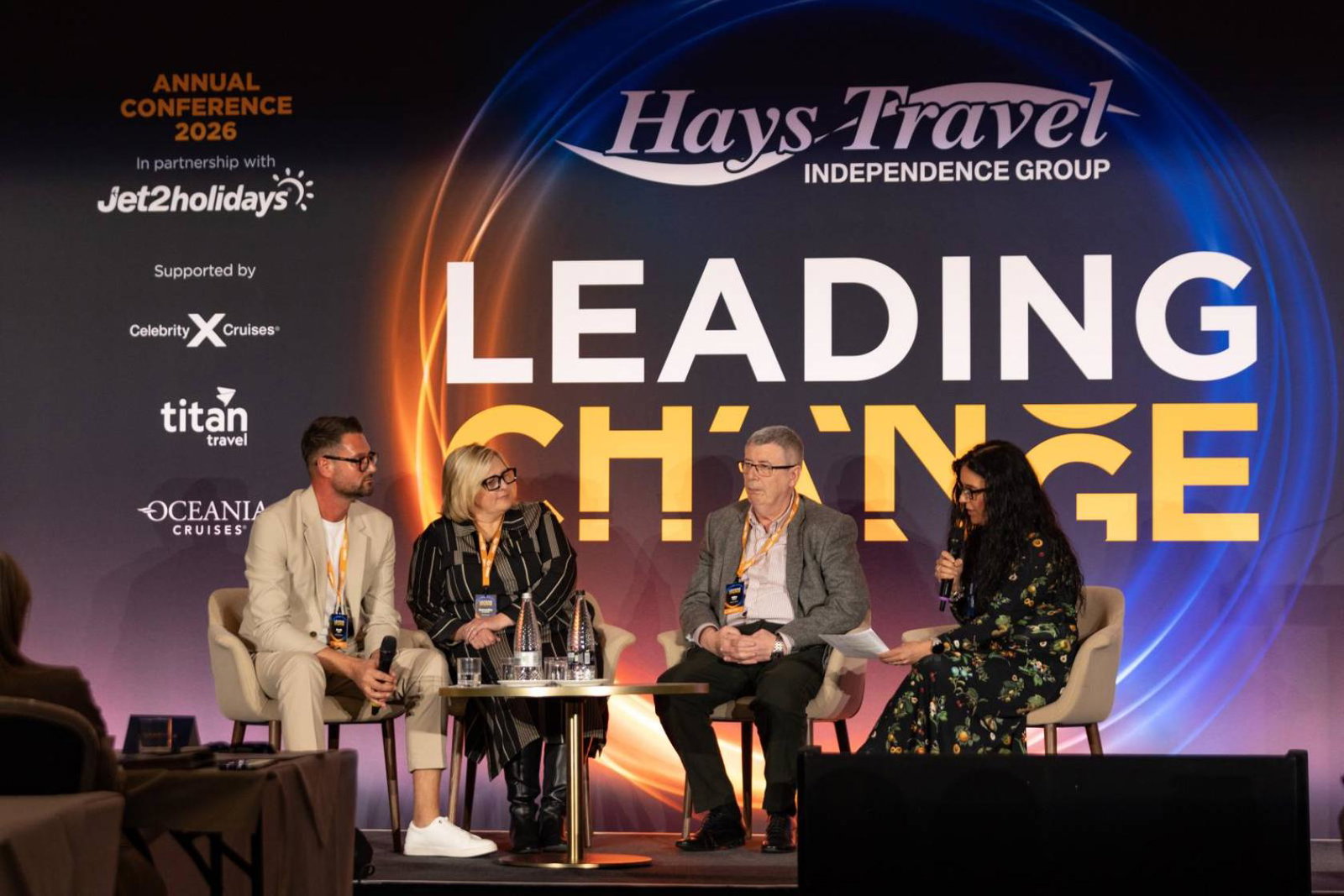
Dame Irene Hays set the scene at the day-long event, acknowledging the industry was enduring "another challenging time" owing to the war in Iran, which has punctured what was otherwise gearing up to be a record-breaking year for Hays.
However, Dame Irene said Hays has begun to see "early shoots" of recovery, including last weekend's "most encouraging set of figures" (17-19 April), as the industry remains tentatively hopeful for the summer season.

TTG was on the ground to capture the discussion, which varied from the strategic importance of homeworkers to the potential of a multi-billion-pound selling sector...
'Inflation isn't going anywhere'
Businesses are facing a structural shift in how to manage their workforces as sweeping changes to employment law, including a 4.1% increase in National Living Wage, collide with year-on-year inflation and other cost pressures.
This was the line delivered by Ken Campling, finance director at Hays Travel, who explained travel and other "labour-intensive" businesses would have limited to room to absorb the new costs without rethinking their approach.
"Each full-time, minimum-wage employee will need an additional £1,000 budgeted annually," he said. "Depending on the size of your team, you'll need to sell significantly more holidays just to stand still."
Campling recommended agencies shift toward higher-margin products such as cruise, long-haul or specialist itineraries, with a renewed focus on value over volume. Productivity gains were another point raised, with technology, including AI, enabling staff to work more efficiently.
"If AI can help agent find products faster, or support less experienced staff to sell more effectively, there may be some benefit," he said. "Inflation isn't going anywhere, and businesses have a duty to get ahead of these issues."
UK cruise market forecast to tip £6 billion
With the UK cruise market predicted to be worth £5.8 billion by 2027, Catriona Parsons, head of cruise at Hays Travel, encouraged agents to double down on the "high-growth" sector – particularly within its luxury and expedition niches.
"Are you suggesting river or luxury as an option?" she asked delegates on the day, noting that river cruising offers high margins and strong repeat business, while luxury cruises command average selling prices of around £6,000 per person with margins of 14-15%.
Parsons urged agents to adopt five key behaviours to capitalise on growth: identifying priority products, deepening product knowledge, investing in training, acting with intent and innovating in how cruise is sold.
She also pointed to growing demand for expedition cruising, revealing that Independence Group members booked more than 1,000 expedition passengers in January alone, across a global range of itineraries beyond traditional polar regions.
Central to success, she said, was moving away from feature-led selling to a more emotive, experience-driven approach.
"Sell the feeling, not the product," she explained. "Help customers visualise the experience, personalise everything and always position the upgrade. People rarely regret upgrading, but they do regret not doing it."
Cross-selling key to unlocking river cruise growth, say agents
Agents are turning to cross-selling strategies to drive high-margin products such as river cruise, with Mike Silford, managing director at Suitcase Travel, finding "real synergy" between river and ocean cruising; particularly with clients who opt for Norway and similarly rugged coastal itineraries.
Silford also suggested a growing trend among clients transitioning away from self-drive holidays or caravanning, who are increasingly open to river as an alternative. "It’s a natural progression," he said, adding these customers are often well-suited to the pace and structure of river itineraries.
Scott James, manager at The Travel Store, agreed, suggesting agencies could even position river cruise as an option alongside short-break enquiries.
"River cruise offers a similar itinerary to a four-night, European city break, for example," he said. "It gets you used to talking about the sector, too, for those who feel selling river cruise doesn't come naturally."
Homeworking could be your next growth driver
Homeworkers are fast becoming a strategic extension of retail operations, rather than an alternative route into the industry, according to Harriet Thompson, head of the Hays Travel Independence Group.
Thompson pointed to a growing number of retail members who have introduced homeworking arms alongside their high street presence, creating what she described as a "wraparound service".
Businesses including Seaside Travel, Mel's Travel and Designer Travel are among those adopting the model, using homeworkers to extend availability beyond standard shop hours.
The approach allows agencies to serve customers outside the traditional 9-to-5 window, capturing demand that might otherwise be lost, particularly during peaks periods or in the "fast-moving" late market. "We've seen some real success in the businesses adopting this wraparound model," Thompson added.
'Every discount given is profit lost'
Claire Gibson, head of commercial at Hays Travel, cautioned that heavy reliance on discount-led marketing risks undermining long-term profitability, particularly as rising costs continue to squeeze agent businesses.
"Every discount given away is profit lost," she said, urging members to focus on value rather than price-led messaging – often done through social media – that encourages customers to shop around online.
Gibson suggested agents target cruise and escorted touring, with the latter's higher overall spend a "real help" when offsetting rising business costs. She added that escorted touring should be viewed as complementary to both short- and long-haul sales.
"It’s about making sure that product mix is working as hard as it could be," she added.