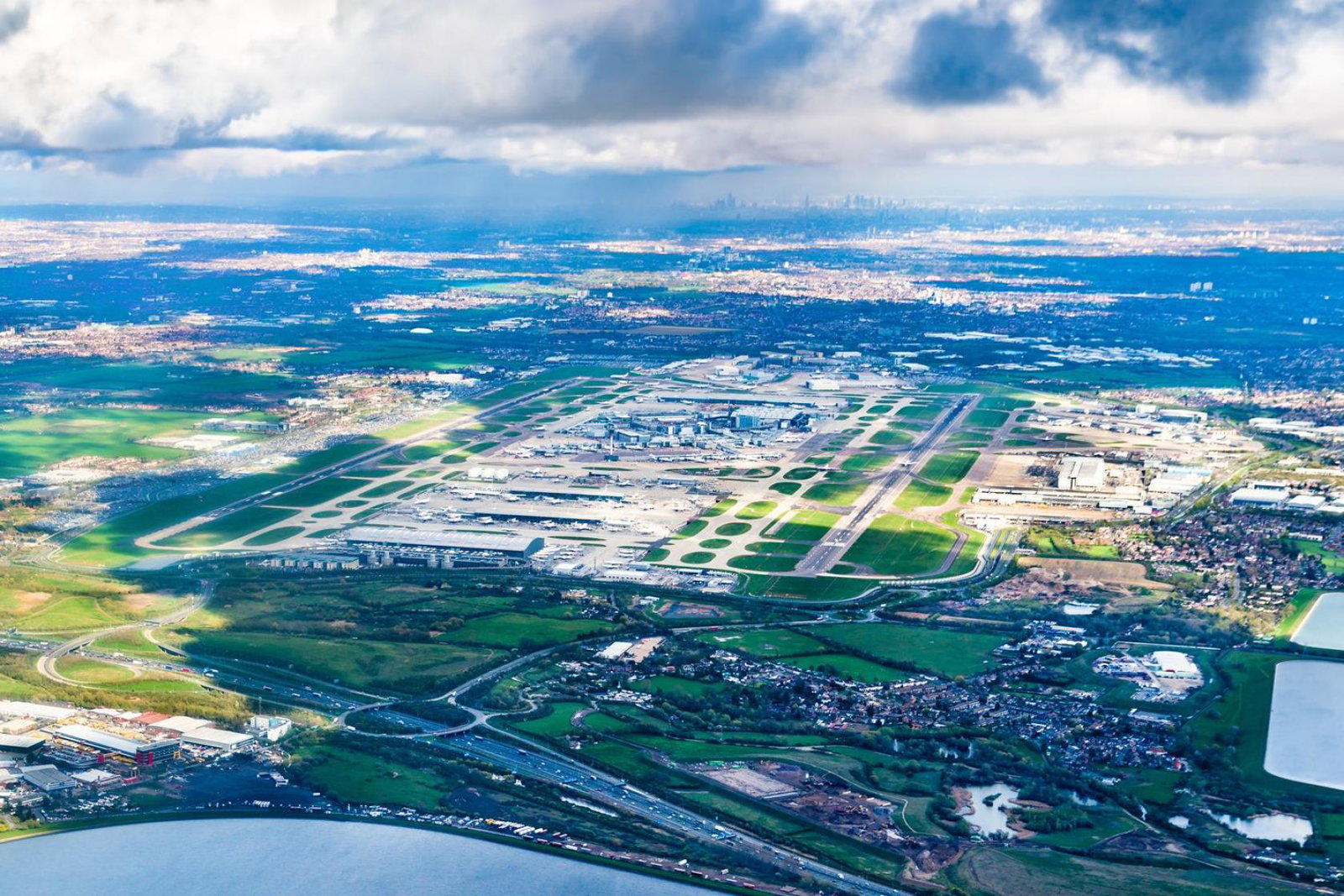
At a cost of £33 billion, the development will enable more long-haul flights, but will also mean moving a section of the M25 motorway.
The plans will now centre on building a 2.2-mile-long runway north-west of the airport.
Transport secretary Heidi Alexander rejected a proposal by the Arora Group for a 1.7-mile runway costing £23 billion that would accommodate mainly short-haul flights in favour of the full fat option put forward by the airport itself.
Does this mean planning permission has been given?
No. The government has just given its formal backing to the scheme favoured by Heathrow Airport Limited (HAL) and rejected the Arora scheme.

So when will it be built?
The government said it is “aiming for a third runway to be operational by 2035”. It will consult by next summer with a view to completing the process "by the end of 2026”.
Is Heathrow calling the shots then from now on?
No. The government says the scheme "does not represent a final decision on the third runway’s design". It adds a planning application will be submitted “in the usual way”.
The whole thing is part of the Airports National Policy Statement (ANPS), which will be published by the end of next year. “Details such as runway length, layout and infrastructure will be considered throughout the ANPS review,” the government said.
If it goes ahead, what will happen to the M25?
A new section will be built and put into a tunnel that will go under the new runway. Heathrow argues the road can be constructed while the present route remains open. The government has previously hinted it won't pay for groundworks like moving the motorway.
What will happen to the airspace above London?
The new Airspace Design Strategic Objectives review, which is redesigning Britain’s crowded airways, will give priority to Greater London, which copes with more than 1.1 million take-offs and landings each year.
The government says London’s airspace will be “prioritised for modernisation” to support a third runway and to “save carbon emissions”.
What about environmental considerations?
There will be challenges over noise and pollution, but the government can side-step some of these in that it says Heathrow expansion has “always been factored into the UK’s carbon budget planning”.
The independent Climate Change Committee will be consulted “to ensure expansion is consistent with the net zero framework”.
Does this mean Arora Group are out of the picture?
No. Arora says it is “now reviewing how our plans will be adjusted to the longer runway scheme” with the intention that it becomes part of the project.
What will be the end result?
Assuming the project goes ahead, Heathrow – which currently handles 84 million passengers a year – will be able to accommodate 150 million. There will be another terminal built, although some older buildings, like Terminal 3, could close.
What do airlines think?
British Airways chief executive Sean Doyle said earlier this month he supported a third runway, but not at massive cost. "If you could avoid moving the M25, you should avoid moving the M25," he said, adding: "You should potentially look at building a shorter runway."
His view has been backed by BA's parent IAG. A spokesperson said: “IAG has serious concerns about the affordability of the proposals announced today [Tuesday] and plans to talk to the government about ways to reduce the overall project cost.”
Virgin Atlantic estimates the total expansion and redevelopment bill could run to £60 billion. "HAL says its plan is 'privately financed' but in reality it’s paid for by airlines and customers through airport charges, which are already the most expensive in the world," said a spokesperson.
Virgin added the project “would result in passengers and airlines footing the bill through even higher charges”.