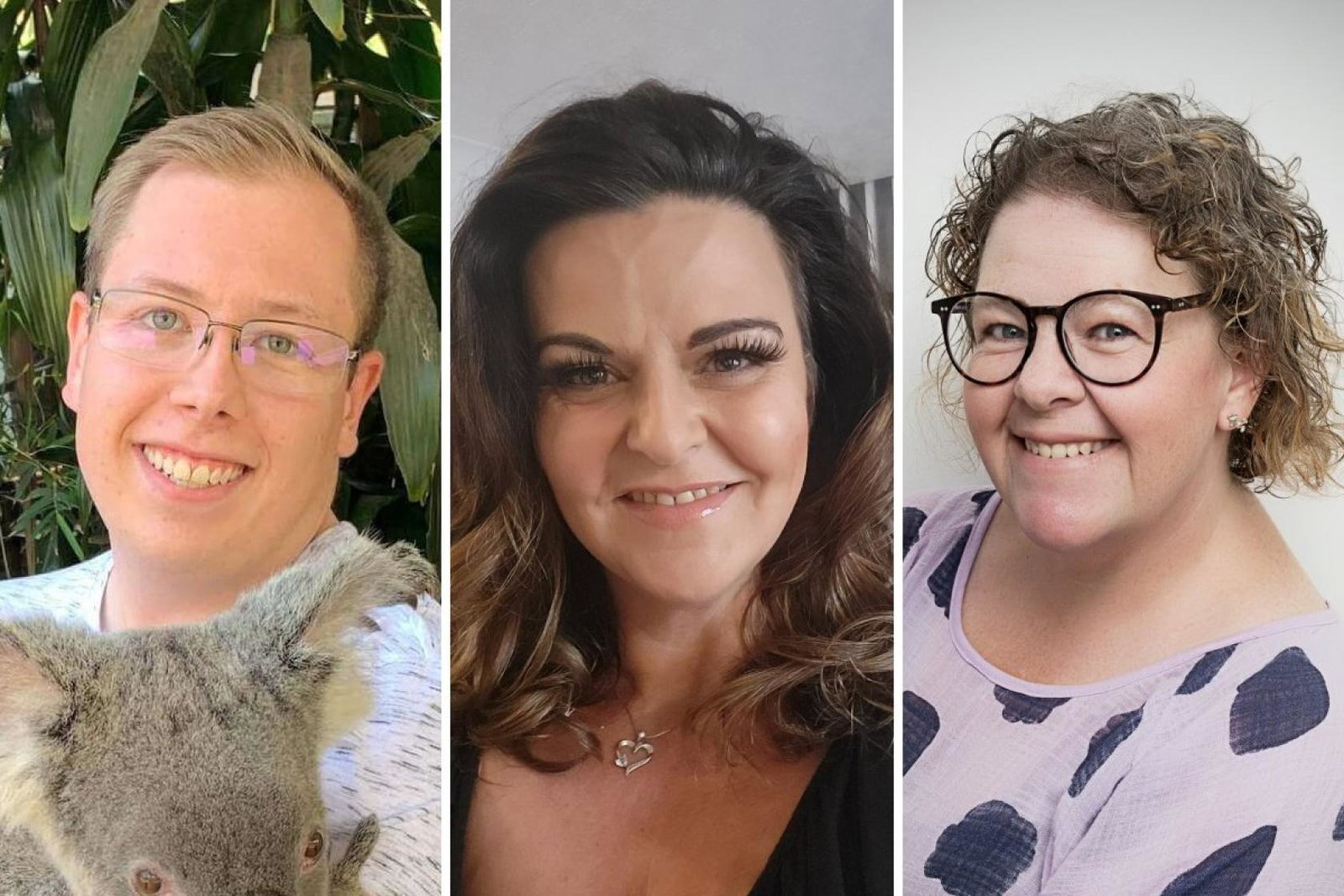
“I’ve never disclosed my neurodivergence to a supplier – I fear the stigma that’s attached to it.”
It’s a bold – and brave – admission from travel agent Ben Langsdale. But he’s not alone.
Carol DeMartini works for an award-winning homeworking agency, and is recognised as one of Jet2holidays' top sellers from travel's non-retail community.
She is also one of the 700,000 people in the UK living with autism. Or, in Carol’s case, AuDHD – autism with ADHD – with which she was diagnosed this summer.
Selling travel, she says, can be “a huge dopamine hit – but it can drain me faster than I realise”.

Meanwhile, teacher turned Travel Counsellor Helen Maltby was diagnosed as autistic in 2018. She struggles to use the phone and finds it hard when suppliers won't take video calls.
These three agents are among the one in seven people in the UK whose brains function, learn and process information differently to the majority.
The most common types of neurodiversity include autism, or autism spectrum conditions; ADHD, attention deficit hyperactivity disorder; and dyslexia.
For those who are neurodivergent and working in travel, the industry presents many opportunities and myriad daily challenges, from suppliers who insist on phone enquiries to winder industry pressure to be sociable.
Navigating phone calls
Travel Without Limits director Langsdale was diagnosed with ADHD in early 2023 and 18 months later, autism too. “The thing I find most challenging is interacting with suppliers who only accept incoming enquiries via phone,” he tells TTG.
“One of my biggest difficulties is auditory processing,” he explains. “It means it can take me longer to process information communicated verbally. This can create internal pressure to respond instantly, leading to me stumbling over words and feeling mentally drained afterwards – especially after in-depth calls about complex itineraries.”
Unexpected phone calls are also hard to navigate. Travel Counsellor Helen Maltby (right) shares Langsdale's frustrations. She finds it easier when she can actually see the supplier or client. “I can better gauge when it is my turn to speak, and get a better feel for how the conversation is going,” she said.
But for One Travel Club homeworker DeMartini, her diagnosis is also her “superpower”. “My passion drives me but it can easily slip into burnout,” she shares. “I build emotional connections and strive for perfection [for clients], that’s my superpower, but I can carry their stress and excitement as if it were my own.”
Managing the anxiety
Maltby says a tendency to catastrophise is common among autistic people. “Being a self-employed travel agent, there is a lot of anxiety attached to the job – what is if goes wrong? What is they don't like the resort I chose? What if they blame me for ruining their holiday?
“This has, of course, never happened,” she adds. “But as I build up my business and get more clients, the anxiety gets worse.”
For Langsdale, “energy management” is his biggest challenge. “Some days, I can work with incredible focus and creativity for hours, while other days, even small administrative tasks take a huge amount of effort.”
And then there’s the multitude of industry events, which Langsdale says brings social pressure. “There’s an industry expectation to be outgoing and to attend in-person networking events, which are often really overwhelming and overstimulating,” he explains.
DeMartini agrees. “I tend not to go to events as I sometimes just can't physically put that mask on,” she says. “The industry thrives on energy and networking, but I am no longer able to face long periods of time faking it.”
Making it work
For Langsdale and Maltby, being self-employed is key. It enables them to have full control over how they work, particularly managing noise. “I almost always work with noise cancelling headphones on, and usually with the lights quite low or blinds drawn to avoid too much sensory input,” explains Langsdale.
Noise was a key factor in Maltby's switch from teaching into travel. “Now I just have the cats climbing on my desk to worry about!” she jokes.
She praises the “phenomenal” support she has had from Travel Counsellors in terms of making accommodations for her at events, sharing how delegates at the agency's annual conference can WhatsApp someone for help if they're struggling to cope.
Langsdale and DeMartini, meanwhile, both opt not to communicate with their clients by phone, but will always be flexible if that's the client's preference.
When she does, DeMartini will go over conversations multiple times in her head to cover all eventualities that may occur on the call. “I am used to masking,” she adds. “I’ve done it all my life.”
To share or not to share?
Another consideration for these agents is the extent to which they share their diagnoses with their clients. Maltby says she is “very open” about her autism, and even talks about it on her website. “Society is so much more understanding about autism than it used to be, although there is still a long way to go.”
Langsdale, though, says only a handful of his clients know about his diagnosis. “I wouldn’t feel comfortable sharing with all new clients because there’s still a lot of stigma and misunderstanding about what neurodivergence means. Some people assume 'neurodivergent’ means less capable, which isn’t the case,” he adds.
DeMartini is also wary about being open. “Being 47, and having had to adapt to the 'normal' world throughout my life, I find I’m stuck in the approach of saying nothing and acting 'normal’ [masking].”
The agents are equally wary about being open with suppliers. “I’ve never disclosed my neurodivergence to a supplier because, again, I fear the stigma,” admits Langsdale (left). “I wouldn’t want them to think less of me as a result of a preconceived idea of what neurodivergence is.”
DeMartini is similarly reticent. “If I needed a certain accommodation, I may possibly share, but I have an in-built fear of being seen as different and fussy, so I act 'normal’.”
But doing this, she warns, is “very tiring”. “Suppliers, clients – they all love a bubbly voice and it’s one that I have managed to curate since being a teenager – people are receptive to that.”
The silver lining
Despite the challenges, being a neurodivergent agent can have benefits. Maltby says she’s “definitely had clients come to me because I'm autistic”. “Most of the time, new clients say they came to me after reading my webpage or because of social media, where I don't make any secret of my autism,” she explains.
“Or it's because I was recommended by someone who travelled with autistic people. I'm starting to see more and more clients who are autistic, or are travelling with autistic family members, come to me because of my own neurodivergence.”
DeMartini says, less explicitly, her natural attention to detail has helped her offer exceptional service to her clients. “My clients trust me due to my care and precision,” she explains. “I make them feel ‘held’ – it’s heart-led empathy and operational excellence.”
And if a client shares that someone in their family is neurodivergent, DeMartini will “100% tell them” that she understands and they are in safe hands because she and her children are neurodivergent.
Changing attitudes
Langsdale wants to get across the message that “neurodivergent travel agents are no less capable than our neurotypical counterparts”.
“When we advocate for change, it’s not about seeking special treatment, it’s about improving accessibility for everyone – because most of the adjustments that would help us would also benefit neurotypical agents as well,” he contends.
Maltby agrees. “I've definitely had people tell me that I can't be autistic because I have a job, or because I have a family,” she reveals. “I've been told that I don't look autistic.”
She wants to educate others on the fact that not all autistic people, for example, have the same needs and preferences. “I like to think I understand the need to ask the right questions to find out what challenges a client and their family might face,” she says. “I've had autistic clients whose perfect resort would be my worst nightmare – we are all different.”
DeMartini (right) is also keen to change the others' perspectives. “I’ve seen the backlash over the years,” she says. “I never want to be seen as a drama queen. I would love to be known as 'the neurodivergent agent’, because we bring a different kind of care to the industry – not despite of our differences, but because of them.
“Given my diagnosis came this year, I have learned to manage myself the hard way in a hard market. Some days I do not work unless the client is currently travelling, or it’s urgent, I have to protect myself – put on your own oxygen mask first before helping others!”
Langsdale has created a Facebook group called Neurodivergent Travel Professionals - Discussion & Support Group, and welcomes new-joiners.