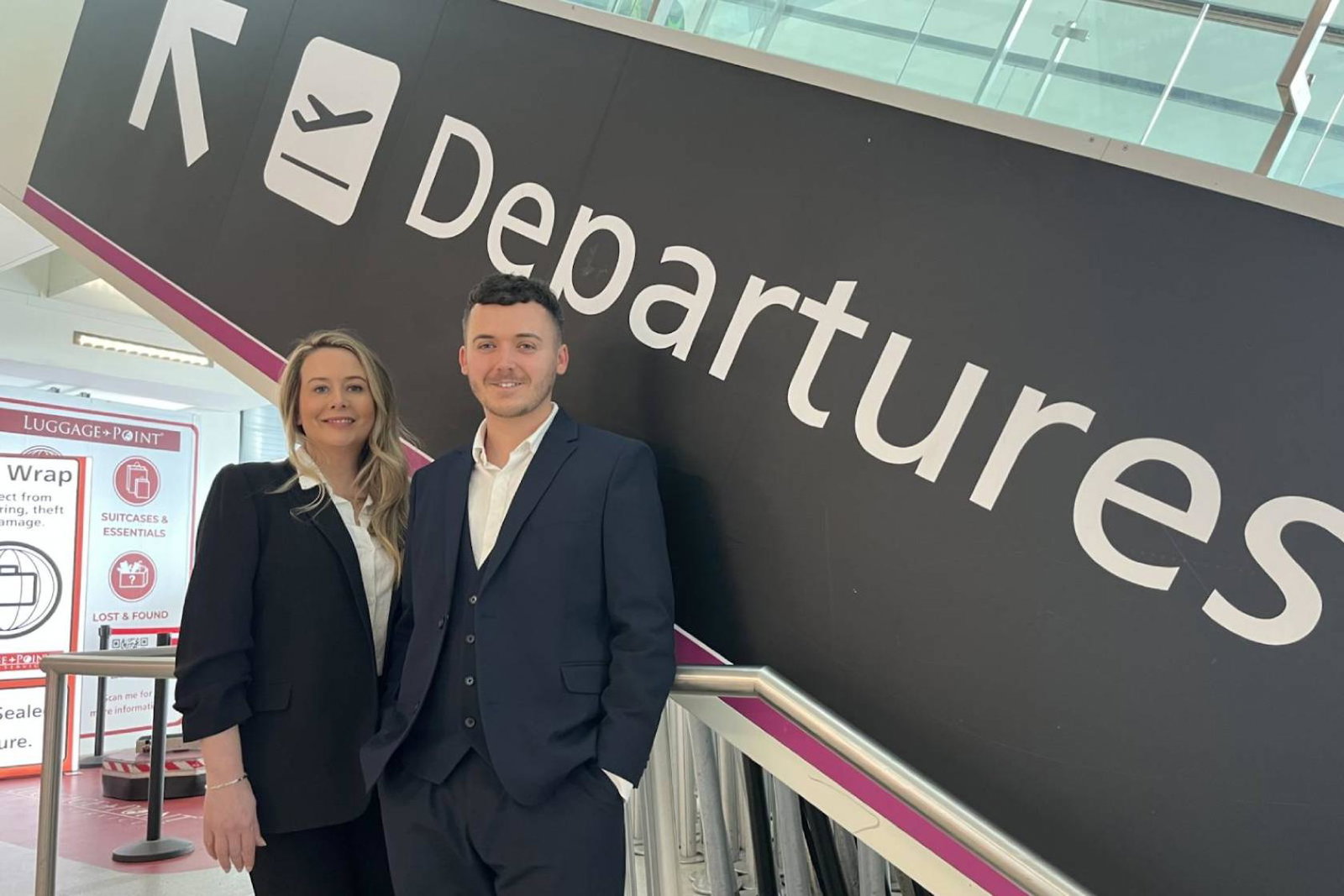
AllWays Travel was founded by Michael Connolly and Sarah Baum in November and has already started securing bookings and repeat clients, which has led to a nomination in the UK StartUp Awards' Consumer Services category.
"It was very nice, if unexpected, to be recognised so early on," Connolly tells TTG. "But we're particularly pleased about the category, because it really taps into the reason we started this business, which is accessible travel."
Connolly and Baum’s route into the agency business was unconventional. The pair established Accessible Housing Scotland (AHS) in July 2024, drawing on their estate agent backgrounds to address what Connolly describes as a "huge gap" in the provision of suitable homes for people with accessibility needs.
"That market just wasn’t being catered to," he says. "From there, moving into travel felt like a natural progression."
Personal experience also shaped their decision. Connolly grew up watching his aunt Linda, a wheelchair user with spina bifida, miss out on overseas holidays. "They never really went abroad," he recalls. "My aunt's experience was a big motivation for me."
The agency operates without a high street presence, which Connolly tells TTG was both a commercial decision – and one rooted in accessibility. The pair regularly visit clients in their own homes or conduct consultations via video calls, allowing customers to plan trips in familiar environments.
"For some clients, especially those with mobility needs or neurodiverse conditions, it’s much more comfortable," Connolly explains. "We can go to them rather than expecting them to come to us."
Information gap remains biggest barrier
While accessible rooms and facilities are increasingly available, Connolly argues the biggest obstacle is communication. "The main issue is the lack of information," he says. "Hotels might have accessible rooms, but finding them and being confident they’ll meet your clients' needs is where it breaks down."
For example, accessible features such as wet rooms may still include small design flaws, like a raised lip, that render them unusable for wheelchair users. "Accessible means different things to different people," he continues. "We spend a lot of time verifying details, asking questions – and sometimes pushing suppliers quite hard before we’re comfortable recommending something."
In one case, the agency worked with a client planning a family visit to Nigeria, which required detailed checks on accommodation and transfers claiming to be accessible. Connolly and his team exchanged multiple emails and WhatsApp messages with hotels, requesting photos of the rooms to confirm suitability.
"In the end, we had them take a video of the room," he says. "It was only then that we could see it wasn't suitable."
That same diligence extends to room layouts, an often overlooked factor that is crucial for holidays with multiple wheelchair users. "If we can’t get the layout from the supplier, we’ll ask the hotel directly," Connolly says. "Things like appropriate turning circles for wheelchair users are so important, but often not considered."
Early traction and repeat business
Despite launching just a few months ago, the agency has already secured its first repeat client – Positive Paths, a charity led supporting young adults with learning disabilities. The organisation runs several group trips a year, offering both respite for participants and a break for carers.
The agency recently arranged a four-night trip to Porto and is now planning a trip to Italy, with several more holidays under discussion. "These trips are about giving people experiences they might not otherwise have," Connolly says. "And giving parents or carers a bit of breathing space too."
While repeat business remains limited at this early stage, Connolly says initial trading has been "busier than expected," with a steady stream of enquiries for accessible holidays alongside more conventional bookings.
Currently, around 30% of business relates specifically to accessibility requirements, a figure he plans to push over the next year. "I'd like the majority of our bookings to be accessible travel as we establish ourselves more," he adds.
Barbados 'unexpected' accessible option
In terms of product trends, Connolly highlights cruise as a strong option, particularly for older travellers or those with reduced mobility. One recent client, initially anxious about travelling alone, completed a cruise with full support arranged. "She needed a shower rather than a bath, and everything was organised door-to-door," he says. "She had a fantastic time."
Short-haul European destinations also remain more accessible, largely due to the relative ease of transport and availability of support services. Long-haul travel, particularly flights, continues to present more significant challenges.
"Once you’re at the destination, there are often options such as equipment rental, adapted rooms," Connolly says. "But the flight itself can still be the biggest hurdle.”
That said, emerging destinations are beginning to show promise. Connolly cites Barbados as an example, where a growing number of hotels are offering accessible room configurations. "It’s not somewhere you’d immediately think of," he says. "But the options are there."
'Our priority is raising awareness'
AllWays Travel operates as part of the Barrhead Travel-owned Brilliant Travel consortium, which provides access to supplier networks, booking systems and Atol protection. "For a new business, having those relationships in place is invaluable," Connolly says. "It allows us to focus on the important details."
For now, the agency’s priority is raising awareness among consumers and within the trade. Connolly hopes increased marketing and supplier engagement will drive more accessible bookings in the coming peak season, positioning the business as a specialist within an underdeveloped space.
"The most rewarding part is giving someone an option they didn’t think they had," he adds. "That’s what we want to keep doing."