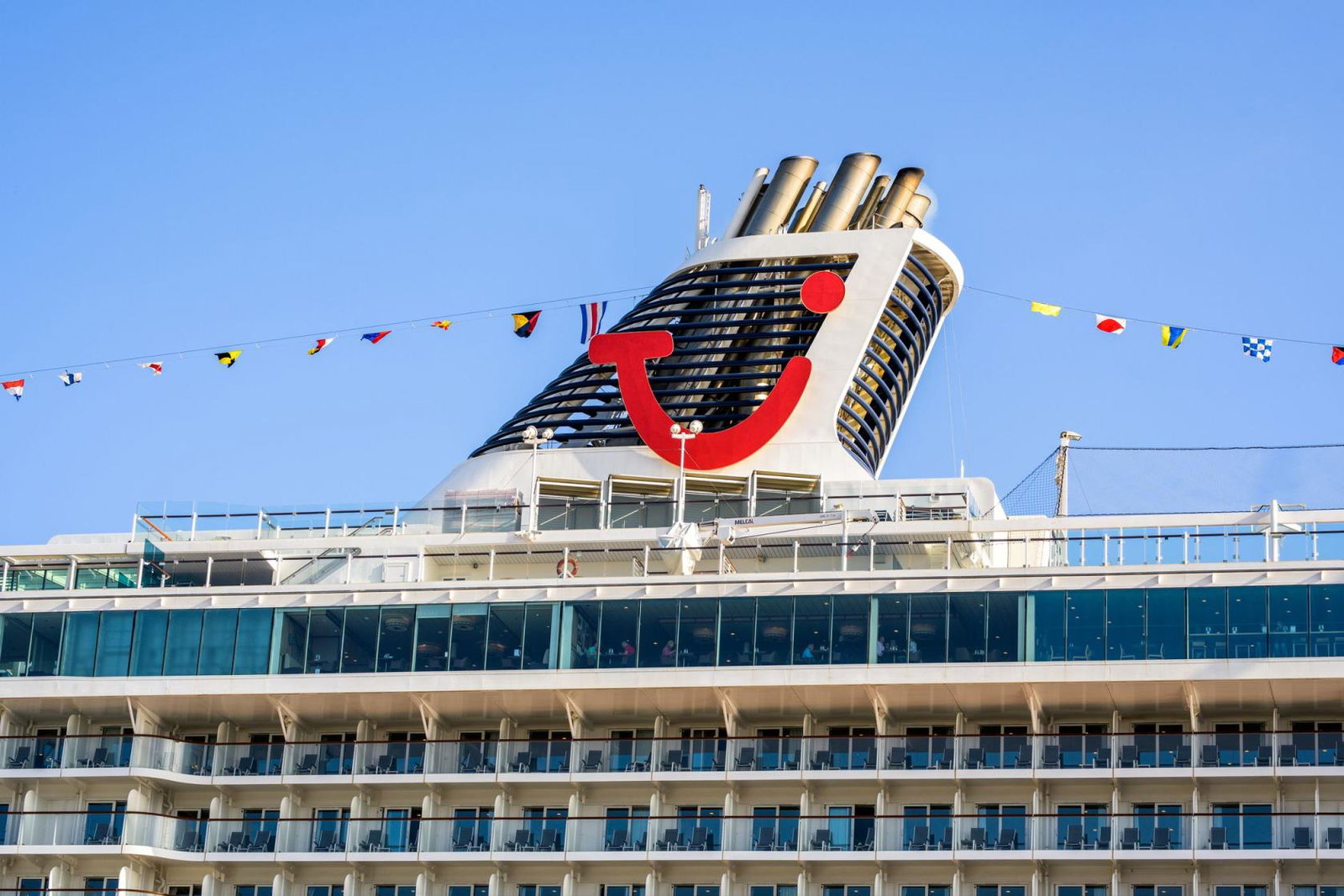
This included costs arising from repatriation efforts and operational disruptions relating to the conflict in the Middle East. However, Tui Group still expects to reduce its losses in the second of the two – typically weaker – winter quarters of the year by between €5 million and €25 million.
Last year, the operator recorded a €207 million second-quarter loss in underlying earnings before interest and tax. Tui will publish its full second-quarter / first-half results on 13 May.

Tui said despite "strong operational improvement" in the first-half of its 2026 full financial year (six months to the end of March), "the ongoing conflict in the Middle East and the uncertainty surrounding its duration continue to limit near-term visibility and drive consumer caution".
While its stated ambition remains to deliver full-year earnings before tax and interest "towards the level" of last year's €1.4 billion, Tui said "against this background", it has adjusted its guidance to earnings in the range of €1.1 billion to €1.4 billion. Prior guidance was for a 7% to 10% uplift in against last year's €1.4 billion.
'Volatile backdrop'
With concerns in Europe over fuel supplies owing to the ongoing closure of the Strait of Hormuz, Tui revealed that as of 15 April, it was 83% hedged on fuel for summer 2026 and 62% for winter 2026/27. It is also 80% hedged on fuel costs for its cruise businesses for the remainder of its 2026 full-year.
"Despite the volatile geopolitical backdrop, Tui remains well positioned," it said. "The group’s strong financial position and robust balance sheet provide flexibility to navigate the current environment."
Tui successfully repatriated around 10,000 guests in March after US and Israeli strikes on Iran, and retaliatory attacks, brought war to the wider Middle East region.
This included approximately 5,000 passengers onboard Mein Schiff 4 in Abu Dhabi and Mein Schiff 5 in Doha, and around 5,000 guests from European source markets, plus a further 1,500 members of crew. The two ships left the Persian Gulf at the weekend and will now embark on their summer seasons in the Mediterranean, starting mid-May.
"Trading for the remainder of our Tui Cruises as well as the Marella Cruises fleet continues to reflect a sustained, strong booking environment, following a very positive wave season," Tui insisted.
Shift from east to west
Across its operator, airline and hotels and resorts divisions, Tui acknowledged the geopolitical situation has led to "a partial shift" in customer demand from the eastern Med to the west, "with customers demonstrating increased caution and booking closer to departure dates".
As a result, booked revenue for summer 2026 is running 7% behind last year, while hotel occupancy for the second-half of the year – peak summer – is 7% lower than last year.
"This development is driven by the impact of the Iran war particularly in Turkey, Cyprus and Egypt, as well as by the aftermath of the hurricane in the Caribbean," Tui added.