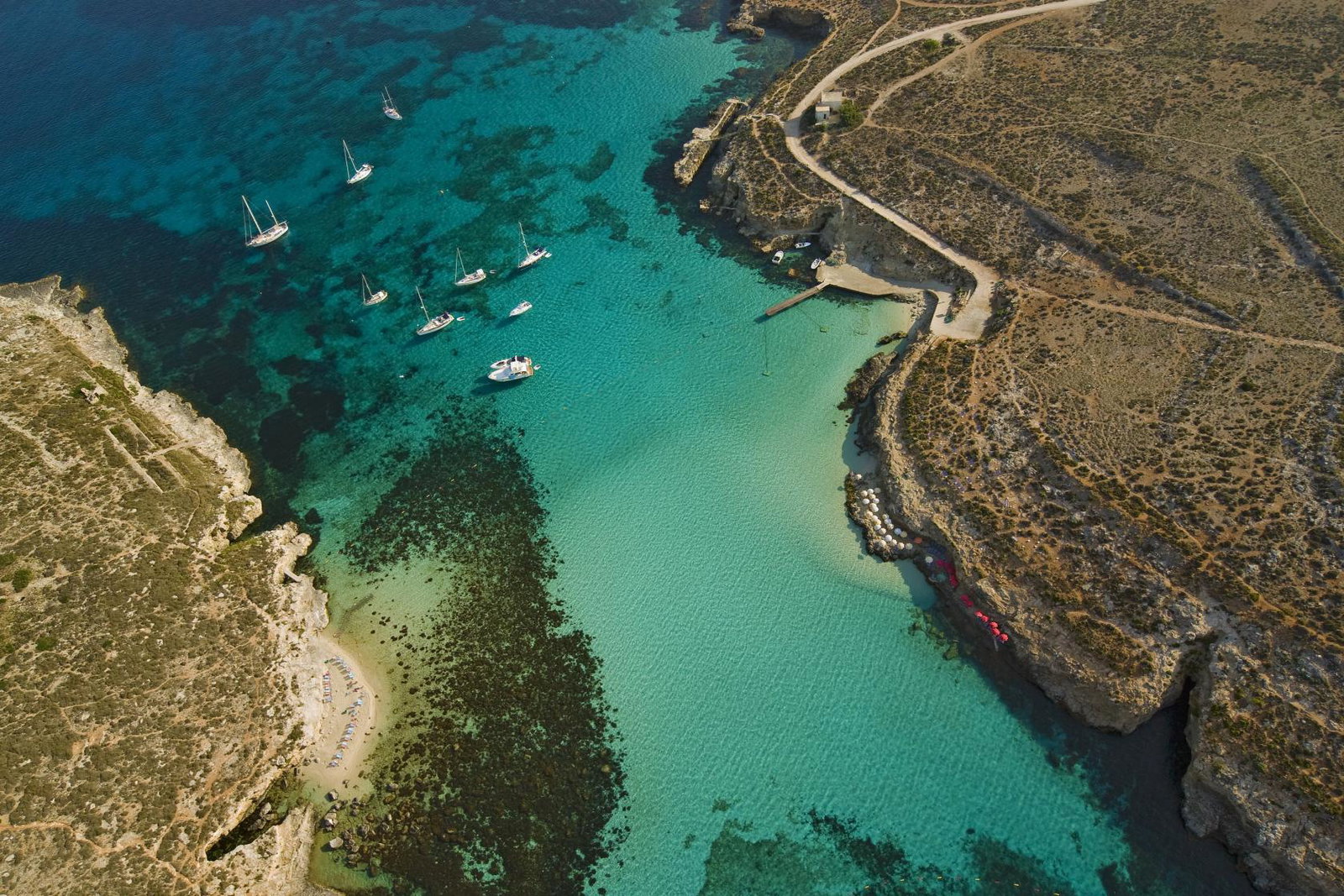
Introduced on May 1 this year, a new online booking system has succeeded in reducing visitor concentration at the popular yet fragile beauty spot by 68%.
Last year up to 12,000 visitors were recorded at Comino’s Blue Lagoon at any one time during peak hours, and the new free booking system allows a maximum of 4,000 visitors at any one time. Bookings generate a QR code, and wrist bands are issued at entry points.
The average number of visitors at the Blue Lagoon at each of the three daily time slots introduced this summer is 1,979.

Only 34 out of 189 available time slots (morning: 08:00–13:00, afternoon: 13:30–17:30, evening: 18:00–22:00) in July and August registered more than 3,000 visitors.
Carlo Micallef, chief executive of the Malta Tourism Authority (N3-410), said these figures confirmed that the new booking system was successfully distributing the flow of visitors throughout the day, avoiding the much higher concentrations previously experienced at certain peak hours.
“By controlling peak visitor numbers and spreading flows, the booking system is helping us embark on a journey to protect the Blue Lagoon and give visitors a better experience. These improvements underline the effectiveness of the measures taken so far, and the determination of Team Blue Lagoon and of our partner entities to continue working in the direction we have undertaken.”
Established earlier this year, the Malta Tourism Authority’s Team Blue Lagoon has reorganised operations at the Blue Lagoon and is focusing on four key objectives. These are improved visitor flows; a safer visitor experience with a larger swimming zone; additional cleaning and waste management resources; strict enforcement and security throughout the site, on land and at sea.
The swimming zone was extended by 12% in May. Two smaller beaches in the same area were also newly designated as safe swimming zones.
Team Blue Lagoon also doubled the cleaning resources allocated to the area, with at least 12 cleaners assigned daily to empty bins, collect litter, and maintain the site’s showers and toilets, which were also refurbished. Waste is now transported off the Island more frequently, reducing the environmental impact.
Maritime operations have also been reorganised, with a new capitainerie managed by Transport Malta officers overseeing the arrival and departure of vessels to the existing landing sites.
The team has also strengthened on-site safety and security, with a new patrol team, more lifeguards, as well as police officers, environmental monitors and emergency personnel. Enforcement tied to commercial operations was reinforced to ensure compliance with applicable conditions.
New signage is guiding visitors to follow the site’s regulations and remain on established paths, avoiding the protected garigue. Some of the paths have been upgraded to improve safety.
Looking to safeguard the Natura 2000 protected area for future generations, MTA also appointed internationally acclaimed architecture and design practice Mizzi Studio to deliver long-term rehabilitation proposals to preserve the site’s natural beauty, while ensuring ecological balance and sustainable public access. The proposals, which are being discussed with stakeholders, including e-NGOs, will be open for public consultation in coming weeks.
Deputy Prime Minister and Minister of Foreign Affairs and Tourism, Hon Ian Borg added:
“Team Blue Lagoon's efforts this summer are the first tangible drive to improve the sustainability of operations at this national gem and Natura 2000 site. The results are encouraging – a vital first step towards long-term and sustained rehabilitation as well as a better visitor experience.
Let me be clear, this is just the beginning. We will continue analysing the data and review the next potential steps.
The Blue Lagoon is a very small site, placing physical limitations on the level of activity it can host, particularly on land. Consequently, its popularity means that it is always bound to be very busy at peak hours.
This will not dampen our drive. We shall persevere to strike the right balance, ensuring environmental protection while offering an enjoyable visitor experience.”