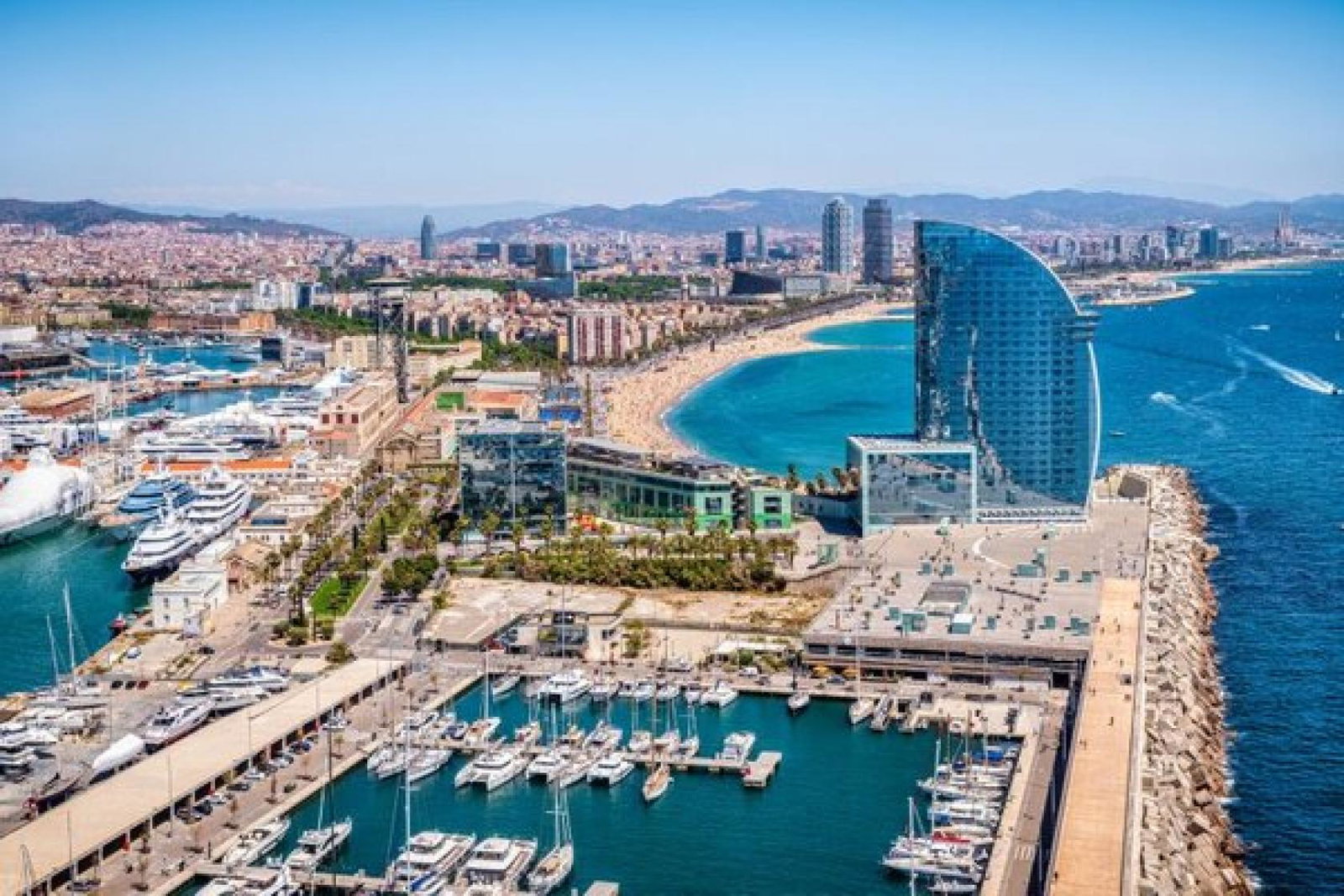
The destination, which is the busiest cruise port in the Mediterranean, has been at the the forefront of the debate and protests about overtourism following several high-profile flashpoints, such as tourists being sprayed with water pistols by protestors.
Now, a new agreement between the city council and the Port of Barcelona will see the demolition of three of the older cruise terminals on the Adossat wharf, which will be replaced by a single new terminal, capable of handling 7,000 passengers at one time.

The current A, B and C terminals will all be torn down and replaced by a new facility on the site of terminal C, which is scheduled to enter service in 2028. The move will eventually reduce daily cruise capacity by 16% from 37,000 to 31,000 passengers.
In a statement, Port of Barcelona said it would also introduce a range of new initiatives to improve mobility and “make it more sustainable”.
Barcelona’s mayor Jaume Collboni said: “For the first time in history, a limit is being placed on the growth of cruises in the city.”
Collboni, who banned cruise ships from calling at the Muelle Barcelona Norte and the World Trade Centre docks in 2023, praised the port for recognising that the growth in cruise activity “cannot be infinite and needed to be reduced”.
“The current management of tourism involves setting limits and managing better,” said the mayor, who added that the number of cruise passengers visiting Barcelona rose by 20% between 2018 and 2024 after the previous agreement between the council and the port did not set any capacity limits.
The port said the new terminal C will be “public” and open to general use. The other four terminals are privately owned: terminals D and E are operated by Carnival Corporation, and terminal H by MSC Cruises, while terminal G is currently being built for Royal Caribbean Group, with opening scheduled for spring 2027.
The revamp of Barcelona’s cruise terminal will also see the overhaul of a 610-metre section of wharf, which will help to make its facilities “some of the most modern and sustainable globally”.
This work will include the installation of onshore power supply (OPS) systems for connecting ships to the electrical grid, so they can turn off their engines when in port and reduce emissions.
Access and mobility to the port will be further improved port through the expansion of the Porta d’Europa bridge.
Jose Alberto Carbonell, president of the Port of Barcelona, added: "These actions represent a public-private investment of €185 million, which adds to the investments made under the 2018 agreement, and confirm the Port of Barcelona’s commitment to the sustainable development of cruise activity."