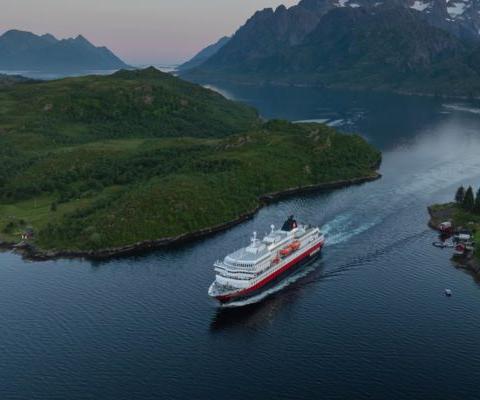
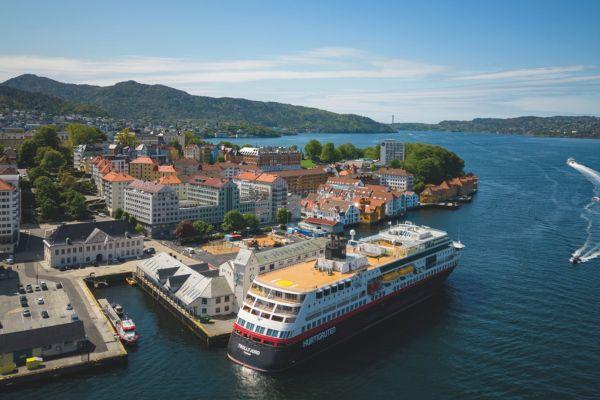
During this period, the number of UK passengers travelling onboard Hurtigruten’s fleet of 10 ships increased by 10%, reflecting increasing demand for authentic experiences along the Norwegian coast.
Hurtigruten’s premium Signature Line product is landing particularly well in the UK, with revenue up 92% against last year. Agents are capitalising on this; revenue from Signature Line bookings made via the UK trade is up by 231% compared with the same period in 2024.
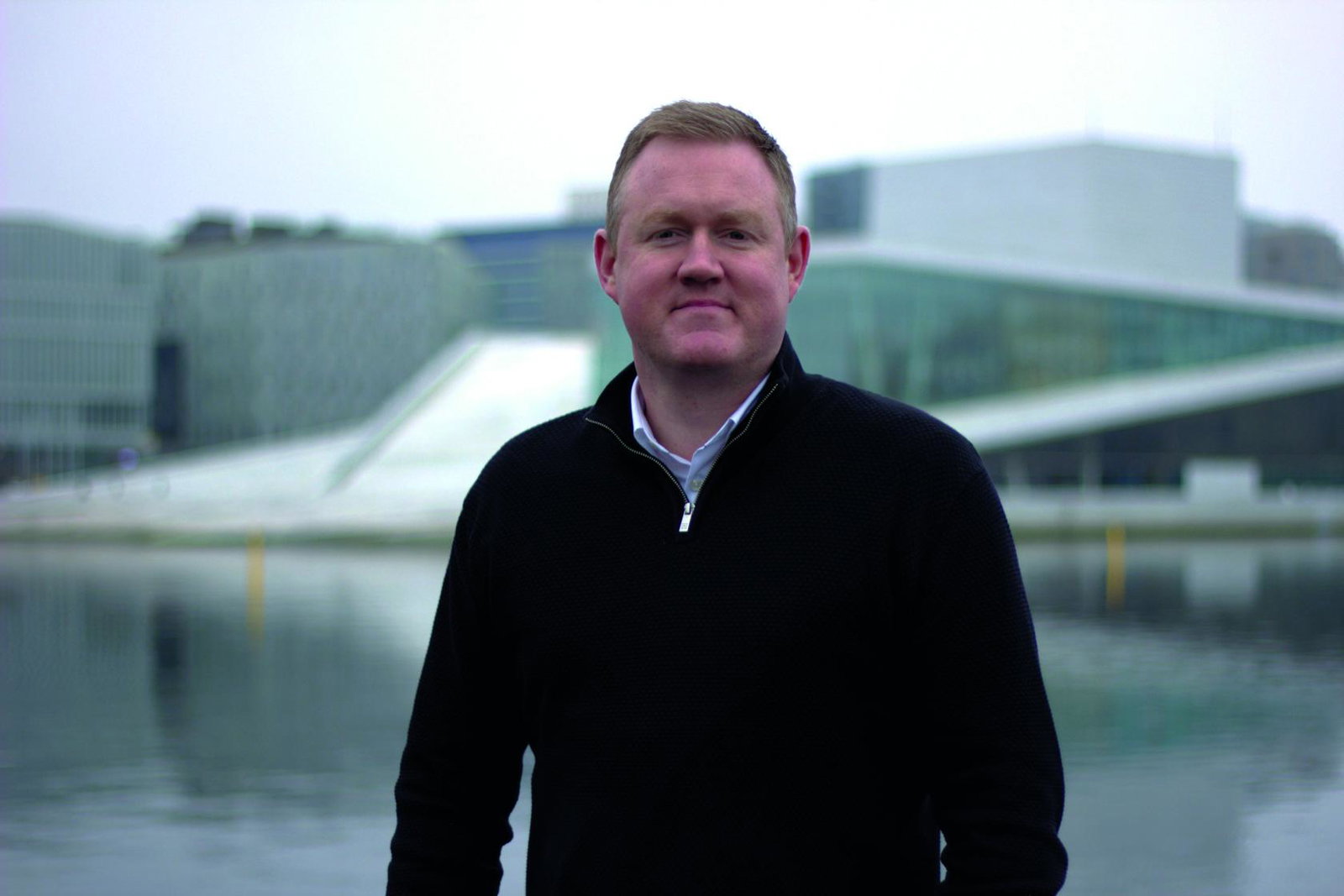
Chief commercial officer Iain Powell, who has been handed two promotions since joining the line last year, believes the business’s recent success can be attributed to two factors.
“There’s growing demand for travel to Norway,” he explains. “Agents have managed to marry the increase in demand we’re seeing for Norway and the better understanding of Hurtigruten, and realising there’s actually quite a significant commercial opportunity there. We’re obviously very well placed to capitalise on that.”
Hurtigruten isn’t the only Norwegian operator benefiting from the surge in demand. The country’s annual tourism report for 2024 revealed overnight stays in hotels, campsites, cabin villages and youth hostels increased by 12% year-on-year.
Furthermore, almost half (46%) of holidaymakers to Norway last year were visiting the country for the first time.
Powell believes demand for Hurtigruten’s products is being driven, in part, by its expert-led Astronomy Voyages programme, as well as burgeoning interest in so-called “coolcations”.
Hurtigruten expects to welcome 81% more guests on Astronomy Voyages this year compared with 2024.
Education Process
From a business perspective, Powell insists efforts to separate the two brands is now complete, but he admits there’s an ongoing education process trade partners and consumers will have to go through to fully understand exactly what the move means for them.
However, he adds: “As time goes on, that need to inform is going to lessen as we educate travel agents on fam trips, via e-learning and as we engage with them more. I think it will naturally become clearer over time – it’s something we’re always going to have to be aware of.”
He insists by separating the two brands, Hurtigruten employees now have “real clarity” about what its core products are.
When TTG last spoke to Powell, he had only been with the company for two months, and the separation was still being finalised. His message then was around widening Hurtigruten’s trade distribution.
So how has this particular goal been achieved over the past 16 months? Powell won’t reveal the names of any new trade partners, but he does say: “We’re seeing great success from businesses that specialise in touring and rail, and sell the kind of land holidays to customers who may want try a cruise.”
This strongly suggests Hurtigruten is selling through agencies or tour operators that are relatively new to promoting cruise holidays. Evidently, it’s not just consumers who have noticed Norway’s enduring appeal.
Signature Product
Around the time of Powell’s second promotion to chief commercial officer back in May, Hurtigruten announced it would be increasing capacity on its Signature Line programme.
Starting next summer, Midnatsol will join Trollfjord and Finnmarken in the premium fleet, with Vesteralen returning to Hurtigruten’s Coastal Express fleet on the Bergen-Kirkenes roundtrip route.
Powell hints that some of this growing demand for Signature Line product is coming from customers who would normally cruise with “more mainstream operators”.
“[These customers] want a premium product,” he explains. “They want the all-inclusive offering. They want the longer stays in port, so a more traditional cruise offering.
“But they want to do this on a small ship in a really authentic way, and they want to experience Norway properly. We do span a multitude of different partners and customers.”
He adds: “There’s a big opportunity for the UK trade to get behind that Signature product, which is already doing really well in the UK.”
Powell applauds the work Hurtigruten’s UK trade team has done in recent months, accessing new agents and training them up. It’s no surprise, therefore, when he reveals the trade team is expanding.
Powell is not only recruiting for an account manager, he is also looking for a new managing director for the UK, Nordics and emerging markets – his old role.
“We need to make sure we still have the market lead in the UK, someone who’s focused on that market. The fact we are replacing that role shows our commitment to the UK.”
Open Village
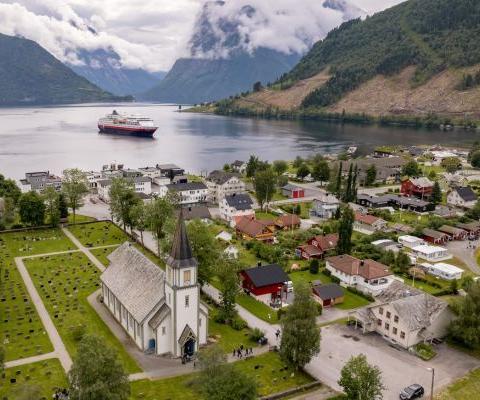
To tap into this thirst for all things Norwegian, Hurtigruten in May launched its “Open Village” initiative, which offers customers the opportunity to visit some of Norway’s most remote coastal communities during Signature Line departures between May and September.
Guests can interact with locals in Bessaker, Traena and Saebo and generally live like them for a day. Hurtigruten will also pay these villages £18 per cruise passenger for every visit. It’s an interesting idea that is clearly aimed at meeting consumer demand for Norway.
“[Open Village] is an opportunity for customers to step off the ship into small communities and then experience things like village parades, church concerts or get something traditional to eat,” says Powell.
“These are truly authentic experiences – it comes back to us trying to ensure customers leave us feeling like they’ve seen Norway and properly experienced it.”
Hurtigruten is achieving its goals, not just through the education process Powell touched on earlier, but by delivering exciting products that are capturing the imagination of holidaymakers across the world. “We have confidence in the products we deliver,” insists Powell.