Orient Express has revealed its top priority is to “pay homage to the brand in our own way” following the debut of La Dolce Vita earlier this year.
Operating under Accor, the company relaunched the luxury sleeper train in April 2025, more than 15 years after the original Orient Express ceased operation.
That same month, it opened its first hotel, Orient Express La Minerva, which is set in a Renaissance building close to the Pantheon in Rome.
Its portfolio will double in 2027 with the return of the Orient Express route from Paris to Istanbul; the maiden voyage of Orient Express Corinthian (the world’s largest sailing yacht); and the launch of its second hotel, Orient Express Palazzo Dona Giovannelli in Venice.
Gilda Perez-Alvarado, chief executive officer at Orient Express, says the diversification of its products will create a “connecting brand” that allows clients to sail, ride and stay with Orient Express all within a single journey.
These launches are exciting, but like any business expansion, they are also a risk.
The name Orient Express has long been shorthand for “luxury sleeper train,” with books like Agatha Christie’s bestselling 1934 novel pushing it into popular culture. It has also been a fixture on the silver screen, appearing in movies such as From Russia with Love, 102 Dalmatians, and Mission: Impossible – Dead Reckoning Part One.
Its popularity in literature and films exposed the brand far beyond its actual clients; regardless of whether a person has boarded the train, they are likely to have encountered its grandeur.
“We have a huge responsibility on our shoulders as custodians of the brand,” Perez-Alvarado told TTG Luxury. “We have to think long-term in terms of our strategy to make sure we’re successful for years to come.”
The weight of this “custodianship” is heightened by the expansion of its product, with the brand now determined to weave its train journeys together with its hotels and sailing yacht. Each experience will be seen as a “chapter of the Orient Express book”, linked by the “golden thread of its elevated service.”
“The planning aspect is the lynchpin of the operation,” Perez-Alvarado explained. “We need to make sure that the engineers are speaking to the designers at the same time they’re talking to the operations team. The right hand is always talking to the left hand.”
She adds that this military-level organisation is especially important for the teams working on Orient Express Corinthian and the trains, which, by default of being transient, present a whole host of additional concerns.
Preservation
Central to this project is protecting the legendary brand image of Orient Express.
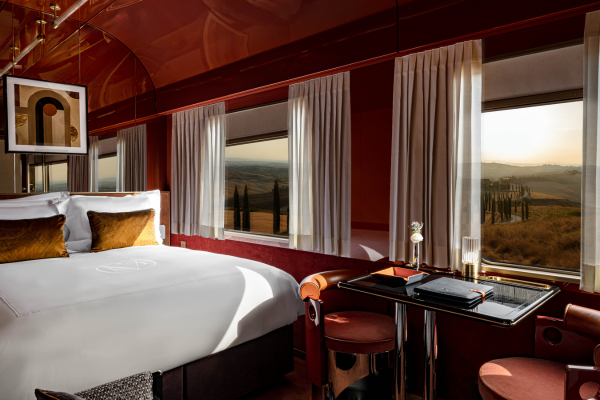
Accor purchased 17 of its original carriages in 2018 after they had been discovered by French railway researcher, Arthur Mettetal, on the border between Poland and Belarus. These vintage carriages (12 sleeper cars, three lounges, a restaurant, and one van) have since been “meticulously” restored, with interiors made to be strikingly similar to those of the 1920s train.
Designed by Parisian architect Maxime d’Angeac, the renovated cars feature dark wooden panels, green velvet lounges, and low, soft lighting. Other nods to its heritage include headboards with mother-of-pearl embroidery and plush furnishings in deep jewel tones.
“For us to do all of these renovations, we needed people who know how to do the art the same way it was done 100 years ago,” said Perez-Alvarado. “We are celebrating an art that could very well go into oblivion.”
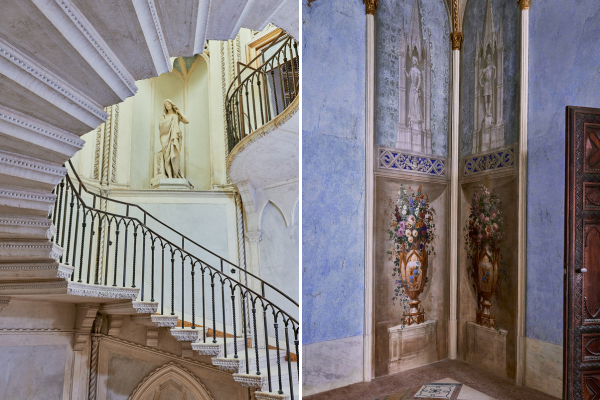
This focus on craftsmanship is again evident in the Orient Express Palazzo Dona Giovannelli in Venice, which will open April 2026 after an eight-year restoration. Originally a 15th-century palace, the building has been transformed into a 47-room luxury hotel with a Gothic portal entrance and canal views.
“The renovations of the palazzo were extremely meticulous,” said Perez-Alvarado, referring to a project so large-scale it involved building a dam to drain the water from the facade.
She believes it is an investment that will pay off, extending the longevity of these buildings for decades to come: “We are adding not just years but quality years to these assets.”
With so much already in the pipeline, there are currently no plans to expand Orient Express portfolio further. The vision for its future, however, remains clear.
“We have to make sure we’re curating something that fits and feeds people’s perception of Orient Express,” said Perez-Alvarado. “I’d love in five years’ time for the team to be true to the myth, and to remain joyful, playful and mysterious.”
The Musee des Arts Decoratifs in Paris will host: One Hundred Years of Art Deco from 22 October to 26 April, marking the centenary of the 1925 International Exhibition. Three full-size Orient Express carriages (a cabin, restaurant and lounge) designed by Maxime d’Angeac, will be on display. This marks the first public reveal ahead of the full train launch in 2027, featuring 17 restored carriages previously lost and recovered on the Belarus-Poland border, connecting iconic European destinations.