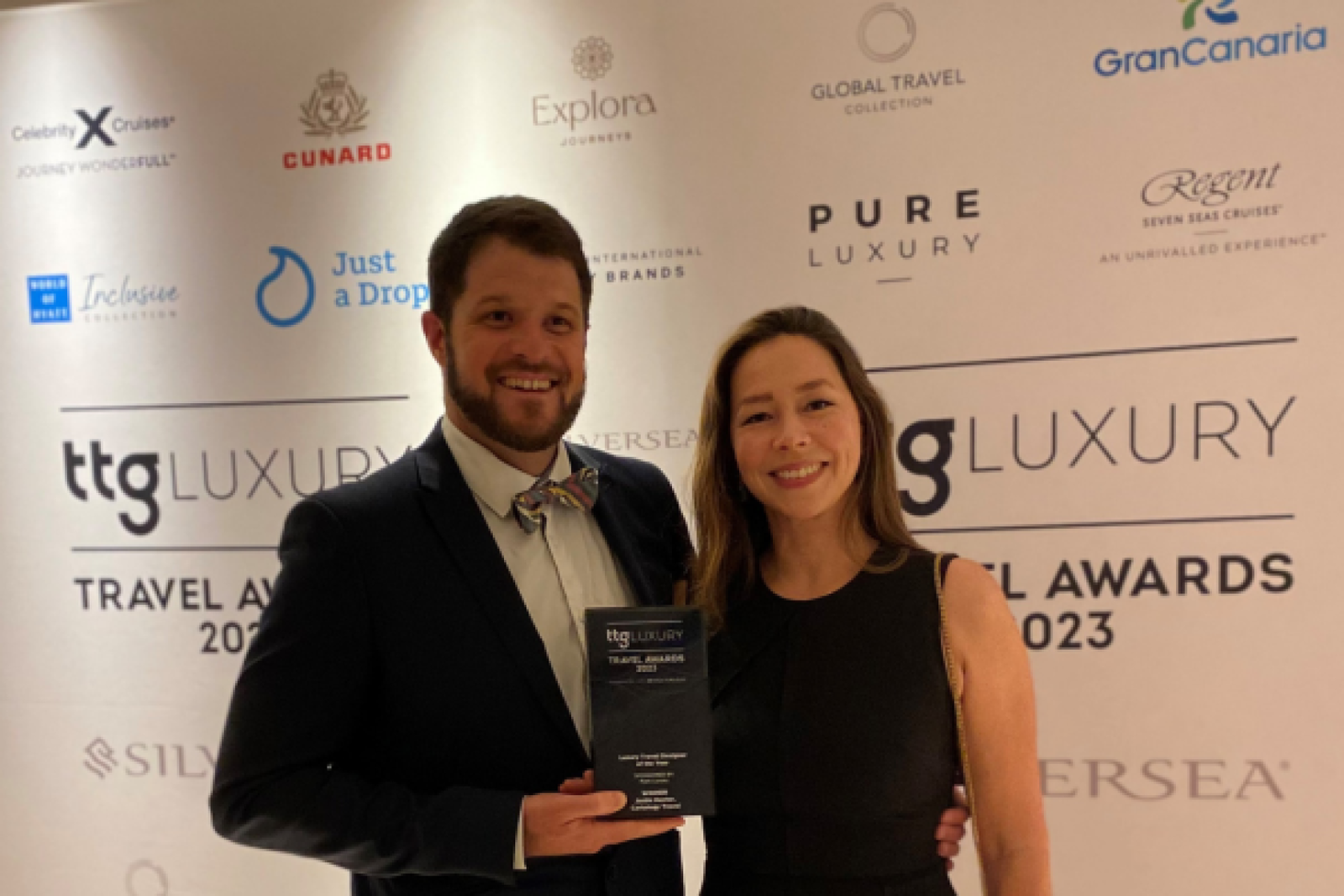
A bespoke travel agency has shared its ‘soft skills’ for impressing clients and closing sales, just a few weeks after being shortlisted for the Top 20 Luxury Travel Agencies 2025.
Cartology Travel has invested heavily in training its team of 19 independent advisors, the majority of whom have joined the business from other professions.
A key focus of this training is the role of emotional intelligence (EQ) in sales, which – though often overlooked – is becoming increasingly invaluable amidst the rise of AI.
It also emphasises how strong ‘soft skills’ can equip advisors to navigate common objections, booking disruptions and even full-blown emergencies, as well as how to ‘surprise and delight’ clients after the booking has been made.
Justin Huxter and Kathy Boate, owners of Cartology Travel, have now shared the five ‘soft skills’ they teach their advisors – and why they’re non-negotiable for booking success.
Smile, even on the phone
Even if a client can’t see your face, the expression you make can make a big difference to how you sound.
Huxter and Boate advise their travel advisors to smile when speaking with clients on the phone, especially during the initial consultation. Smiling not only changes the tone of your voice, often making it warmer and more approachable, but it also triggers feel-good hormones in the brain and helps build resilience to stress.
Other quick tips for improving your verbal presence include grounding yourself with both feet on the floor, breathing slowly, and speaking at a measured pace. Pausing deliberately for effect is another simple yet powerful way to convey confidence and clarity.
Make clear boundaries
Boundaries are the foundation of any sustainable working relationship – and this is especially true in the digital era, when clients can technically contact their agent at any hour of the day or night. To ensure everyone’s on the same page from the start, Cartology Travel advises its homeworkers to lay out exactly what clients can expect from their services.
“The first consultation is key to establishing boundaries and the ways you work,” explains Huxter.
Cartology Travel’s advisors have been trained to clearly communicate to each new client how they operate, from the times they are available to speak to the additional privileges they can offer. Not only is this beneficial for the advisor (who may not want to respond to WhatsApp calls at 3am) but it also helps to manage expectations of the traveller, especially if they haven’t booked through the trade before.
“Don’t be afraid to set up your stall and how you work,” Boate said. “You don’t need to bend over backwards to find a four-star hotel on the Amalfi coast for under €500. Sometimes, the hotel just doesn’t exist.”
Get it off WhatsApp
While WhatsApp can be a convenient tool for sending quick updates, Cartology Travel believes it should never be a replacement for email correspondence.
“We tell all our agents to get the conversation off of WhatsApp as soon as possible,” Boate revealed. “I’m not forwarding 20 screenshots of WhatsApp messages or the terms and conditions of the booking. Also, if something goes wrong, I want to see an email chain.”
Even if a client reaches out on WhatsApp, Boate will redirect their conversation onto email to ensure a traceable trail of communication.
Voice notes are even more strongly discouraged at Cartology Travel. Not only are these memos susceptible to misinterpretation, they also disrupt the continuity of the written communication – which can cause potential lapses in the exchange.
Ask closed questions
One of the main reasons clients use a travel advisor is to save them time on researching and booking. Questions should therefore be focused and offer multiple choices, rather than vague and open-ended. This rule applies to everything from asking about destination preferences to availability times for a call, especially if you’re dealing with a new client.
“People are very busy, so we tend to ask closed questions. For example, we present a list of options for when we’re available for the call,” said Huxter. This technique is particularly effective when the client is being evasive in their communication or even failing to respond.
“If you don’t hear back from an email, follow up by asking them, ‘Do you still want to proceed with this?’ And 99% of the time they will respond to that question,” he added. “There’s something about that question that really prompts a response.”
Never assume
As a professional travel advisor, it’s easy to assume that clients will provide all the basic information.
However, Cartology Travel emphasises that agents must be especially diligent in collecting details – no matter how minor – to ensure that all documents and paperwork are accurate and consistent.
“Sometimes clients give you two-thirds of the information you need – and that’s exactly when mistakes happen,” Huxter warned.
A common pitfall, he added, involves passports: the name a client uses in daily life often differs from what’s on the document. Departure dates can also become confusing, particularly when time zone differences come into play.
With so much scope for things to go wrong, Cartology Travel encourages its advisors to foolproof their bookings as much as humanly possible.
“To be an agent, you have to assume that your client knows nothing and reads nothing, while at the same time assuming that they are a lawyer and will come up to every single thing you put in writing and hold you to it,” Boate said.