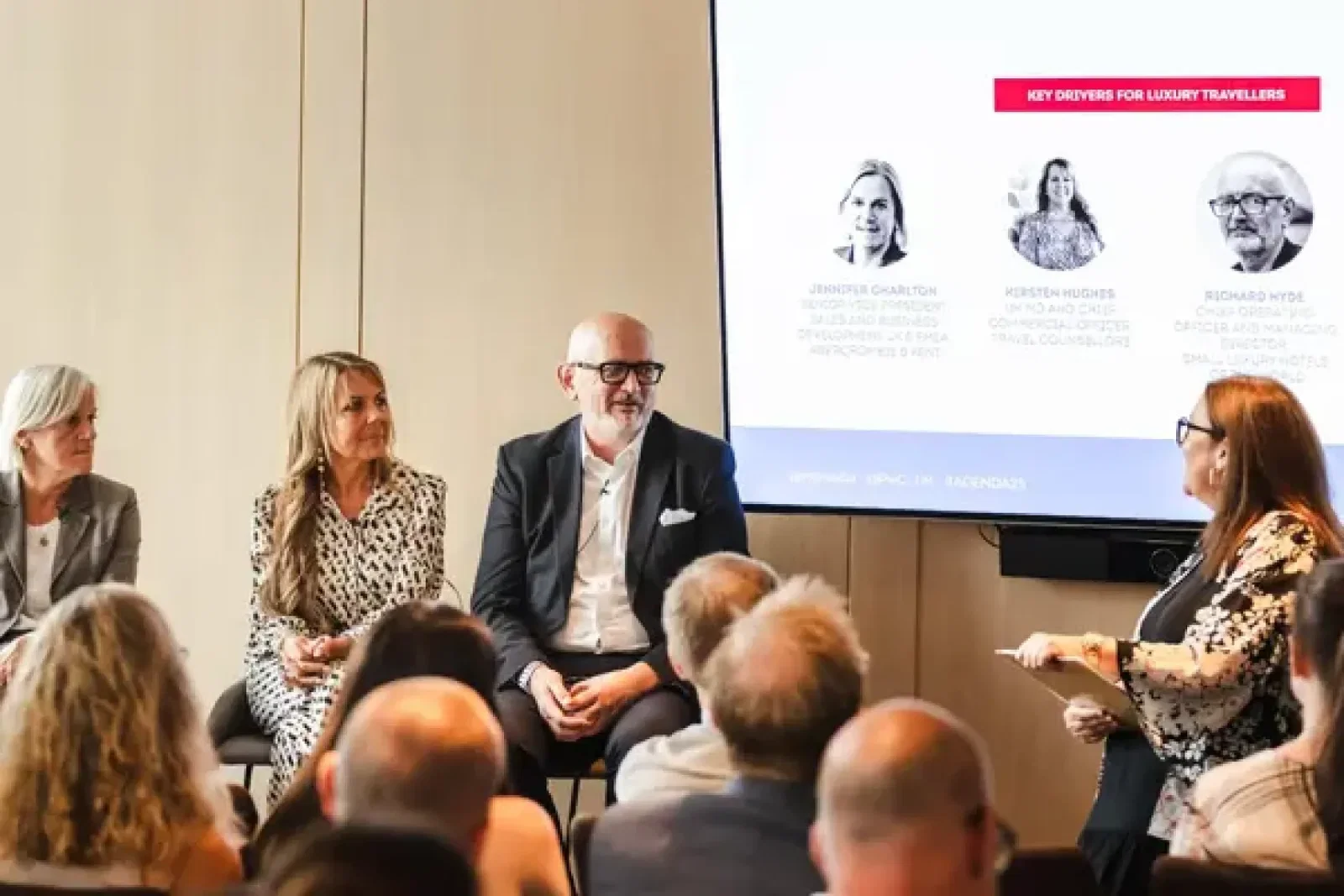
Panellists presented a resilient and positive picture for luxury travel. Despite constant threats of volatility from economic and geopolitical events, they agreed that luxury travel had a lot to be excited about, so here are five key takeaways to help dissect the trends in booking patterns, destinations and experience, and what luxury agents should be prioritising for their clients.
Why you can’t commoditise luxury travel
The panel heard earlier from PwC partner Eleanor Scott that luxury travellers were 10% more likely than other consumer groups to be taking an experiential holiday this year, and were quick to share their observations of luxury traveller priorities.

Jennifer Charlton, MD, Cox & Kings and SVP of Sales, A&K UK and EMEA Trade Sales, highlighted how the uniqueness of the experience - not just the experience itself - is what catapults travel to premium levels.
“People want to get into places where nobody else can; they want that ‘surprise and delight’ type of element and they want to be met and whisked through the airport. They want to be made to feel special. It’s a very consultative type of sell and they start out with a certain idea in mind - but those ideas, that uniqueness, is what is driving [increased spend]. It’s very difficult to commoditise luxury travel if you want to upsell.”
Travel Counsellors’ managing director Kirsten Hughes noted little limit in terms of the amount that premium customers wanted to spend, but was adamant they want value for that spend.
“Those customers that maybe went to the same hotel pre-Covid, then post Covid prices went up again and again, so they are no longer brand loyal. And now there are so many properties – particularly in Europe – that have upped their game in luxury. People want to spend, but they want to come back thinking it was worth it.”
No ‘Trump effect’ – but people are switching
Luxury travellers were more likely than others to consider new destinations rather than retreating to the safety of what they have known before, the audience heard. But on the subject of safety, the panel was keen to point out that current geopolitical events and the threat of extreme weather were main drivers for customers booking later as they wait to see what unfolds.
Richard Hyde, chief operating officer and managing director of Small Luxury Hotels of the World, was quick to state he had seen little evidence of the often spoken about ‘Trump effect’ on sales, but added the company was seeing significant bookings in the Caribbean, Japan and the Maldives.
He added that certain parts of Asia – such as Thailand or China – were “definitely bouncing back”.
Charlton observed how clients are switching destinations. “If you look at the Middle East and North Africa, that’s been like a yoyo for us. It’s difficult to replace unique destinations so there’s no one place people are gravitating to,” she said.
Hughes added: “Brits have really short memories, and the US has come back. However, we are seeing bookings down for major cities and up for places like Montana, Yellowstone, Texas and ranch holidays.”
She noted significant growth in luxury cruise over the past four to five years too, with strength in bookings also coming from Asia, Australia – and Albania, “which has suddenly become popular”.
Sales are solid, but volatile
Broadly speaking, panellists reported solid sales as the year progresses, though they warned a climate of volatility was making it ever more difficult to forecast.
Hyde stated this year has been “very rosy” for Small Luxury Hotels of the World, with sales currently outdoing last year’s “best ever year”, though he stressed now was not the time for the industry to rest on its laurels, with a particular nod to geopolitical uncertainties and world events “You can have a sequence of events and it comes crashing down,” he warned, adding however that “people are a lot more savvy these days and have a better sense of what’s going on in the world”.
Hughes noted that across Travel Counsellors, premium travel was “solid” against a backdrop of softening for non-premium sales, with average booking values up among premium customers, who were also going on holiday more often.
Searching for “inner sustainability”
Nodding to PwC’s Scott’s point that, in a significant shift to the average consumer, luxury travellers prioritise the experience and relaxation element of holidays, Hyde stressed “this is absolutely true”.
“People are looking to stay within their comfort zone. We see a big growth in places where you can just be yourself, to reconnect with family or friends. There’s a huge trend of people going away ‘to chill’ and to look after your mind – inner sustainability is important,” he said.
Hinting at the desire for value as well as experience, Hughes revealed that Travel Counsellors was seeing a definite trend of “people wanting more from their holidays”.
“People that may have gone just to Mauritius in the past are now maybe in South Africa or on safari for three nights before going there; in the Maldives they may do a stopover; in Greece, they’ll do two or three smaller islands. They want more value and more memories from their holiday,” she said.
Booking patterns polarised
Charlton noted a definite shift in booking patterns – telling the audience “there’s no longer peaks as we used to call it”. She relayed how the second half of the year was seeing a significant increase in bookings compared to previous year – with a number of those having previously been booked in the first half.
“It’s very dynamic with [geopolitical concerns] and I think that’s driving the lates market. Also, airlines have dynamic field management systems – I looked and found flights to Crete in the first week of September for £900. You’re not going to pay £900: you’re going to wait and see if the price comes down and if they don’t you might change your destination,” Charlton said. “Even if people can afford luxury they want to feel they’re getting value for money as well.”
Hyde said bookings were still happening as traditionally between January and March but pointed to a “spreading out” of bookings outside of the prime summer season, “maybe due to climate change and summers getting too hot – they really want to take their summer holiday in April or May, or October”.
Hughes meanwhile discussed operating a “year-round inspirational cycle, with more interesting things available at all times” and keeping suggestions for travel ideas personalised for premium customers.
“Just keep dropping a mix of things in front of them, rather than big campaigns in January and September, is key,” she advised. Across Travel Counsellors, January had been strong this year, she revealed, but added that “booking patterns are genuinely changing”, with some destinations – Japan and South America being prime examples – seeing very early bookings.
The TTG & PwC Agenda 2025: Key Drivers For Luxury Travellers report is now available online.