





Dozens of candles flicker along the dark corridor of the 16th-century palazzo as guests alight from gleamingly varnished launches and enter Venice’s largest private garden, with champagne in hand.
Standing around the city’s tallest palm, we wonder if there’s ever been a more dramatic nocturnal or daylight exit from a station than Santa Lucia, its steps leading down to the Grand Canal and looking straight across at San Simeone Piccolo. We climb the stairs to a long table ribboned with white flowers and take our seats for a three-course dinner serenaded by a harpist at the window overlooking the Grand Canal.
We had arrived at dusk for the very first evening of the two-night Venice and Tuscany tour aboard Italy’s new luxury train service. It has been created by Arsenale, hot on the heels of the opening of its complementary Orient Express La Minerva Hotel in a 17th-century Rome palazzo with 93 rooms, with nearly all itineraries starting and ending in Rome. As Silvia Carlesso, La Dolce Vita’s marketing director, tells me: “They will bring many people to Rome, so it’s a good moment for our city.”
In the palatial new Orient Express Lounge in Rome Ostiense station, I meet an array of guests of surprisingly varied ages from Britain, Ireland, France, Finland, Mexico, South Korea and India. The lounge offers a contemporary twist on an Art Deco theme beneath a lacquered tangerine ceiling, with expensive art and design books arranged on tables leading up to the bar. I also inspect the opulent shower rooms provided for anyone coming straight from the airport or perhaps another train to meet this one. Glazed wooden cupboards await branded souvenirs sourced from Italy, as is almost everything on the train.
Arriving in style
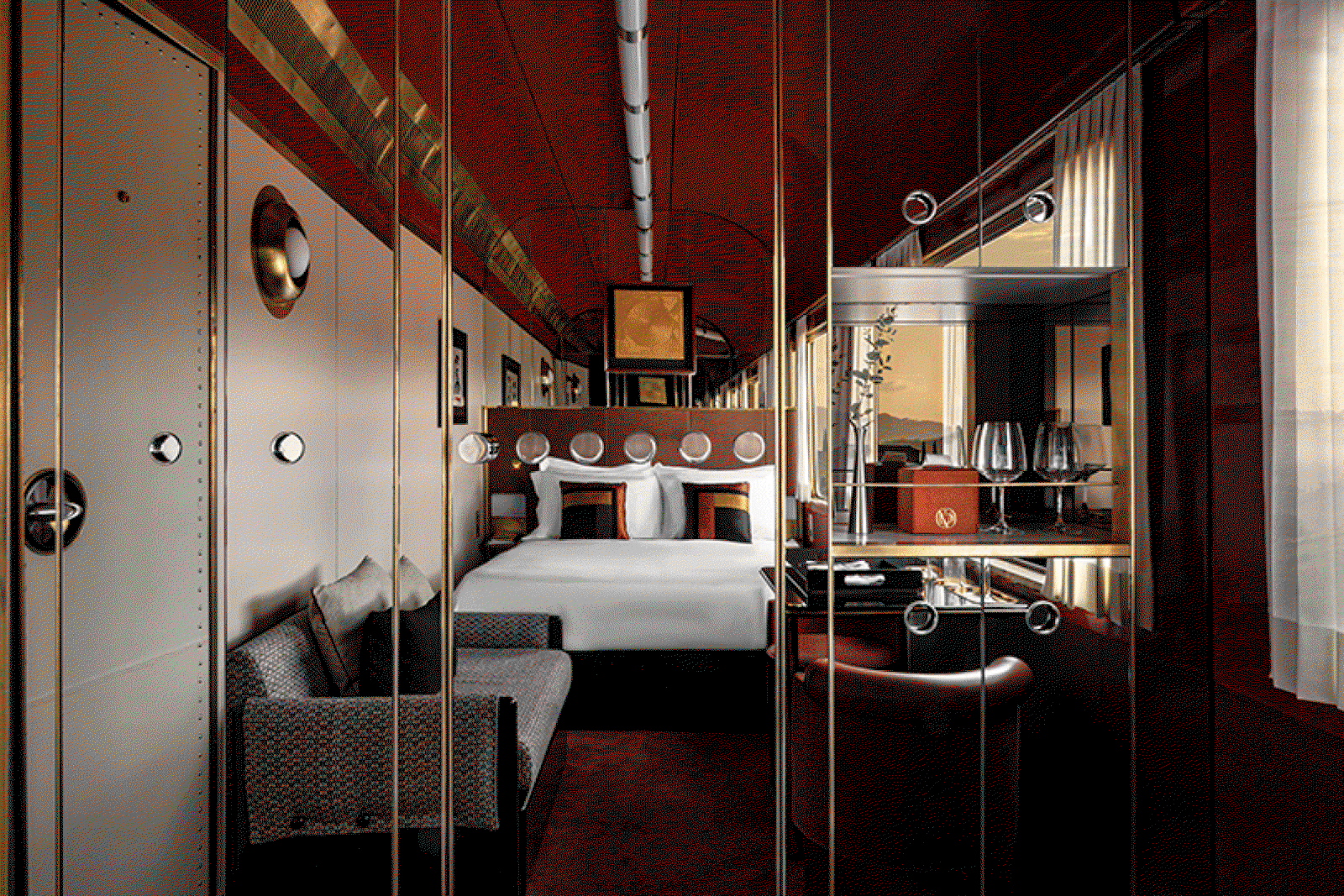
It’s not a new train, though you wouldn’t know it. The 12 carriages from the 1970s have been completely stripped and rebuilt with design work by Dimorestudio of Milan to create 31 en-suite cabins: 18 suites of 11 sq metres and 12 deluxe compartments of 7 sq m, to be followed by a full-carriage suite with two bedrooms.
I’m impressed by the use of mirrors on opposite walls to increase the sense of space, but I wonder how the generously dimensioned will fare on the cramped throne. Deluxe cabins have a chair, collapsible table and a sofa which converts into a small double bed, while a dressing gown and slippers are found in the small wardrobe.
Suites, meanwhile, are large enough to obviate the need to fold the bed, and there are two chairs. Controls in each compartment adjust the air-conditioning temperature and fan speed, and there is wi-fi throughout the train.
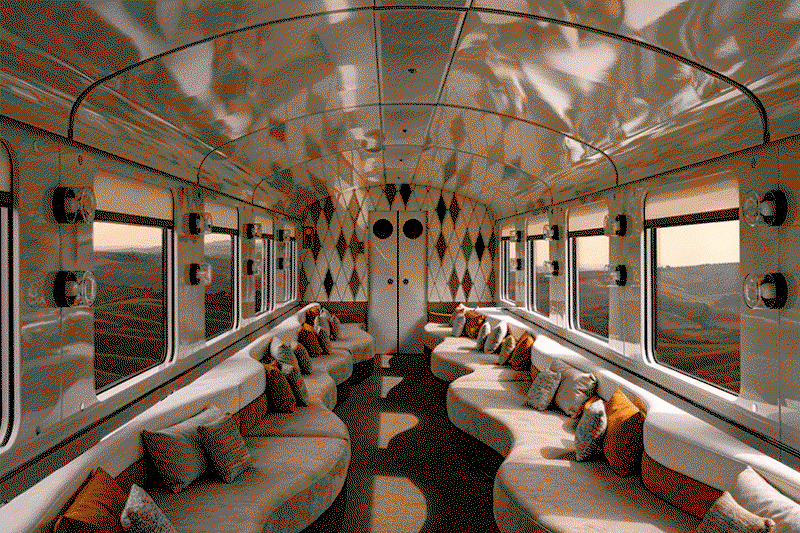
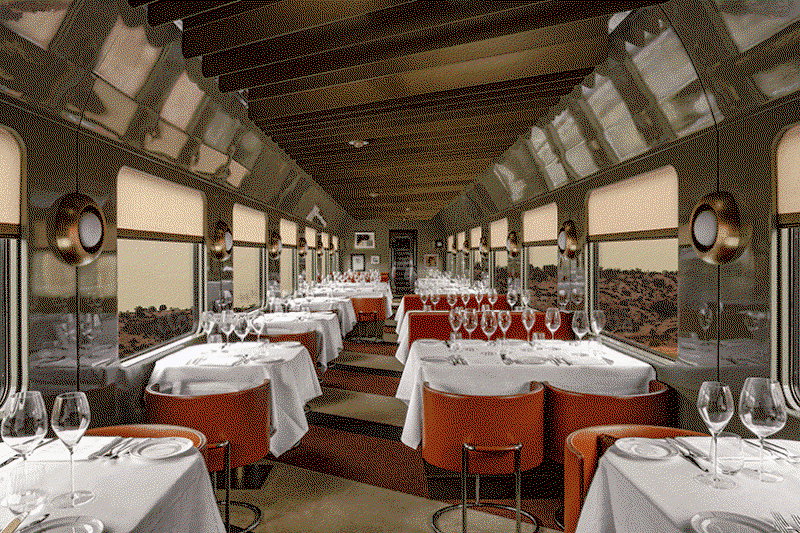
I wander along the fabric-lined corridors to inspect the open lounge car. With long sinuous banquettes, bar and piano, it’s the social hub of the train with pianist, saxophonist and singer performing in the evenings. The lounge is placed next to a dining car with enough covers for a single sitting.
Lunch is a six-course tasting menu with paired wines and portion sizes that are well judged to allow for the dinner to follow later. Menus for La Dolce Vita Orient Express have been devised by chef Heinz Beck whose La Pergola is Rome’s only Michelin three-star restaurant.
The 35 staff on each train work as a fixed team to develop camaraderie and all have been recruited by ex-Venice Simplon-Orient-Express managers from five-star backgrounds, to ensure they are accustomed to service in a moving environment such as this.
A new dawn
Italy’s first luxury hotel train is the beginning of an ambitious programme of new trains driven by Italian entrepreneur and CEO of Arsenale, Paolo Barletta, in partnership with Accor, which owns the Orient Express brand. The French-based hospitality firm has also secured a strategic investment for this project from LVMH, which of course, also owns Belmond, operator of several other legendary luxury trains.
It’s clear there have been many entities involved, and while talking with Silvia Carlesso about the train’s genesis, she stresses “we couldn’t have done it without the support of Fondazione FS Italiane and FS Treni Turistici Italiani”, whose role is to expand the use of trains for tourism throughout the country.
From Venice the train travels to Siena, famous for its Gothic cathedral, whose colour-banded campanile resembles ice-cream parfait, and the world’s oldest horse race. The Palio might be a huge tourist attraction, but it is very much for the locals, as I learn at the stables and training ground of last year’s winner. This is one of the off-train tours tailored to client’s interests as expressed in a booking questionnaire in advance, and which PR manager Valentina Silvestri tells me “are often experiences that tourists would find difficult or impossible to arrange themselves”.
By the end of the summer, a second train for Italy will have been completed, and work is progressing on the Dream of the Desert luxury train for Saudi Arabia. Arsenale also has plans for trains in Egypt, Uzbekistan and the UAE.
I expressed my feeling that the evening in Venice had been too short, even though most guests may have previously been to Venice – after dinner we departed to a siding for five motionless hours of sleep, before continuing on to Siena. It’s still early days, and I’m told itinerary adjustments to reflect such reactions will be made.
The generous staff-to-passenger ratio, train construction costs and the complex logistics and tour arrangements account for prices that some clients may find eye-watering. But full bookings on early departures already seem to suggest that the appetite for train travel, increased by numerous television series, is alive and well, and unlikely to diminish anytime soon.
Book it
A one-night itinerary onboard La Dolce Vita Orient Express starts from £2,662pp, departing Rome Ostiense station on multiple dates. Price includes private transfers from other stations, airport or hotel, meals and drinks onboard, and all tours.