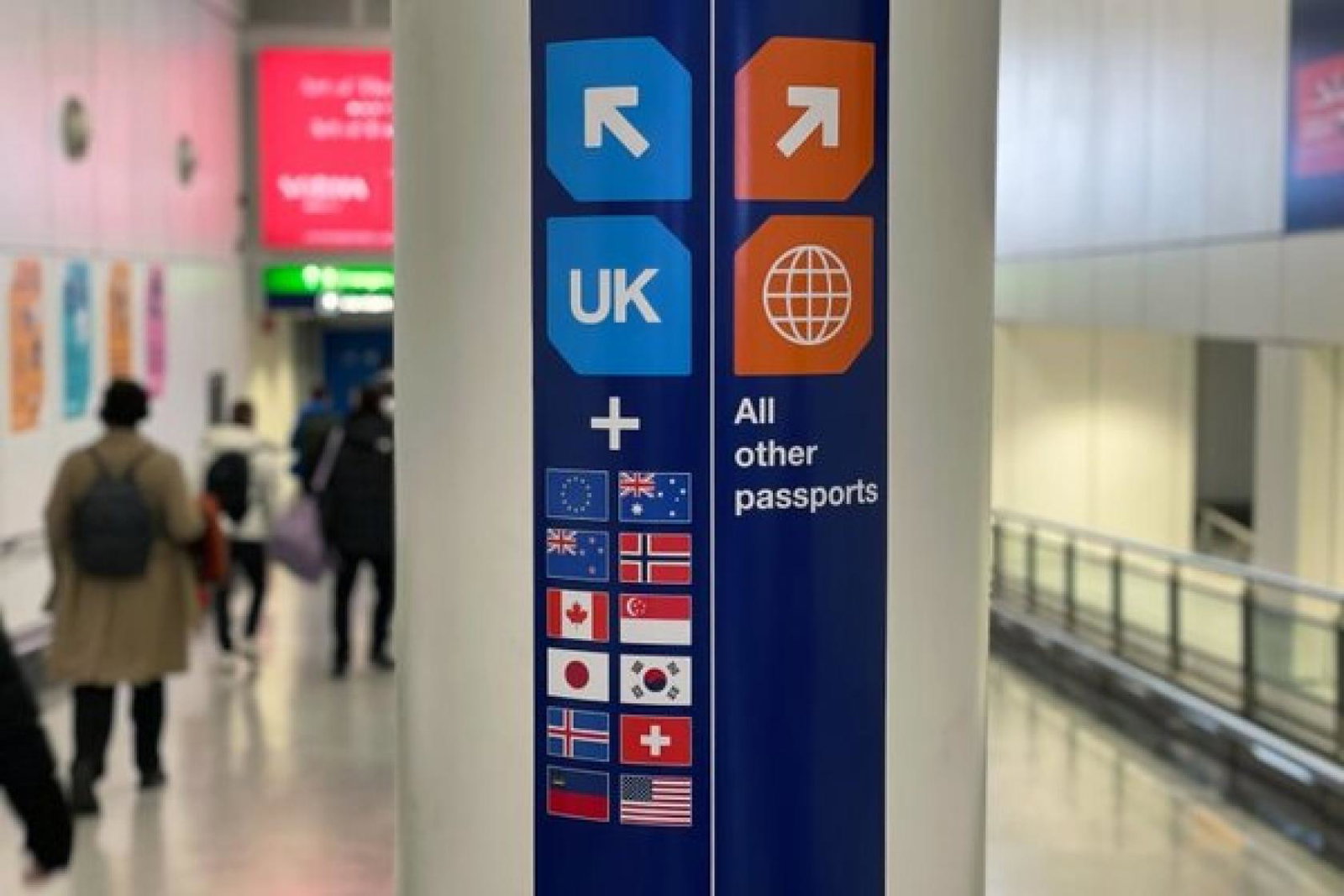
It’s been a long wait; EES, which will require non-EU travellers to register their fingerprints and submit to a biometric facial scan when they enter the bloc, was originally proposed in 2016 and had been due to start in 2022.
However, issues with the underlying technology meant the launch was postponed until May 2023, then late 2023 and then again to November 2024. The EU is now proposing to switch it on in October. Once live, EES will replace passport stamping.

Etias, meanwhile – a visa waiver scheme similar to that required for travel to the US – will require travellers to register online and pay a fee before they travel. The EU says it will now launch in late 2026, but has provided no firm date.
So with the firmest timetable yet from the EU for the two launches, TTG has pulled together everything you need to know about both EES and Etias to help you get ready for the first phase of the roll-out later this year.
So why do we all need to know this? Well following Brexit, the UK is now considered a "third country" by the EU meaning that both new systems will apply to all UK passport holders travelling to the European Union.
UK travellers to the EU will soon be required to register their EES data and, from next year, submit and pay for the visa waiver. So your clients – and you – need the details.
This didn’t use to happen – what’s changed?
Put simply, Brexit – plus a desire to hinder international criminality and monitor travellers’ movements – are the key reasons the EU is reforming its border arrangements.
The UK is no longer a part of the EU and, as such, the EU has the right to monitor movement of UK citizens and check their identities more closely, along with those from other non-EU nations.
When does EES start and how much will it cost?
EES will be free and will go live on Sunday 12 October so it will affect those travelling during October half-term. The EU says it will be phased in progressively over a six-month period, meaning some travellers may not have their details taken if their entry point is not yet equipped for EES or if there are long queues.
However, the EU says that from 10 April 2026, EES will be fully operational at all external EU border crossings. In the interim, the EU wants at least 10% of border points to operate EES from 12 October, but it will not make biometrics mandatory, so if queues do form, travellers may be checked manually.
At borders that have biometric equipment, checks will be mandatory from December. The target is for half of all EU border points to operate EES from January 2026.
How will EES work?
Passengers arriving in the EU will have their fingerprints and facial details registered, so queues are likely at border points. Data will be held on file for three years after the last trip, after which the process will have to be done again. Children under the age of 12 are not required to provide fingerprints, while a new passport will require a new EES registration.
Where will EES registration take place?
At the point the traveller arrives on EU territory, most likely their destination airport. However, those departing on ferries from Dover, on Eurostar trains from London St Pancras and or LeShuttle services from Folkestone will have their details taken there, as they are EU borders.
Does EES apply throughout the EU?
No. According to the European Commission, the system will apply when entering 25 EU countries, but not Cyprus and Ireland.
Are any non-EU countries involved?
Yes – Norway, Iceland, Switzerland and Lichtenstein. They are part of the border-free Schengen area, along with most EU member states, so EES details must be provided.
Does this mean the end of passport stamping?
Yes. Passports will be scanned on arrival instead. EES means everything will be done electronically, and once everyone is registered, it should speed up border control. Remember, though, EES will make it easier for the EU to monitor the movements of UK passport-holders and spot those over-staying in the EU. Following Brexit, UK citizens without visas are subject to a maximum stay of 90 days in the EU in any 180-day period.
Are EU borders in the UK ready for this?
Eurostar says St Pancras International has the necessary 50 kiosks installed. Eurotunnel has built an enclosed drive-through zone accommodating 53 vehicles simultaneously, with each bay having two biometric kiosks. Eurotunnel said 700 vehicles an hour can be processed and claims EES will add “just over five minutes” to journey time.
The Port of Dover has built a similar facility on a reclaimed dock, which will also process coach passengers, who must alight to enter their data. Coaches will then be "sealed" before proceeding to check-in.
Is there anything that could speed up all of this?
Potentially, yes. Frontex, the European Border and Coast Guard Agency, has developed an app which will allow travellers to pre-register documents and a facial image for EES, although fingerprints will still need to be taken at borders. The first airport to start accepting the app will be Stockholm’s Arlanda airport this year, with France, Italy and the Netherlands planning a 2026 start. Portugal and Greece have also “expressed interest” in utilising the app.
In a nutshell, should potential delays be factored in?
Absolutely. Notifying your clients’ airport transfer company when their flight touches down that they "won’t be long" may be a little optimistic while EES is in its infancy. The industry has also warned of challenges once the systems go live as teething problems are addressed.
What about Irish passport holders?
As they are EU citizens, neither EES nor Etias will apply to Irish passport holders when travelling to EU countries.
Where can I find out more?
The EU has created an EES microsite, as has the UK government.
Going back to Etias, what’s this all about?
Etias is the online visa waiver UK passport-holders will need to visit the EU and Schengen countries. It will be valid for three years or until the passport expires. Etias authorises a 90-day stay in the EU in any 180-day period. No start date has been given, but the EU now says Etias will begin “in the last quarter of 2026”. Travellers to the EU will need both EES and Etias authorisation.
Is there a cost?
Unlike EES, yes. The original non-refundable fee was put at €7 (£6). However, that has trebled to €20 (£17) before the system has even been launched. Those aged under 18 or over 70 won’t have to pay but will still need to apply for the Etias.
All this bureaucracy and cost, it’s outrageous!
It really isn’t. Similar systems are becoming standard around the world, with most countries introducing something similar. The UK has since 2023 had its own Esta/Etias equivalent, the Electronic Travel Authorisation (ETA), which costs £16. In April this year, ETA became a requirement for EU visitors to the UK.
Is there a rule about passport validity?
Yes. Passports should have at least three months’ validity and should not be older than 10 years.
What information will I need to provide?
Personal information needed includes your first or given name(s), surname(s), date and place of birth, nationality, home address, parents’ first names, email address and phone number. You will also need your travel document details.
Background information includes details about your level of education and current occupation, as well as questions about your intended travel and stay in any country requiring Etias. You must also provide details of any criminal convictions, any past travels to war or conflict zones, and whether you have recently been subject of a decision requiring you to leave a country.
Can you submit details on behalf of someone else?
Yes. This is perhaps an area where agents can help some clients. Anyone applying for someone else must provide their name and contact details of the organisation or firm, plus the applicant and you must sign a declaration.
Is there such thing as a family Etias?
No, Etias is personal and each traveller must have their own. Similarly, there is no group Etias. Applications for under 18s must be submitted by a person “exercising permanent or temporary parental authority or legal guardianship”. Etias granted to children remain valid for the full three years even if they become adults in this timeframe.
How long will it take for Etias applications to be approved?
The EU says most applications will be approved “within minutes” but says some cases “may take up to 30 days”. It recommends applying well in advance of travel. Applicants who require further scrutiny will be notified within 96 hours.
What happens if an application is refused?
Applicants will be informed of any reasons for refusal and given details of how to appeal.
Do I need to keep a print-out?
No, all the information is held online, but some may wish to print things for peace of mind.
Will there be a glut of commercial websites offering to help with applications for a fee, like with Estas?
Undoubtedly yes, but they are easily identified. Anyone charging more than the basic Etias fee should be avoided. All official EU websites have the europa.eu domain, so head to the real Etias website at travel-europe.europa.eu/etias.