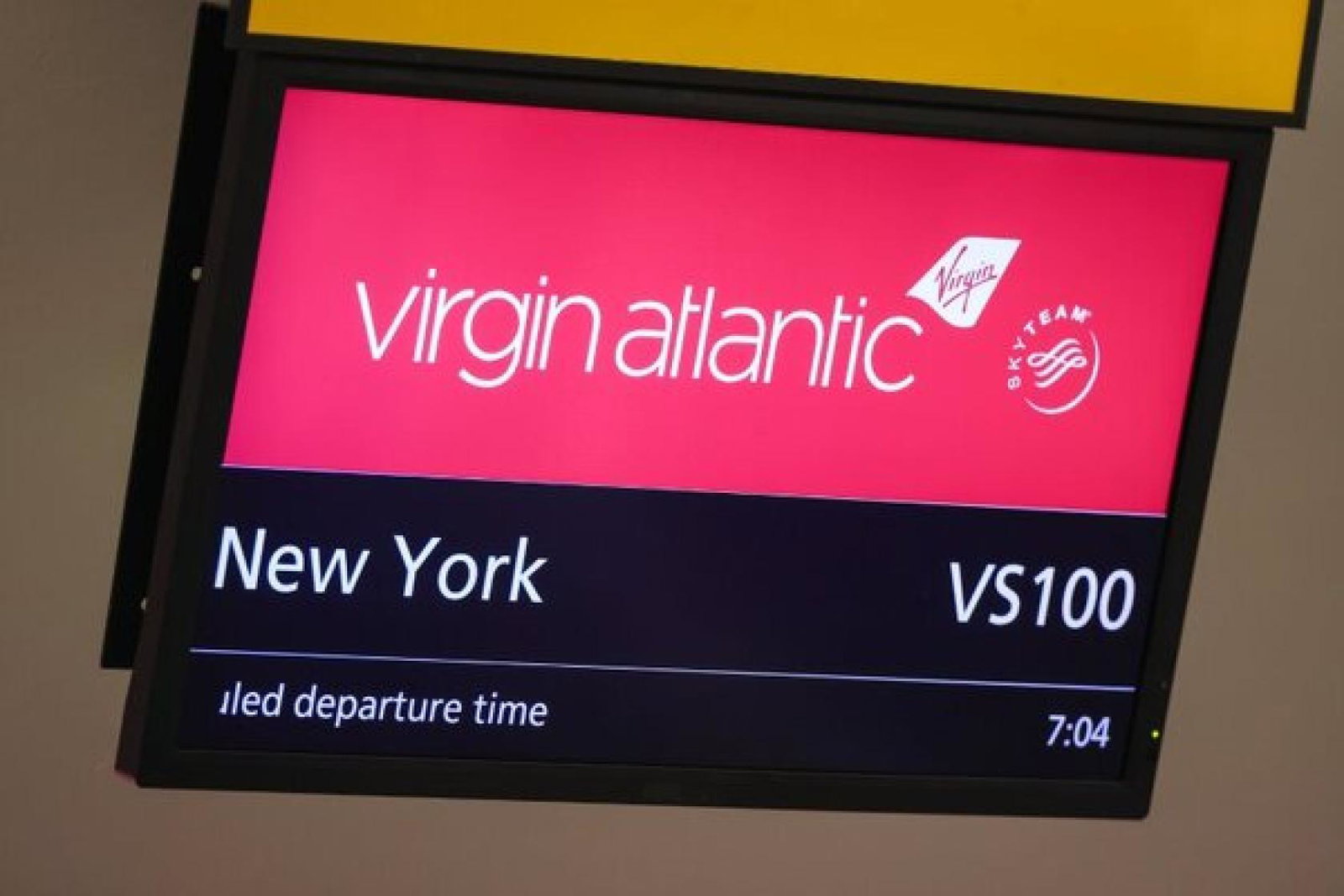
Virgin Atlantic flight VS100 or Flight 100 – the first long-haul flight to be powered fully by sustainable aviation fuel (SAF) – touched down safely at New York JFK on 28 November without incident.
VS100 was given the green light in early November. It was not the first 100% SAF flight; what made this a world-first was flying long-haul with SAF powering both engines, not just one as has been achieved onboard commercial short-haul flights in the past.

Compared with a typical Heathrow-JFK service, the reduction in lifecycle greenhouse gas emissions from flights like VS100 is expected to be around 70%.
Virgin Atlantic won a Department for Transport (DfT) competition last year to execute the first 100% SAF-powered transatlantic flight within a year. It led a consortium, which included Rolls Royce, Boeing, academics and consultants, and settled on a 28 November departure.
SAF is not without its problems; concerns have been raised about how expensive it is – purchasing SAF currently costs airlines up to four times as much as conventional jet fuel – and how quickly production can be scaled up.
It’s estimated that just 0.1% of the fuel being used by airlines is SAF. For Virgin to achieve its target of “10% SAF by 2030”, chief executive Shai Weiss and his colleagues highlight the need to scale up production by 150 times the current rate.
The UK government, for its part, has consulted on the introduction of a SAF mandate requiring at least 10% of jet fuel to be made from sustainable sources by 2030 – a target that may not even be achievable if there is no further investment in production and supply. Transport secretary Mark Harper has also warned the necessity for a general election sometime in the next 12 months could also hinder the government’s SAF timetable.
There are other challenges too. Sceptics and outright critics assert these fuels are not truly net-zero in terms of emissions as they are made from waste products that have previously produced carbon through their production or use.
’A seminal moment’
For Corneel Koster, Virgin’s chief customer and operating officer, SAF is a clear step towards making long-haul aviation more sustainable. “We can – and need to – fly on 100% SAF," he says.
"When it comes to long-haul aviation, electrification won’t work for many decades to come, and hydrogen is still in initial stages. If you want to fit hydrogen on a plane, your fuel tanks will need to be three times larger than they are currently.
"Mostly for the here and now, and possibly all the way to 2040 or 2050, SAF is the way to reduce the impact of long-haul aviation and start decarbonising."