‘You just need to get out there’
Perhaps the most illuminating point made on stage was the lengths to which some of these agencies go to get their branding out there.
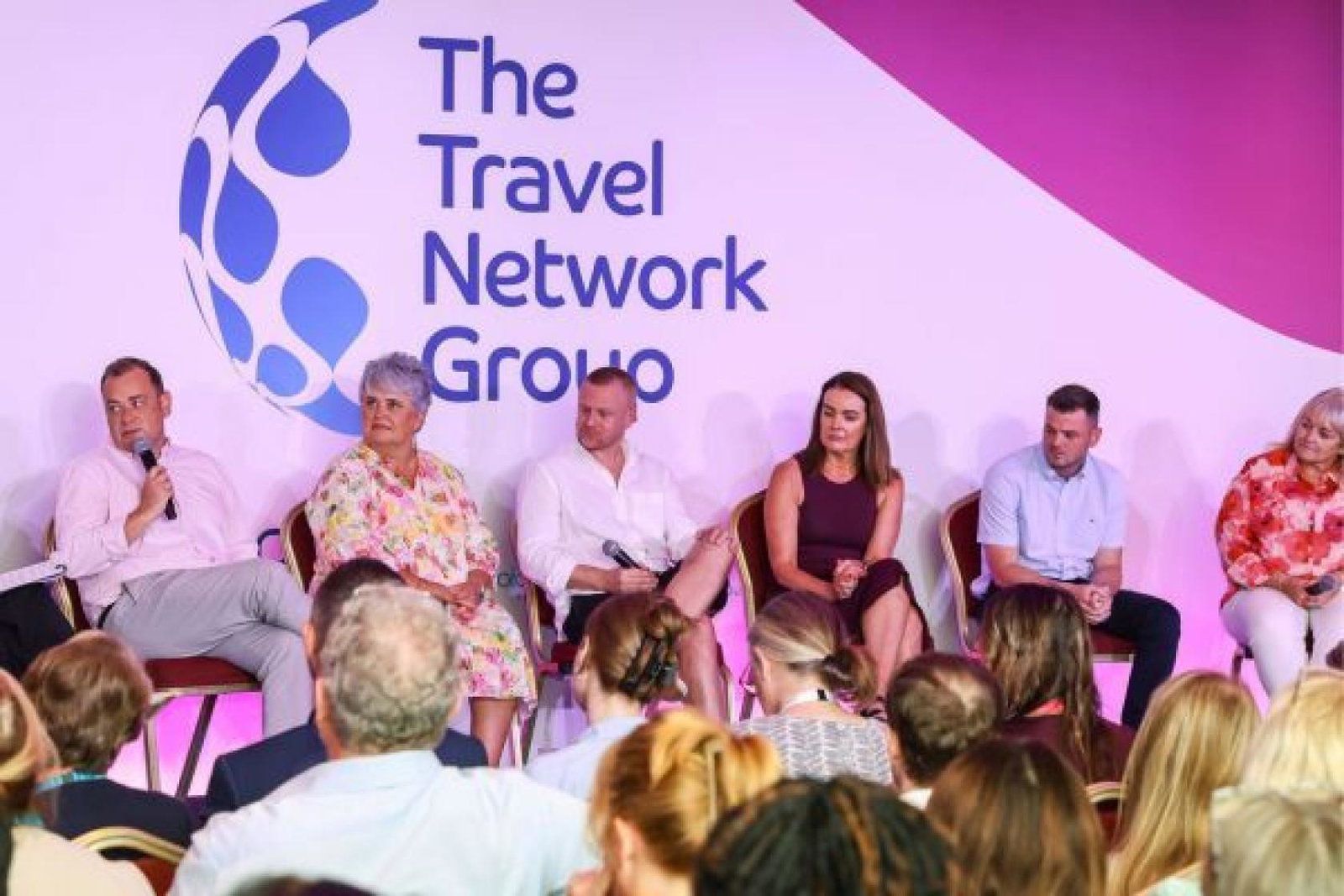
Richards and Conroy Smith (pictured) both stressed agents needed to “immerse” themselves in their local communities, whether that be sponsoring sports teams, supporting local charities – or having your face displayed across the side of a car wash.
"I’ve even got my face on the local car wash – much to my husband’s disgust," said Richards. "It’s great advertising!"
Richards also has a Tivoli Travel-branded car she drives around her Mirfield hometown. “It’s pretty good – but it's broken down a few times,” she said, adding: “I go everywhere in it, but when I’m away, my colleague Helen uses it. My customers can tell whether I’m working if they see me driving it.”
Conroy Smith said Off Broadway Travel’s efforts in the village of Welwyn had “paid off” and highlighted how the agency had been awarded a local business award for the past four years.
“We do all the local fairs,” she said. "We did a classic car show that worked well. We also got the community involved in collecting football kits to support an underprivileged team in Mauritius. It has paid off. We’ve won the 'Welwyn Oscar' four years in a row. It’s the award for the best business in Welwyn voted for by the locals.”
To illustrate her point about how crucial it is for agencies to have their branding everywhere, she joked: “We go to the funerals – we go to everything.”
Expand your business slowly
Triangle Travel opened a quarter of a century ago. Kenton, though, insisted he’s always wanted to expand at a steady pace. The agency currently has six shops across Berkshire and Oxfordshire.
“We managed to get the shops in the right places," he said. "We’ve never said we want 10 or 20 shops. We’re quite happy with what we’ve got because the quality is there.
“I would rather have the six [shops] than 10 or 15 that weren’t all delivering on customer service.”
However, Kenton confirmed his staff were ready to expand “at the drop of a hat” if needed. “The staff understand what expansion means for us as a business,” he explained.
Like Kenton, Swords (pictured) outlined the need for businesses to grow at a pace that suited the environment in which they are situated in. “I’ve always had a passion for retail,” he said. “People were asking me why I was getting into retail at the beginning, and I said I still think there’s a huge place for it.
“When we opened our first shop [in Wimbledon town in 2017], we knew it wasn’t where we wanted to be. We opened our first shop as a bit of trial. If you do it too quickly, you may be hit suddenly by huge business rates. You don’t know what you’re going to do with the market as well.”
Swords Travel subsequently moved to a larger premises in the heart of Wimbledon Village last summer and recently revealed it is launching an in-house tour operator.
'If you’re a homeworker, stay in your lane'
CLS Travel owner Clare Stege noted how the homeworking sector is “very saturated”, so agents should try to block out the “noise” and focus on their core customer demographic.
“You’ve got to keep to your lane about where you’re going with it and how you grow your business,” Stege told delegates. “Looking at my customer base, they are around 50 to 70 years old and I focus on them and on adding more value to the customer base that I’ve got.”
She added: “I’m very driven by what I earn. That is what works for me. I try to stay in my lane and block everything else out rather than rate matching.”
Strong management takes pressure off
JF Travel's Fielding said it was probably easier to move from two shops to three than it is to go up from one to two. But he also stressed agency bosses should share responsibility among senior staff and not take on too much themselves.
“Covid taught me a lot,” he said. "I used to do everything. I’ve now realised I cannot do that. There’s more of a management structure in place and we’re growing year-on-year. Northern Ireland is a small place, so it’s easier to evolve a brand.”
Encouraging families to book – and stay booked
Prior to the panel discussion, TTNG chief commercial officer Vim Vithaldas revealed how the family market was “really struggling”. Fielding echoed this view: “Families are probably the biggest market for us," he said. "It’s tough for them.”
He offered a solution to try and persuade families not to cancel. “What we’ve done in the last four to six weeks is focus on 2026 and we break the cost down for them when speaking to families," he continued.
“If it’s a £2,000 booking, for instance, and they have 10 months to pay, we break it down for them. It then becomes more affordable and they’re not getting stung with a big bill at the end.”
Fielding admitted going away as a family of five is “expensive”, adding: “I’ve got three kids.”
Target a specific margin
Kenton admitted his business lacked direction after Covid, but revealed after settling on a 13% margin target for his staff, things had improved.
“We seemed to be chasing volume and then we seemed to be chasing margin and we weren’t doing either very well,” he explained. “We sat down and we decided to go after 13% margin on average. Over the past two or three years, it sits at 13.27%.
“You have to get the staff involved, and it has taken a year, a year-and-a-half or two years [to get there]. Don’t get me wrong there have been sleepless night, but it soon passes. I understand we’re based in quiet affluent areas, which allows us to do this – but it’s been a game-changer."
Print marketing, anyone?
Swords argued print marketing could yet still achieve the right result for some agencies – even if, broadly speaking, the nation’s appetite for print products was on the wane. “We try not to discredit different levels of marketing,” he said. “I think business development is huge. You can’t ever stop. It’s always evolving.
“A good recent example is print marketing. People saying print marketing is expensive and it’s not good for the environment. I think there’s a huge place for print marketing in all communities.”
Swords said a sizeable group of his agency’s customers weren’t looking for holiday inspiration on Facebook or Instagram, giving him and his business partners Stuart a challenge in terms of how they accessed these people.
“A lot of them are high-net-worth clients who still read print products,” he continued. “We decided to design our own magazine in spring, summer, autumn and winter. We delivered 10,000 magazines locally. The impact was huge. People knew we were there and they recognised it.”
Furthermore, a single lucrative booking, confirmed soon after the first issue had landed, covered the cost of the magazine, added Swords. “We’re getting repeat business from it and we’re getting partners to work with us on it.”
When using TikTok, follow the trends
Fielding urged agents to “leap on” TikTok and use it as a sales tool. “It’s amazing how often people will call up and say I want to book after watching my content,” he said.
“You don’t have to do much work for it. You have to follow the trends. You can sometimes get 50,000 to 60,000 views on this stuff. It just takes one video and follow the trends. That’s my advice.”
Do you really need staff to work Christmas?
Kenton said he has “dramatically” changed Triangle Travel’s working rota over Christmas and Easter. “For the past three years, we’ve given staff a week off at Christmas fully paid and we close on Easter Saturday,” he said. “That allows staff time with their families and they come back refreshed.”
Explaining the reasons for the change, he added: “We’ve all sat there at Christmas, nobody comes in through the door, you’re heating the place up and you’re wondering what business you’re going to get. That really changed our mentality.”