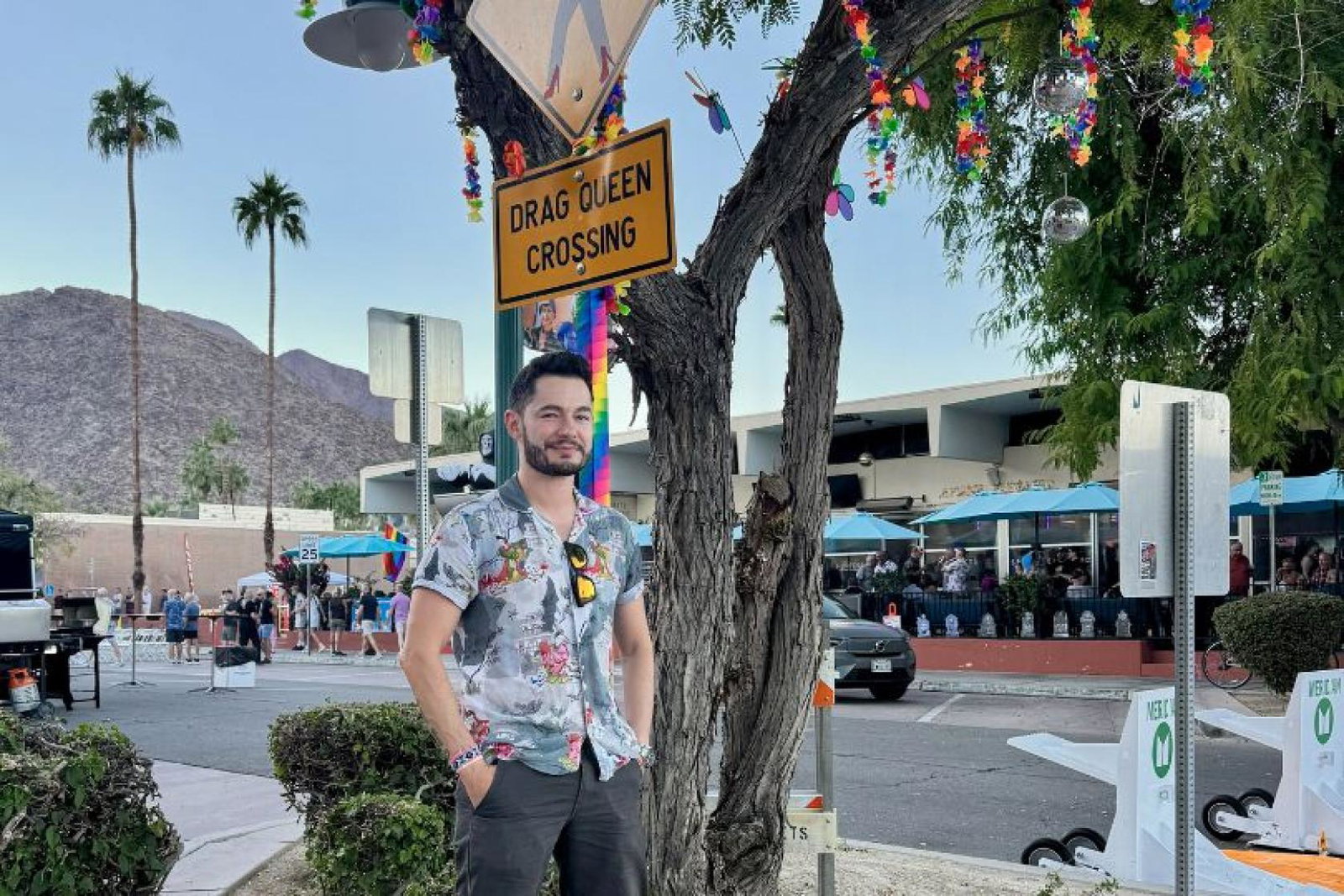
I’ve always loved the United States — from childhood Disneyland adventures to the neon allure of New York, America’s super saturated vibrancy has always appealed.
As a trans couple, my wife, Hannah and I have travelled there many times. I proposed in a rowing boat on Central Park lake in 2017 and we honeymooned there a year later. But despite the fond memories, Hannah will be sitting it out for the next four years, the US now perceived by many as a less than safe proposition for the LGBTQ community. I was on the same page until an offer too good to decline – and invitation to the long running and much respected IGLTA Global Convention, an international, nomadic affair, which in 2025 was to be hosted in Palm Springs.
I floated the idea to UK-based trans friends and the scare stories trickled in: visas ripped from passports; a trans woman deported, accused of prostitution. Friends in the US compounded my fears: "Scrub your social media. Get a burner phone." Testosterone, a controlled substance in the US, was to be left at home. What should have been a run-of-the-mill trip became a tactical operation, first flying to Dublin for TSA pre-clearance on friendlier soil, before choosing a longer connection through San Francisco, avoiding Dallas in the deep red state of Texas – a $1,500 detour in all.
After weeks of worry, standing in the Dublin TSA line was anxiety filled but when the officer finally waved me forward, he was surprisingly pleasant. No questions about gender or identity, just reasons for visit and duration of stay. Eighteen hours later I was warmly welcomed by Palm Springs, the city brazenly, wonderfully inclusive, rainbow flags fluttering in the wind as we drove downtown to the kitschy, bubblegum pink and oh-so-queer Trixie Motel.
Palm Springs is clearly comfortable in its queer identity and aware of the importance of visibility. Local tourism bodies, hotels and small businesses didn’t just host the conference; they participated, listened and asked how to do better, demonstrating how local commitment can cut through national noise.
As an increasingly cautious traveller, I wanted to understand how brands were committing to ensuring their guests felt welcome and , above all, safe. The sessions I attended at IGLTA shared a consistent message: surface-level allyship isn’t enough. Panels discussed the dangers of “performative rainbow capitalism” — companies that cover their logos in Pride colours each June but retreat once the marketing cycle ends. As budgets tighten and political pressure grows, there’s a risk that inclusive initiatives are seen as expendable luxuries. Speakers urged the industry to weave diversity, equity and inclusion into every layer of business, from staff training and supplier selection to the design of registration forms and guest experiences. True inclusion, they argued, is systemic: it should be visible in operations, not just advertisements.
There was also strong emphasis on intersectionality. Inclusion for LGBTQ+ travellers must sit alongside accessibility for people of colour, disabled travellers and those from different cultural backgrounds. The aim is to create travel experiences that are safe, dignified and welcoming for everyone, with a frank and honest approach. Travellers don’t want empty reassurances; they want transparency about risks and proof that destinations are prepared to protect them. Considering the hundreds of anti-LGBTQ bills introduced across US stated in the last two years, those calls for honesty are timely.
Much like variances between cities and states, globally, the map is equally uneven. Spain, Mexico and several Latin American nations have expanded legal recognition and anti-discrimination protections, while countries such as Slovakia and Iraq have recently imposed new restrictions. The picture that emerges is one of simultaneous progress and backlash — optimism shadowed by fear.
For families like mine, these shifts have tangible effects. A single change to a data field or a passport rule can suddenly turn travel from easy to impossible. Conversely, when destinations commit to inclusion through concrete measures — trained staff, inclusive forms, visible diversity — the difference is immediate. You stop anticipating the next awkward encounter. You stop feeling that you are 'other'. You breathe. And in Palm Springs, I certainly breathed.
After four days of discussion at the conference, I found myself cautiously optimistic. The current climate is revealing more than ever that inclusion isn’t a marketing exercise but a professional standard. Businesses that invest in inclusivity are not only doing the right thing morally; they’re strengthening their long-term resilience.
I left Palm Springs reminded that travel, like equality, is an act of faith. You step forward, hoping to meet kindness on the other side of the border. Most days, we do. But lasting safety will depend on whether the promises made in inclusive spaces like IGLTA are still being kept once Pride month is over.