The flight, which has been chartered by the UK government, is scheduled to depart Muscat International airport at 11pm local time (7pm GMT). Seats will be offered as a priority to the most vulnerable.
It follows a statement to the House of Commons by foreign secretary Yvette Cooper on Tuesday (3 March) who confirmed 130,000 British nationals had now registered their presence in the region with the FCDO.
Cooper told MPs that while airspace in the region largely remains closed, she was in "close contact" with her Middle East counterparts – notably the authorities in the United Arab Emirates – to secure departures "as they become viable".

The UAE has opened what are being called "safe air corridors" in coordination with other Gulf countries, allowing up to 48 flights an hour, mainly to get stranded passengers on their way. An initial 60 flights have been operated this way, with more than 80 more scheduled.
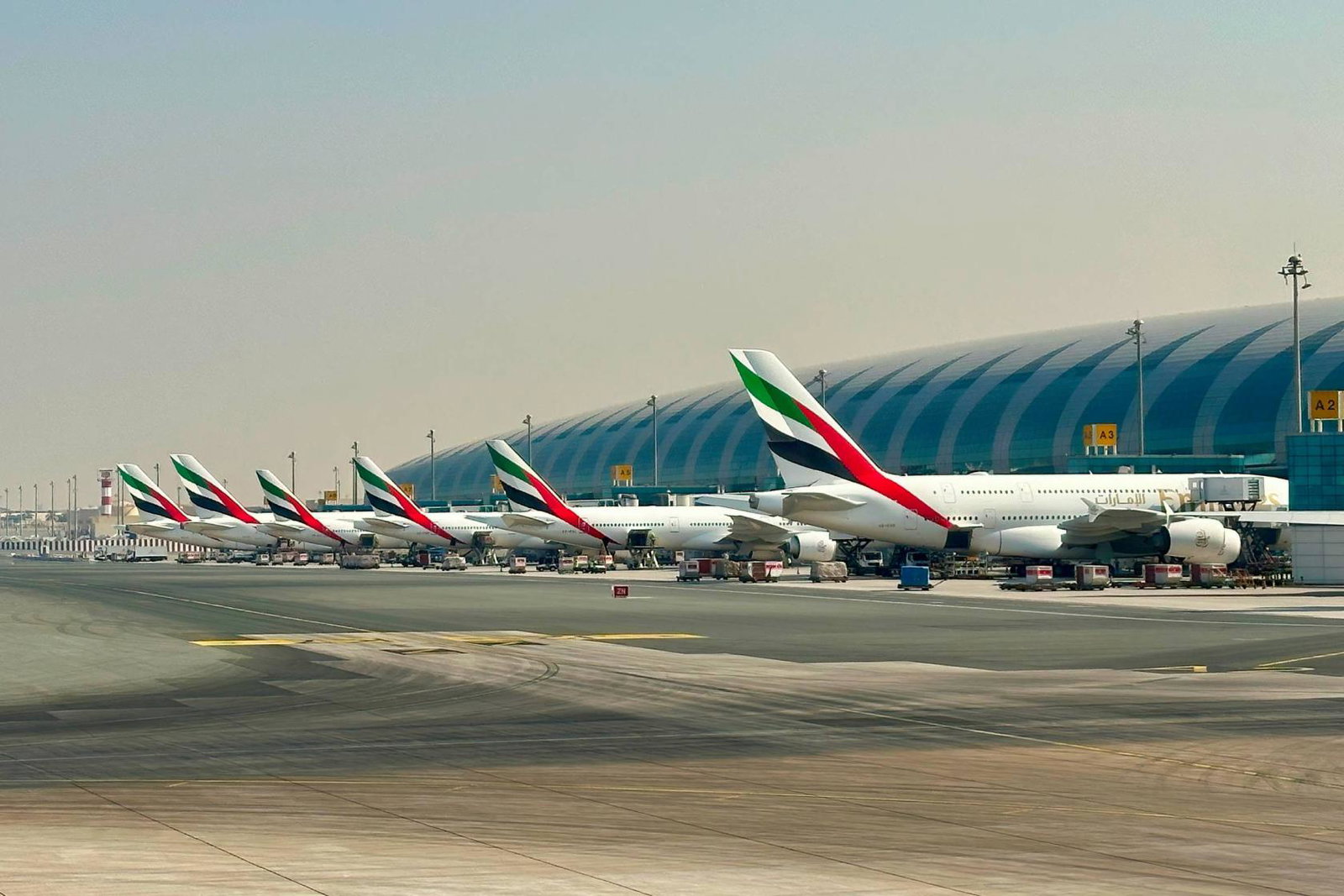
All scheduled flights by UAE-based Emirates currently remain suspended until 11.59pm local time on Wednesday owing to airspace closures across the Middle East, although the carrier has confirmed it will continue to operate "a limited number" of passenger repatriation flights.
Abu Dhabi-based Etihad Airways has extended its suspension of all scheduled commercial flights to and from the emirate until 2pm local time on Thursday (5 March). Like Emirates, though, it will continue to operate some repositioning and repatriation flights.
Qatar's airspace is another that remains closed, meaning Doha International airport – another major transit hub in the region – is shut. Qatar Airways has suspended all scheduled flight operations with a further update promised by 9am local time on Friday (6 March).
By contrast, Oman has kept its airspace open. Cooper said the UK government was working with airlines to increase capacity out of capital Muscat for British nationals, again, with priority being given to vulnerable nationals.
Anyone looking to leave the region via repatriation flights must wait to be contacted by the FCDO, Cooper warned, while Emirates, Etihad and Qatar Airways have all advised passengers not to attend their departure airport unless told to do so.
"This is a very fast-moving situation, and we have unprecedented numbers of British nationals in the region," said Cooper. "I will continue to update members [of parliament] and affected British nationals as the situation evolves."
Airlines in limbo
Flights to and from the Middle East have been grounded since Saturday (28 February) following US and Israeli strikes on Iran, which have claimed the life of Iran's supreme leader Ayatollah Ali Khamenei.
Iran has retaliated, launching strikes on western allies in the Gulf region, including the UAE, Qatar, Bahrain and Kuwait, ostensibly targeting US military bases and installations. However, RAF Akrotiri in Cyprus has reportedly been a target for Iranian drone strikes.
There have been direct attacks on commercial airports in the region, including Dubai International and Abu Dhabi's Zayed International, while debris from an intercepted Iranian strike is understood to have been the cause of a fire at Fairmont's hotel on Dubai's Palm Jumeirah at the weekend.
British Airways has suspended services to and from Abu Dhabi, Amman, Bahrain, Doha, Dubai and Tel Aviv. However, it has scheduled a flight from Muscat to London on Thursday (5 March) departing at 2.30am local time taking advantage of Oman's open airspace.
Anyone due to fly between London and Abu Dhabi, Amman, Bahrain, Doha, Dubai or Tel Aviv up to or on 15 March can change their flight date for free to another date for travel on or before 29 March. Anyone booked to travel up to or on Sunday (8 March) can request a full refund.
BA customers booked to travel between London and Larnaca up to or on 15 March can also change their flight date, for free, for another departing up to or on 29 March.
Virgin Atlantic said it has restarted "some flights" to the region, including two services to Riyadh on Tuesday. However, it warned the situation was "dynamic and fast-moving" and that further changes could be made at short notice.
Some flights will operate on adjusted routings meaning they will take slightly longer. It has so far cancelled eight services since the conflict got under way on Saturday.
Wizz Air has shifted capacity allocated to its grounded Tel Aviv routes to Sharm el Sheikh, including services from Luton. The FCDO has confirmed a British embassy team is on-hand to help British nationals secure airlift home from Egypt.
Tui has cancelled four UK flights that were due to operate to Cyprus on Wednesday – TOM7318 from East Midlands airport to Paphos, TOM6312 from Cardiff airport to Paphos, TOM6354 from Bournemouth to Paphos and TOM2336 from Manchester to Paphos.
In a statement, Tui Group said with repatriation flights starting to get under way, it was "fully prepared" to operate "special flights" using its aircraft to support guests' return from the Middle East, "even though we do not usually operate in this region".
"This would require the necessary governmental approvals and coordination, and therefore a specific start date has not yet been confirmed," it added.