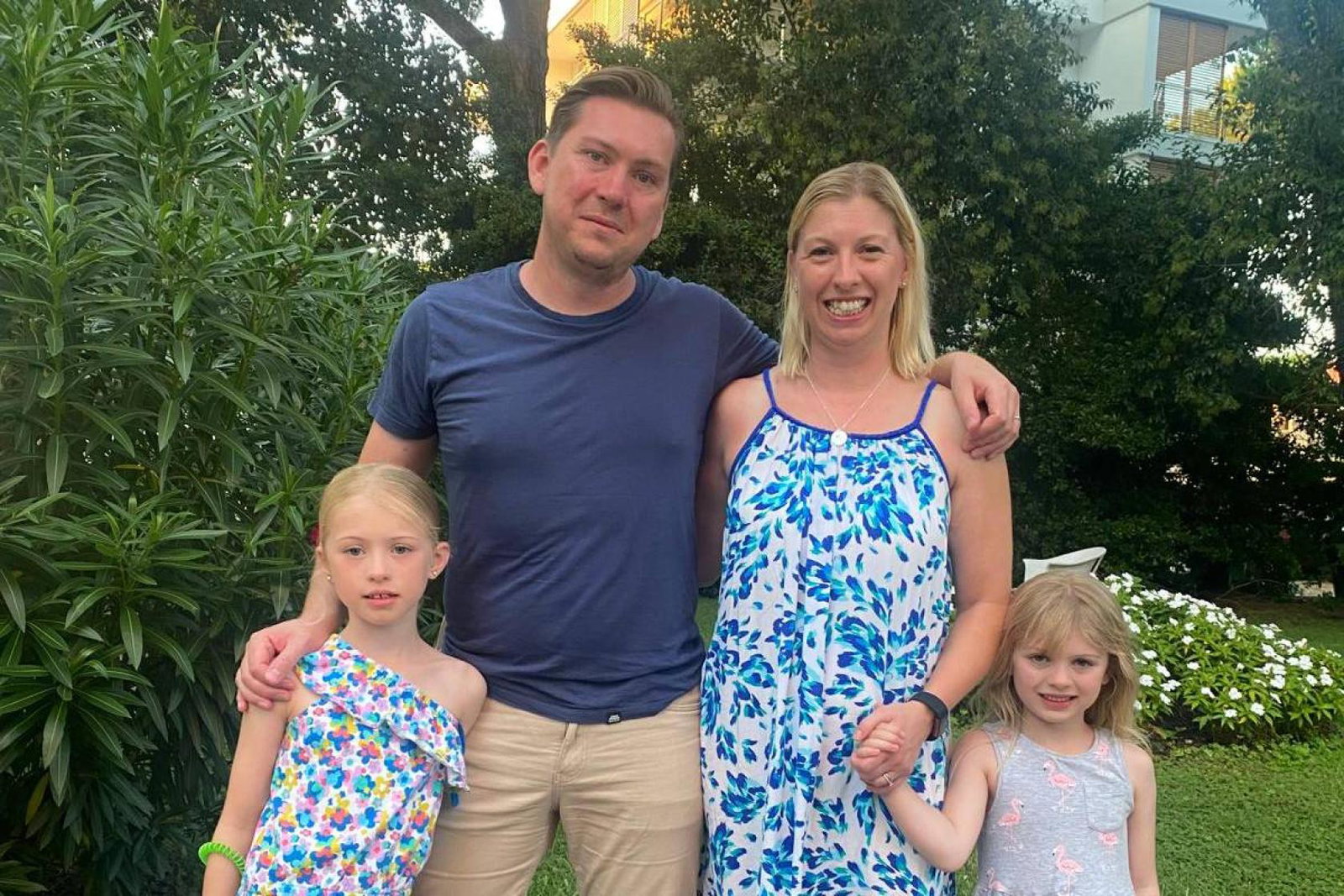
Matt Callaway, director of Savile Row Travel in Henley-on-Thames, told TTG how he has been working hard to get clients home while balancing his own family worries after his wife Sarah became stranded in Dubai. "It's been a crazy, crazy few days, but adrenaline and coffee seem to be getting me through," he said.
Sarah had been visiting Dubai with three friends, one of whom lives in Saudi Arabia, and was due to return on Monday (2 March) before the widespread disruption triggered by the US and Israeli war on Iran.

Callaway has been speaking to his wife regularly while she waited to secure a flight home, but explained the logistics of calling into Dubai had been "slightly frustrating".
"You can't make WhatsApp calls over there so we've been in contact through messages, voice notes and a few Zooms," he said. "We've got two young children who want to see her. They were absolutely fine at first, but now it's dragging on they're getting upset."
'She was homesick and just wanted to see our girls'
After her flights were cancelled twice, Sarah finally secured a seat on one of Emirates’ limited services, which left Dubai at 7.20am on Wednesday (4 March). "It was all up in the air – I assumed this one would be cancelled like the rest," Callaway said. "But they took the risk and thankfully the flight took off."
Callaway explained he had explored alternative routings via Abu Dhabi and other hubs in the region, including Cairo, but questioned the risk of onward connections. "My wife and her friends decided to sit tight," he continued.
"They weren't worried about escalating attacks. Everyone I've spoken to has seemed secure with the UAE government and its defence systems. But she was very nervy, very homesick, and just wanted to see the girls."
'I've averaged three hours sleep a night'
Sarah was one of tens of thousands of expats still stuck in the Middle East, including some of Callaway's own clients. The team at Savile Row Travel have been working "24 hours a day" to make sure their customers make it back home, he told TTG. "We've been working around the clock with very limited sleep," he said. "I think I've probably averaged three hours sleep each night."
That hard work has paid off, though. "We've managed to find pockets of availability and have already gotten some clients out. Their safety is paramount, and that's what we've been working towards," Callaway continued. "The majority of our remaining clients are booked to leave on Friday and Saturday."
He added some Dubai-based clients are also choosing to leave amid the uncertainty. "It's a temporary measure, but a few have enquired after other Emirates destinations and the UK," Callaway said. "I'm wondering how that will affect businesses that are employing expats over there as well."
'The last thing we want is a crisis of confidence'
Callaway, who has worked in travel for 20 years, including in a management role at Audley Travel, described the current political situation as "horrific" but par for the course for travel professionals.
"There's been loss of life and other devastating consequences across the Middle East, so I don't want to minimise this situation at all. But crises are common in travel," he explained.
"I've been stranded in Budapest and Moscow, worked through the Eyjafjallajökull eruption, the protests in Bangkok and the bombing in Mumbai. We operate globally, and unfortunately, that's the nature of the world."
He urged agents "not to panic" and to be proactive in contacting customers to avoid a "crisis of confidence" – even those not travelling through the Middle East. "Clients headed to South Africa, or Vietnam, or other long-haul destinations might still be scared," Callaway said.
"You need to get in front of it, reassure them and make sure they're still comfortable travelling. This industry is built on sentiment, and clients want to know that they're front of mind.
"When the going's good, people will happily travel, spend money and treat themselves. If you give them the chance to think twice or hold back, that's where the lasting effects are."
'Agents are a bit bruised'
Callaway told TTG people only realise the value of a good agent when "things go wrong". "The value we offer to our clients is priceless – I think of it as an insurance," he said.
"You have the guidance and expertise of the team here, which amounts to dozens of years, and people who are willing to do the legwork for you. We're the ones who call the airlines and hotels, negotiate additional rates or extra stays and ticket flights. It's a difficult message to push out to the public, but it's true."
Callaway added that while many in Dubai still feel secure, frustration is growing over limited official communication. "It's obviously a massive logistical issue to tackle, and everyone's going to be slightly critical, but you can see the tide turning online," he said.
"It feels like there's a bit more panic and desperation as the days go on, and people want to hear more from the Foreign Office, the embassies and the consulate."
Ultimately, Callaway hopes the situation will "blow over as quickly as possible", as the UAE begins to open "safe air corridors" and the UK government confirms its first repatriation flight.
"It doesn't matter how seasoned you are – each crisis does deliver a bit of a bruising, and you just have to get on with it," he said.