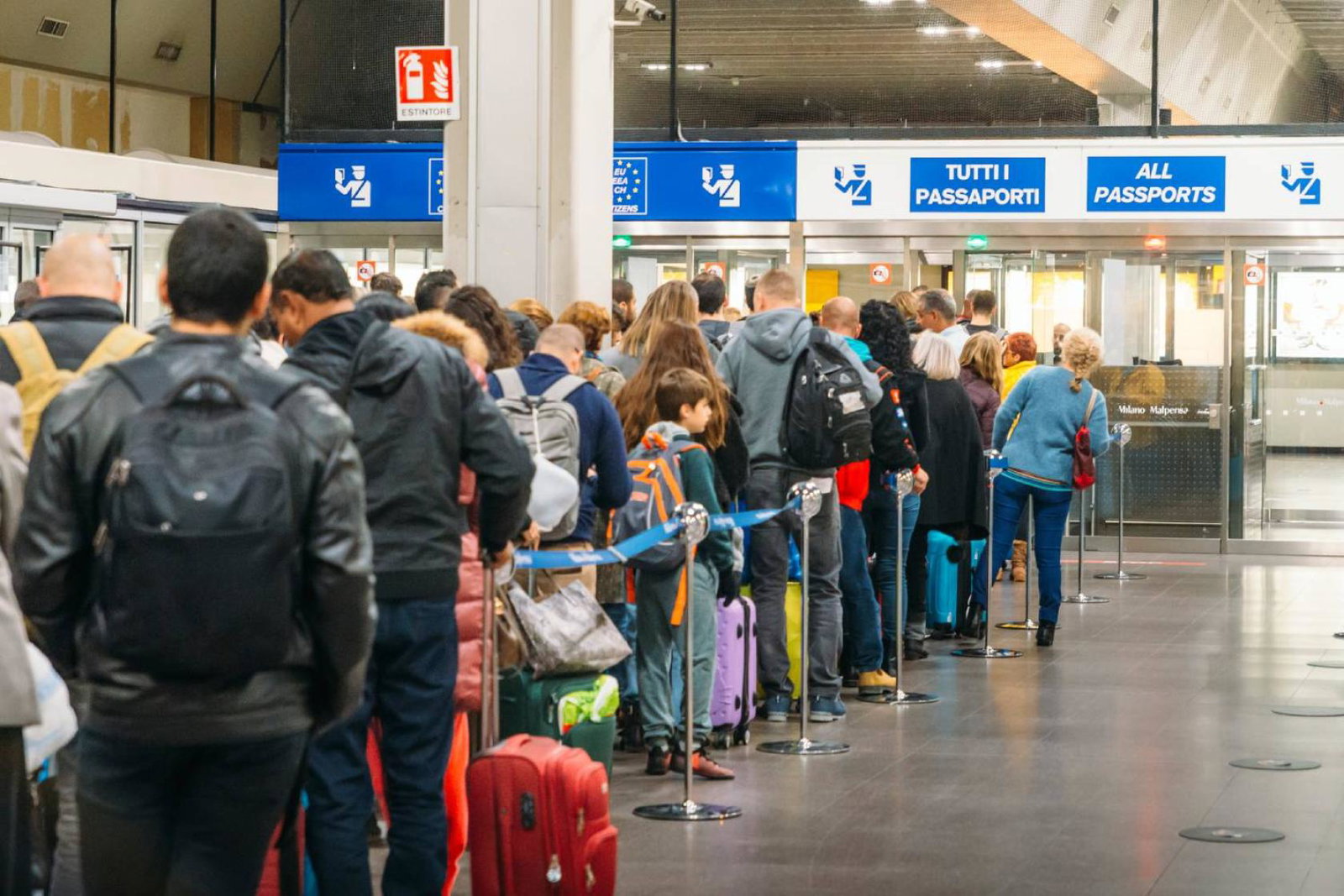
Now, trade body Airports Council International (ACI) in Brussels has urged authorities, including the European Commission, to address the "mounting operational issues" with the rollout of and technology behind the EU Entry-Exit System (EES).
Since 12 October, when the new biometric border system launched, border control processing times at some airports have jumped by to 70%, according to ACI.

The EES had been expected to make passing through passport control quicker in the longer term, although authorities – including Border Force director general Phil Douglas – had warned initial disruption was to be expected while the new system beds in.
Prior to launching, agents were urged to tell customers about possible delays, with Idle Travel owner Tony Mann claiming "a lot of customers" simply do not know about the new system.
Non-EU travellers – "third-country nationals" – such as British citizens will continue to have their passports examined in addition to fingerprints and facial biometrics, with the current threshold for registration set at only 10%.
Operational failures include regular outages, "persistent" configuration problems, including the unavailability of biometric, self-service kiosks, insufficient deployment of border security guards as well as an effective pre-registration app, according to ACI.
Airports in France, Germany, Greece, Iceland, Italy, Portugal and Spain have been particularly impacted by the new registration process.
"Significant discomfort is already being inflicted upon travellers," said Olivier Jankovec, director general of ACI Europe, who explained unless the operational issues were resolved within the coming weeks, airports could expect "more severe congestion" and even "systemic disruption" that could result in serious safety hazards.
"We fully understand and support the importance of the EES and remain fully committed to its implementation. But the EES cannot be about mayhem for travellers and chaos at our airports," he added.
"If the current operational issues cannot be addressed and the system stabilised by early January, we will need swift action from the European Commission and Schengen Member States to allow additional flexibility in its roll out."
What is the EU Entry-Exit System?
EES requires non-EU travellers to register their fingerprints and submit to a biometric facial scan the first time they cross an external EU border.
Following Brexit, the UK is now considered a "third country" by the EU, meaning this new border rule applies to all UK passport holders travelling to the European Union.
The regulation was originally proposed in 2016, though issues with the underlying technology meant the launch was postponed several times in 2023 and 2024, before being officially launched in October 2025.