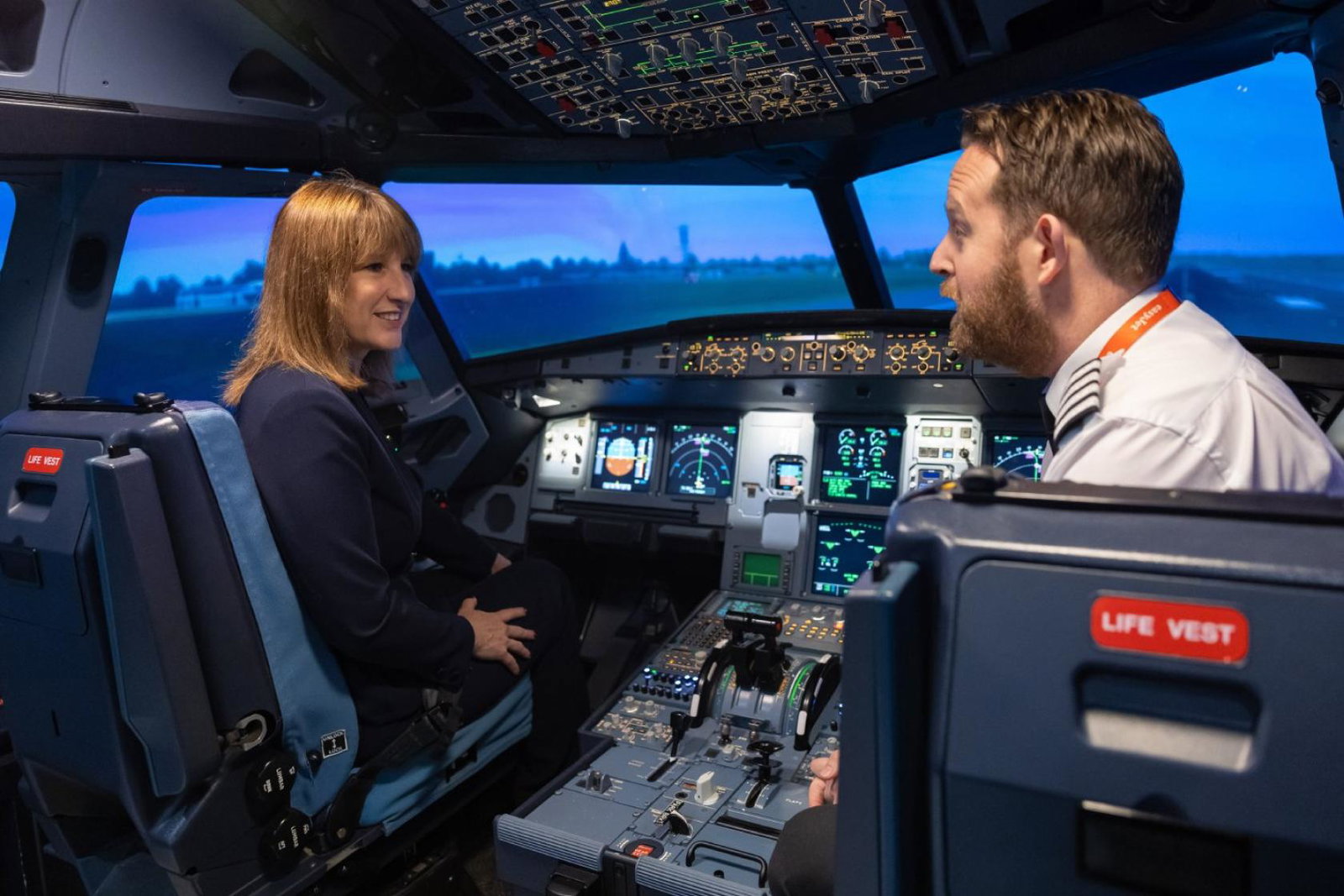
There's the best part of another month yet to go until chancellor Rachel Reeves delivers her Autumn Statement, but already, the industry and consumers alike await it with trepidation.
A black hole of around £22 billion must be filled and money found from somewhere. And the chancellor certainly isn't making the positive noises businesses and consumers are really seeking.
In a Downing Street speech on Tuesday (4 November), Reeves refused to rule out tax rises in her Budget, despite a Labour manifesto pledge not to hike income tax, VAT or National Insurance, warning the world was continuing to "throw more challenges our way".
No wonder agents, operators and consumers are anxious about what’s coming. Tivoli Travel’s Jo Richards is one worried agent. “I’ve put our fifth shop on hold,” she tells TTG. “There were lots of huge changes last time. It will be interesting to see what happens. The Budget has a major effect on people’s money.
"I’ve got some potential new staff, but I don’t want to take any on while this is happening. I like to go with my gut, and my gut is telling me to hold back.”
Richards believes the industry is not on the same footing it was last year. “The bookings did come in January, but it wasn’t the same as peaks in 2024. This year, people tended to hold on to their money.”
Idle Travel managing director Tony Mann is another with concerns. “Yes, we’re thinking about the next Budget, especially after the last one cost us quite a few thousand pounds,” he reveals. “I’ve been spending quite a lot of time with other agents, and they’re all a bit worried about what it’s going to bring.
“The last Budget pushed everyone’s wages up. All together, it increased our costs by about £15,000. That makes you think – do you shave £5,000 off your marketing budget? Not get that extra person in part-time? Pause looking at a lease?
"I’ve been looking out for a second shop, but we’re questioning what the Budget is going to add to the total bill.”
Bad timing for travel?
The timing of the statement is another concern for Mann, although late November has been the norm for many years except in 2024, when the new government was elected.
“It’s falling at a bad time for travel, as you’re thinking about January peaks and the year ahead,” Mann adds. “I wish they’d get it over and done with.”
Others note the effect on consumers. “We’ve gone much quieter,” says Holiday Inspirations’ Neil Basnett. “I think there are huge worries in people’s minds about what’s going to happen in the Budget this time. It’s making people more cautious about committing funds to an expensive holiday until they are more fully aware of exactly what Reeves is going to do.
“With employers cutting back on staff and not recruiting as a direct result of increased National Insurance costs and rises in minimum wages, many are worried about whether they will keep their jobs.”
'Making things harder'
Those increased costs are a bugbear for Beverley Travel co-owner Karl Douglas. “We’ve seen Real Living Wage increase by 7%, that’s the equivalent of one extra employee,” he says. “It’s higher than the National Living Wage. We’re constantly asking ourselves – how do we become more efficient without growing headcount?
“Everything this government is doing is making it harder for businesses. We’re not able to put prices up – tour operators control prices. We just have to get more efficient. We’re trying to do more with the same staff.”
The view from the top is equally damning. Advantage Travel Partnership chief executive Julia Lo Bue-Said is critical of the “uncertainty for business owners” she believes Reeves is creating by refusing to rule out tax rises.
“There’s been an impact on consumer confidence, and we’ve not even got to peaks yet," she warns. "We don’t know what is going to happen. There’s trepidation and recruitment freezes.” Lo Bue-Said adds the economy is “stagnating” and wants the chancellor to prioritise “creating a bit of certainty”.
InteleTravel commercial director Kelly Cookes acknowledges “a lot of people” are waiting for 26 November. “There will be some impact when the Budget is announced,” she stresses. “Last year, it was the same – some of the speculation was true and some of it wasn’t.
“With speculation, the impact is two-fold. Some of it can encourage people to spend before it gets taxed, while some may decide to hold on to their money."
There does, indeed, seem to be a mix of attitudes among consumers. Ted Wake, Kirker Holidays managing director, says rumours of a proposed reduction in the tax-free lump sum that can be taken from pension pots led to a 15% jump in sales in October as his clients decided to cash in and spend.
“Our clients are 65-plus, people who – until recently – thought their pension pots were safe from the chancellor, but now they’re under threat,” he explains. “The incentive to save for a rainy day isn’t there.”
However, he remains optimistic. “Whatever happens on 26 November, the dust will have settled by the time we get to peaks.”
Future still bright
Newmarket Holidays has a slightly younger demographic than Kirker. “Upcoming budgets and elections often impact demand,” says chief commercial officer David Sharman, telling TTG: “We’ve seen 2026 demand soften in recent weeks. However, interest in 2027 remains strong.”
Sharman shares Wake’s optimism. “Usually, once the uncertainty and anticipation eases, customers are confident to plan ahead with their wish-list holidays.”
He adds that with Newmarket in the 50-plus sector, “we’d prefer to see pensions, savings and wealth protected” in the Autumn Statement.
Jet2, meanwhile, is understandably concerned about “affordability for working families”, urging Reeves to rule out “further tax rises or demand management measures that would make travel unaffordable for ordinary households”.
Like Tui, it went on sale for summer 2027 in October – its earliest ever launch of a programme – hoping to sway nervous consumers.
But perhaps the industry should not be so pessimistic; after all, it has survived worse and, fingers crossed, will weather the storm whatever happens on 26 November.
Advantage’s Lo Bue-Said believes in consumer priorities. “People have stopped going out but they’re still going on holiday,” she stresses.
“They’ve stopped other discretionary spending – but holidays are the last thing they’re willing to give up.”