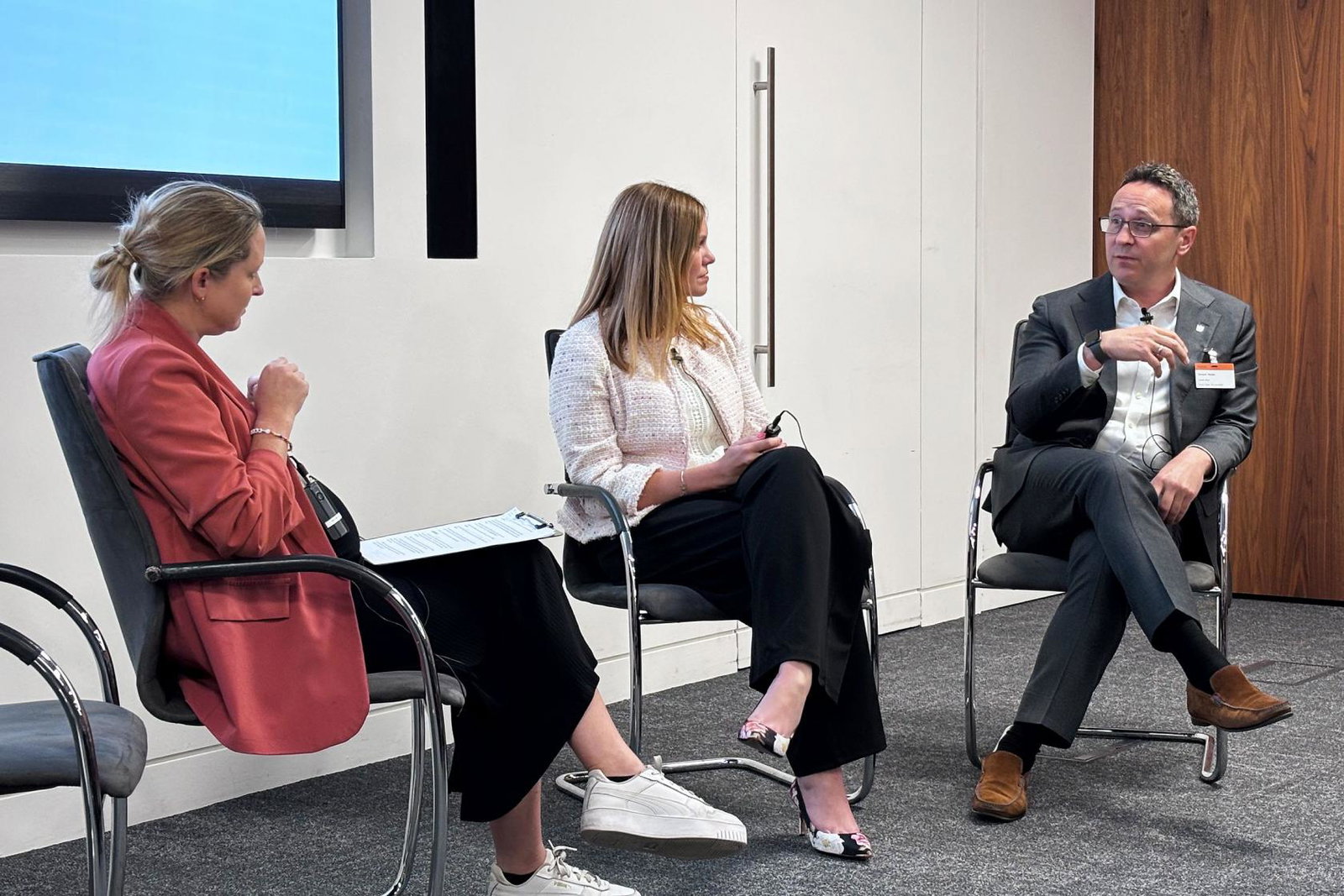
These were just some of the key talking points that came up during TTG's wide-ranging Agenda 2026 event, in association with PwC, which was held at the firm's offices in London on Wednesday (3 June) and saw the publication of associated Agenda research featuring input from more than 40 travel leaders and 2,000 consumers.
Questions were put to Travel Counsellors Chief Executive Steve Byrne, who spoke in conversation with TTG Media CEO Daniel Pearce, and a panel featuring InteleTravel Chief Commercial Officer Kelly Cookes and Royal Caribbean International Vice-President and Managing Director EMEA Gerard Nolan, who gave an honest – and often tough – appraisal of market conditions.
But time and time again, the prospect of a strong lates market came up in their answers – especially if the conflict in the Middle East was to calm. So just how prepared is the UK and Ireland's outbound travel sector for what’s around the corner in the coming months?
Pent-up demand
PwC surveyed 2,000 consumers to understand general sentiment towards travel in the current climate with the US and Iran still at loggerheads and amid ongoing economic and broader geopolitical uncertainty. Interestingly the overall market outlook is positive, with the research suggesting a strong lates market is likely this summer.
However, year-to-date trading is down versus expectations among the 42 travel leaders approached by PwC, while in April, just 30% of consumers said they had already booked their summer holidays. A further 28% admitted they were planning to hold off booking until July.
Demand for the UK and Europe is up year-on-year, while demand for the Caribbean, South America and – unsurprisingly – the Middle East is down.
Speaking during an on-stage panel discussion following PwC's presentation, InteleTravel Chief Commercial Officer Kelly Cookes revealed more than 80% of what InteleTravel agents booked in April and May will depart before 31 October, which she said pointed towards the sector entering one of the most important summer lates markets in recent memory.
'Tough market'
Travel Counsellors Chief Executive Steve Byrne didn’t mince his words when describing current market conditions. “We should make no bones about it, this is a tough market,” said Byrne.
He suggested many Travel Counsellors will be insulated from the current challenges, to an extent, given many generally sell long-haul winter sun products to the Caribbean and the Indian Ocean and were currently maintaining strong booking levels. “The [PwC] data is really powerful – [short-haul] is important to us, but 70% of what we sell is winter, and that’s still doing well.”
He added: “Lates bookings to Greece and other parts of Europe, we don’t tend to over-index there. Our average lead-up time is 150 days. Over a period of time, we’ve tried to move away from that short-haul sun market.”
Gerard Nolan, Royal Caribbean International Vice-President and Managing Director EMEA, said the shift in focus towards Europe was “quite pronounced”, and admitted the line had seen a “lull” in booking levels in April and May.
He added Royal’s teams had got better at dealing with market volatility since Covid. “It’s challenging [at the moment], but we’ve had to change and be nimble more so this year,” he said.
InteleTravel's 'shielded by growth'
Cookes argued InteleTravel has been “shielded” from the market turmoil many are facing by the fact the US homeworking giant remains in “a period of accelerated growth”. “Q1 was phenomenal for us," she said.
"Of course, we did see the softening, but it was relatively short-lived for us as a company,” she explained, adding established InteleTravel agents were often able to “pivot” and mix up the products they sell.
Discounting vs holding firm
Nolan said he believes discounting is more commonly being “called out” by industry commentators and rival suppliers. “It’s definitely there but we hold firm in the value that we offer,” he explained. “It has been good to see that.”
His comment prompted Cookes to highlight how InteleTravel has a “zero” discounting policy. “One of the things that not many people know about InteleTravel is we have a zero-discount line,” she said.
“We do not discount at all. We do see the campaigns from others, and there’s been a lot of discounting campaigns this year. Whenever we have a period of volatility, you see so many more changes around pricing.”
Fuel crisis 'a reality for everyone'
Royal Caribbean has secured around 59% of its fuel needs for the remainder of 2026 at below market rates. Nolan said that while this move offered the US cruising giant “an element of protection”, the potential for the crisis to prompt other suppliers to impose surcharges on fares is “a reality for all of us”.
He added: “The noise in the media is not helping.” Cookes echoed his view, saying: “Whenever there’s a lot of coverage in the media, we do see a spike from people who are concerned about it. We’ll have problems if we start seeing stories where people have been surcharged.”
Reflecting on her travel industry career, which spans two decades, Cookes said: “There’s always change in this industry. I cannot remember a year where we’ve not had something that has caused concern. Is it stopping people from booking at the moment? No."
Europe must get Entry-Exit right
Nolan revealed how he and his Celebrity Cruises counterpart, Giles Hawke, recently ran into problems with the new EU Entry-Exit System (EES) at Bologna airport. However, while Hawke had to wait more than two hours to be processed due to EES delays, Nolan – an Irish passport holder – cleared security in just 15 minutes.
Nolan issued a warning to the European Union and airports across the continent. “If we can’t get EES right, it will affect people’s decision about where they want to go on holiday," he said. "It’s not right people have to experience that."
In partnership with TTG Media, PwC surveyed 42 travel leaders and 2,000 consumers to understand general sentiment towards travel in the current climate amid the ongoing Middle East crisis and economic uncertainty.
Cookes predicted EES delays may become more of an issue in the middle of the summer holidays. “As we get into the summer, EES is going to be an issue because it’s a slightly different process for those with families,” she said. “I’m not sure that it’s on everyone’s radars yet.”
She added there was a spike in bookings for Greece when the country announced British arrivals would be exempt from EES. “For people that were looking [to avoid EES], that made it a very clear choice for them,” Cookes explained.
Are agents the answer to everyone's problems?
TTG Editor-In-Chief Sophie Griffiths asked Cookes whether she believed more people were turning to travel agents given the volatility of the market. Cookes, though, said she wanted to see travel agents make every effort to maintain relationships with clients that continued outside times of crisis.
“Relationships have got to be about servicing the customer longer term not just during that period of uncertainty,” Cookes added. “It’s all about showcasing that support longer-term.”
How is the USA doing?
With the Fifa World Cup just days away from kicking off, a question around demand for travel to the USA – one of the three nations hosting the tournament – was put to both Cookes and Nolan.
“The US has been strong for us for a number of years,” said Cookes. “At the start of this year, demand was softer, but it has picked up. A large part of that is it’s costly, but it’s easier to get to the US because of that connectivity.
The Free Disney dining and drinks offer has been really strong for us. Other areas like New York, Vegas and Nashville, we’re seeing a bit more movement. We’ve definitely seen pick up since March.”
However, Nolan said there had been “no additional demand” for travel to the US ahead of the World Cup.
'Sometimes, flat is good'
As the discussion drew to a close, Cookes urged business owners not to fret about growth during times of uncertainty. She admitted many people in the industry are currently “struggling” to explain below average booking patterns, but added: “Sometimes, depending on where you are as a business, flat is good.
“It’s almost drilled into us that we have to be chasing growth all the time. It really does depend. If you look at what’s happening in the market, flat is probably OK."