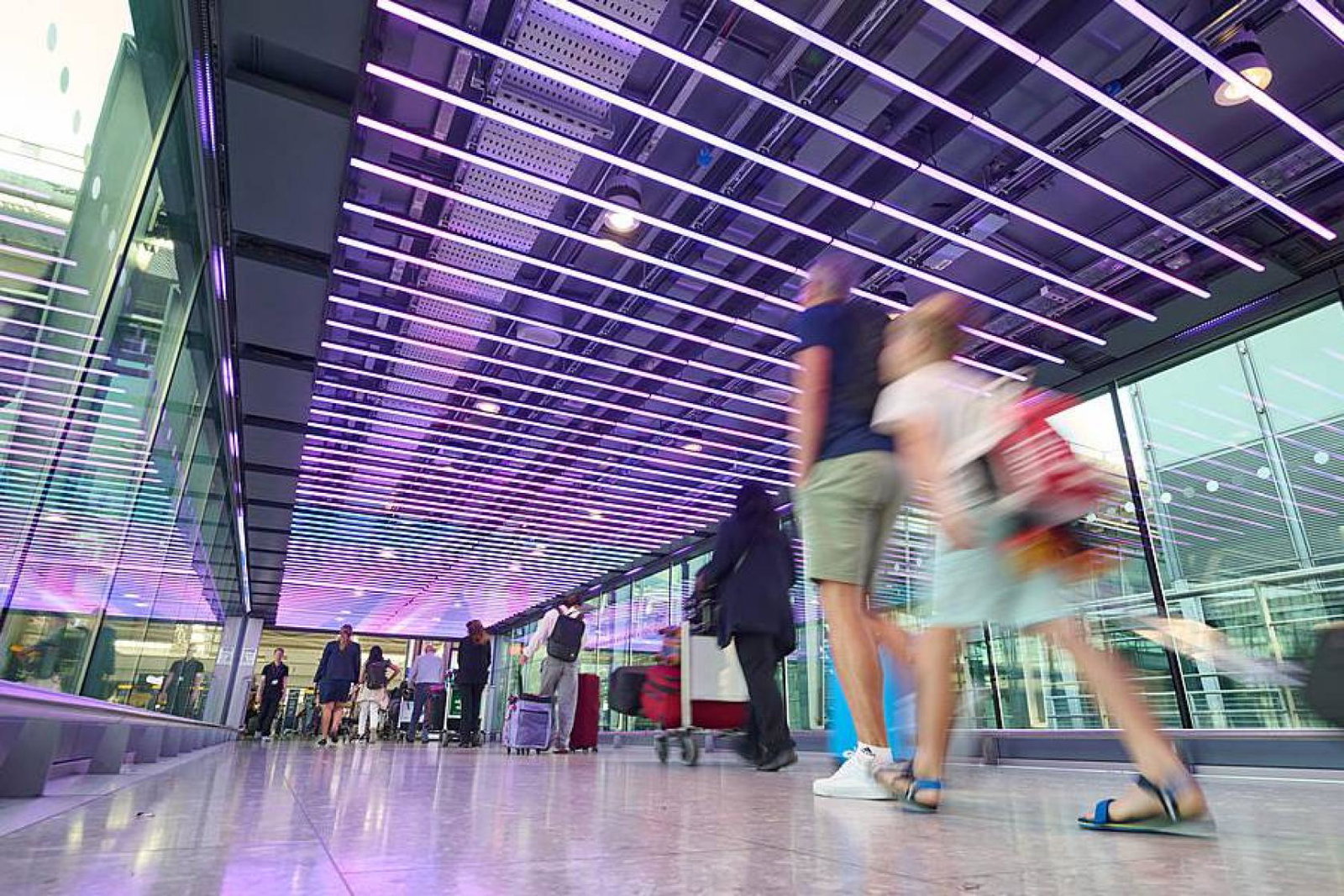
Heathrow on Monday (13 April) revealed it absorbed a 10% spike in transfer passengers in March as airlines adapt to airspace closures stemming from the US and Israel's war on Iran.
However, the airport stressed that while it achieved year-on-year passenger growth last month (+7% to 6.6 million passengers), this was slowing compared with its EU competitors owing to the scant availability of runway slots.
Agents at their problem-solving best as summer challenges mount

It said demand had shifted across its long-haul network, including a more than 50% drop in Middle East traffic, offset by growth from Asia Pacific (+31%) and Africa (+23%).
“We’re doing everything we can to support airlines and passengers as travel trends shift during the Middle East crisis," said Heathrow chief executive Thomas Woldbye. "While Heathrow’s long-haul network absorbed demand in March, the outlook for the next few months remains uncertain."
'The concerns we've been raising for months are now a reality'
Meanwhile, the new EU Entry-Exit System (EES) took full effect late last week after a six-month phased introduction, but already, the regime is showing signs of strain, according to the trade bodies representing Europe's airports and airlines.
In a joint statement, ACI Europe and Airlines for Europe (A4E) have called to the immediate introduction of additional flexibility in the system, claiming the first full day of operations was "marked by passenger disruptions, delays and missed flights".
The partners said after weeks of warning about the operational challenges the EES rollout presents, "these concerns are now a reality".
ACI Europe and A4E both refute the European Commission's assertion that traveller registration takes only 70 seconds when EES is functioning at full capacity, claiming EES was resulting in passenger wait times of two to three hours at border control during peak travel periods.
"These delays are occurring despite border authorities making extensive use of partial suspension measures, which allow biometrics data not to be captured," they said.
In addition, ACI and A4E report "significant disruption" to flight operations with passengers missing flights and suffering delays owing to longer processing times. These include one UK flight that was missing 51 passengers at departure, while another had zero passengers onboard as the gate closed, with 12 failing to reach the gate 90 minutes later.
Speaking to TTG last week, agents reported a mixed picture during the first six months of EES operation, ranging from "breezing" through border control to suffering 90-minute delays depending on the airport in question.
'EES cannot be allowed to compound situation in the Middle East'
Olivier Jankovec, director general of ACI Europe, and Ourania Georgoutsakou, managing director of A4E, said: "While we will continue to closely monitor developments in the coming days, it is already evident that greater flexibility is immediately needed.
"Border control authorities must be allowed to fully suspend the EES when waiting times become excessive. This is essential not only in the coming weeks, but throughout the peak summer travel season. Our support for the EES and its objectives is unwavering.
"However, strengthening border management must not come at the expense of operational efficiency or the passenger experience. Safeguarding Europe’s reputation as an accessible and well-functioning tourist and business destination is at stake, particularly as air travel is already facing significant disruption due to the ongoing situation in the Middle East."