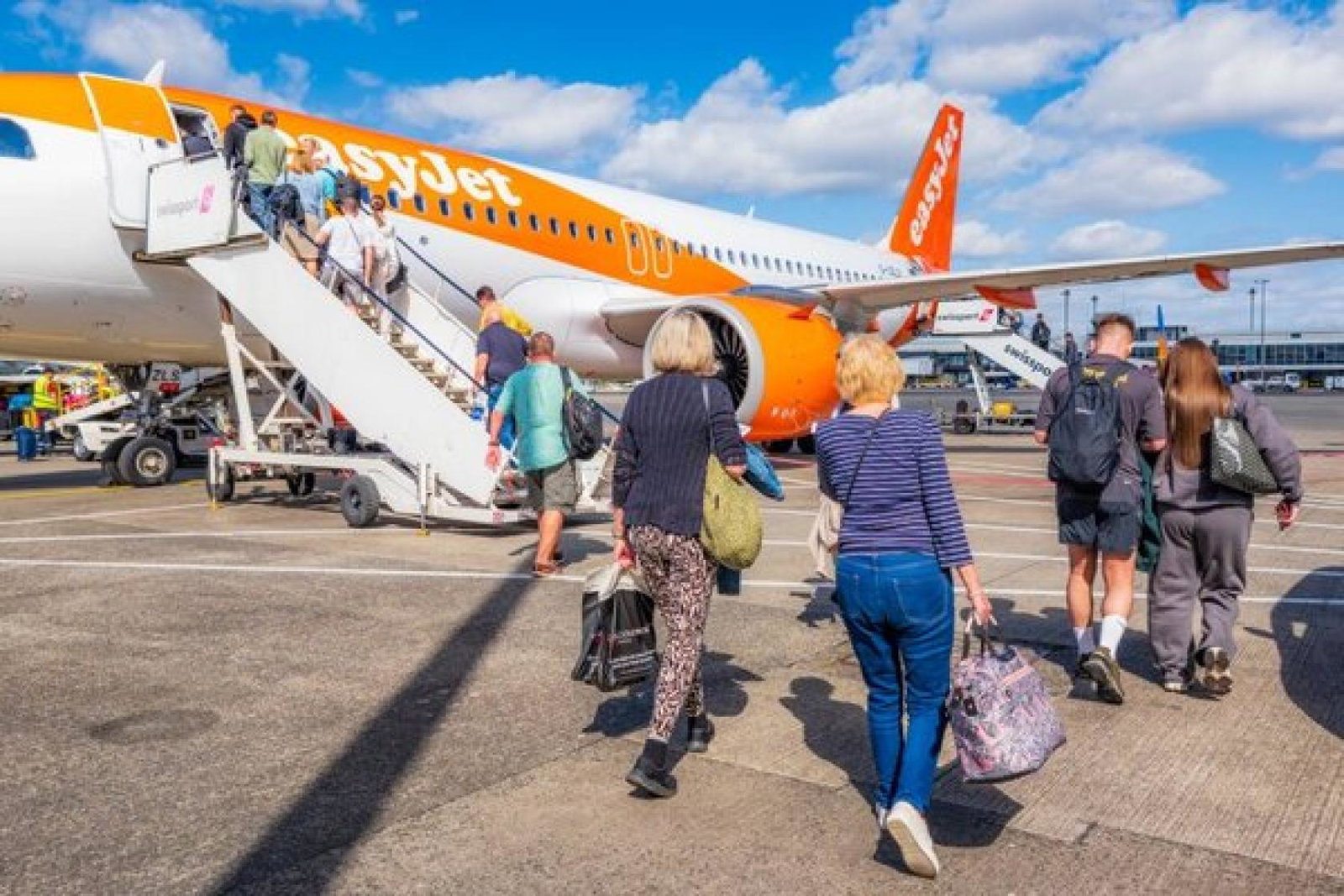
It’s five years since easyJet holidays started serving the trade, and the company is expanding rapidly – readying itself to challenge Jet2holidays for the top spot as the UK’s largest tour operator.
But its history begins well before this summer’s milestone. EasyJet holidays was created in response to the success of Jet2, which I helped Philip Meeson and his team launch in 2007 sensing the opportunity for a dynamically packaged tour operation using their low-cost airline.
It filled a gap in the market left by the effective closure of MyTravel in the north following its merger with Peterborough-based Thomas Cook that same year.

Having served as MyTravel’s deputy chief executive, I gained direct insight into the threat posed by low-cost carriers – and the internet – to the dominance of large, vertically integrated groups in the package holiday sector.
When MyTravel encountered difficulties in 2003, I left and founded the On Holiday Group together with MyTravel purchasing director Bill Allen and Cosmos sales director Brian Young to exploit the rapidly developing dynamic packaging market, and quickly tied up with Jet2.
However, our days as tech and bed bank partners were limited once Meeson recognised the strategic advantages of having an in-house tour operation; after two years, he brought in Steve Heapy and many other former MyTravel staff to run his own operation.
Ironically, this in turn led to an opportunity to provide a tour operating platform for easyJet in partnership with Hotelbeds, which operated easyJet holidays between 2014 and 2017.
In truth, the experience was a frustrating one, as easyJet always saw the tour operation as a “non-core” business and just a way of boosting ancillary income. They even refused repeat pitches to allow us to sell via the trade, as they saw it as a distraction they did not need.
Just getting going
This all changed when Johan Lundgren joined easyJet from vertically integrated Tui as chief executive. He clearly recognised the advantages of a full-scale tour operation and recruited Garry Wilson, along with several other former Tui staff, to oversee the new operation, which launched in April 2019 for Summer 2020.
However, the timing could not have been worse. Covid-19 took hold in March 2020, effectively destroying the 2020 and 2021 summer seasons before a slow relaunch in 2022. Nevertheless, easyJet holidays’ flexible model and lack of hotel guarantees allowed it to minimise losses compared with UK market leader Tui, which accumulated substantial losses and debts during this period.
Covid-19 also taught holidaymakers that DIY holidays come with substantial risk; research published by Abta in March 2021 revealed people were already 31% more likely by then to book Atol protected package holidays than they were a year earlier before the pandemic took hold. EasyJet was perfectly positioned to capitalise on this trend by providing its flight-only customers these holidays through its tour operator.
The concept was proven the following summer in 2022 with 1.1 million holidays passengers delivering a healthy £39 million profit for the group.
Passengers and profits have gone up in lockstep ever since, culminating in 2024’s 2.4 million passengers and £190 million group profit contribution. EasyJet now expects its holidays arm to deliver £235 million in profit this year, with its full-year results due in late November.
I personally believe easyJet holidays is just beginning its UK expansion and will continue to grow at a healthy rate of about 25% per year as it currently accounts for only 5.4% of its parent airline’s seats. By contrast, Jet2holidays is already reaching capacity limits, using – on average – 66% of its parent airline’s seats, with some core beach routes exceeding 80%.
EasyJet holidays can expand quickly by selling more to its airline customer base, while Jet2holidays depends on its parent airline opening new bases and routes, which requires creating new demand. EasyJet, meanwhile, is simply shifting customers from flight-only to package holidays.
EasyJet also has a £50 profit advantage per passenger over its OTA competitors, as it can capture a large share of free brand traffic from its flight-only business. This can be used to reduce prices or outbid these companies for advertising clicks – both of which suggest that EasyJet holidays will grow more quickly.
Winners and losers
So no matter how you see it, the future does indeed appear to be orange. Over the next five years, I expect easyJet holidays to become a market leader with eight million annual passengers. The million dollar question is who will bear the cost of this growth from its current licence for just over three million Atol protected passengers.
I expect two-thirds of the extra five million to come from simply converting flight-only easyJet passengers from DIY holidays to packages, but this leaves around a third, 1.75 million, to come from increasing market share at the expense of competitors. Easier said than done.
However, Jet2holidays’ current significant strength in trade distribution could become a weakness, as it has been secured at a relatively low rate of commission if agents want price parity. You could easily see some of this being lost if easyJet offered volume-related commission overrides above this.
Tui, rejuvenated now it has paid off most of its Covid debt and agreed a strategic distribution deal with Ryanair, looks quite secure as it has no competitors for its long-haul beach product flown using Dreamliners.
So this leaves the likely losers to be the OTAs like Loveholidays and On the Beach, particularly if – or as – we see a migration from pay-per-click advertising to AI search where asset holders will likely be given preference.
This will make any plans, and there are rumours, for Loveholidays to be floated on the stock market increasingly important as it seeks to defend itself from the orange tide.
So here’s to five years of easyJet holidays – and the next five years look likely to be equally as interesting.
Steve Endacott is a former MyTravel executive, who went on to found Holiday Taxis Group and Rock Insurance. He is now chair of the AI incubator Neural River.