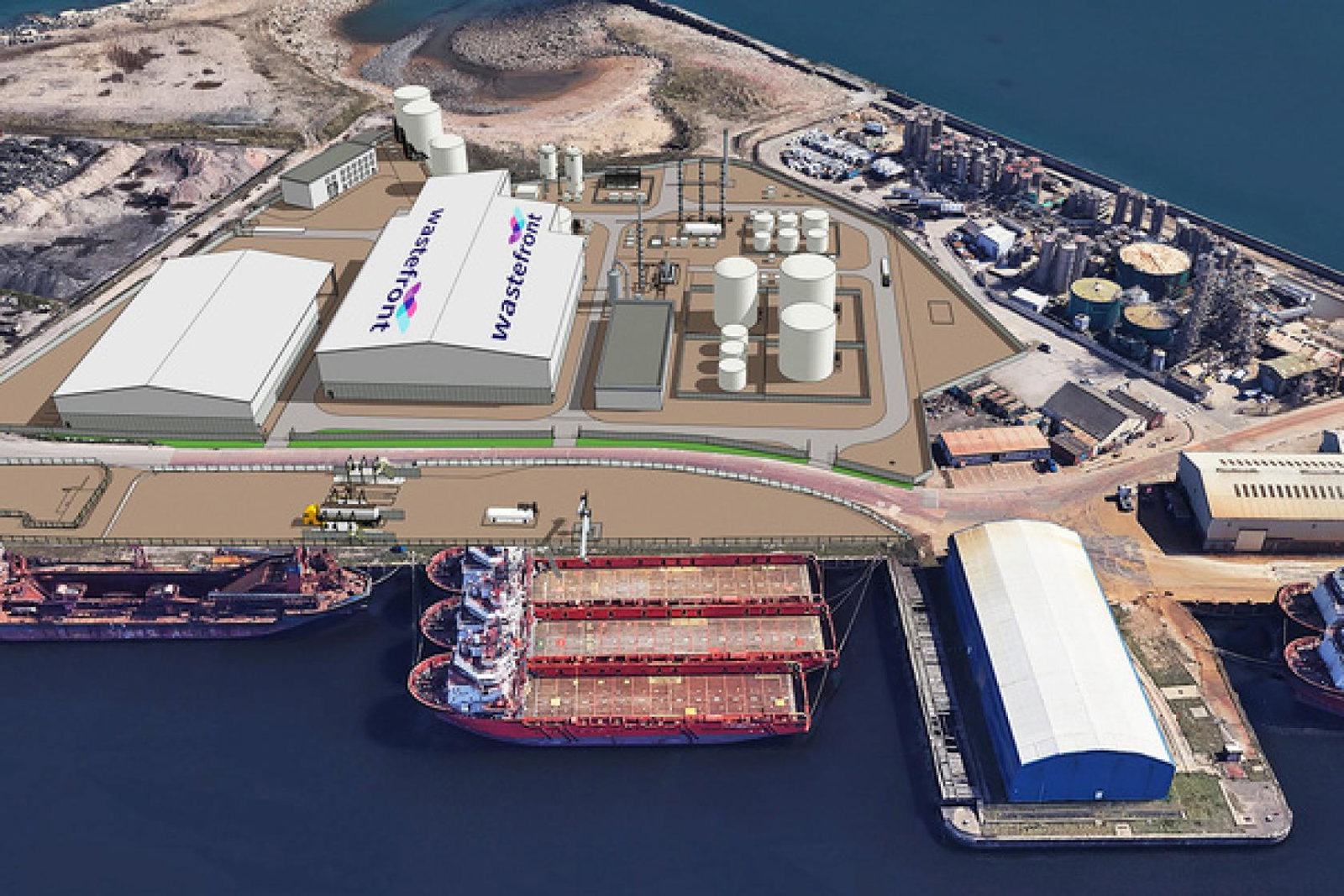
Recycling specialist Wastefront is opening the plant at Port of Sunderland in a project supported by BA and Aer Lingus owner, International Airlines Group IAG).
Production will start in early 2027, with 2.5 million tyres being processed initially. Once fully operational in 2028, 10 million tyres will be reused each year, making the plant the largest in Europe. An estimated 55 million tyres reach the end of their life each year in the UK alone.

The plant is the first of its kind in the UK and one of the country’s first large-scale SAF factories. High temperature reactors break down tyres into granules, producing gas and liquid hydrocarbons. The gas is then fed back to fuel the furnace and the hydrocarbons refined into SAF. Waste carbon produced is altered for a variety of uses, including new tyre production and plastic fillers.
By 2030, Wastefront aims to operate four large-scale plants, collectively producing 128,000 tonnes of oil annually, which it says will yield approximately 90,000 tonnes of SAF.
Wastefront’s chief executive Vianney Vales said: “Wastefront is delivering an innovative project to focus on two key issues: tyre waste and aviation emissions.
“Our circular process not only prevents millions of tyres from being discarded in landfills but also provides a scalable, cost-effective pathway for SAF production. This process will also reduce lifecycle emissions by more than 80% compared to fossil fuels.
“The Sunderland facility is just the beginning - we aim to expand rapidly to meet the growing demand for sustainable fuels.”
The UK’s SAF mandate, introduced on 1 January, requires at least 10% of all jet fuel used in UK flights to come from sustainable feedstocks by 2030, rising to 22% by 2040. However, domestic SAF production remains significantly short of the target of 1.2 million tonnes needed by 2030, with price pressure likely to put up air fares.
Jonathon Counsell, IAG’s group sustainability officer added: “To enable aviation to meet the UK’s new mandate and growing SAF demand, there needs to be even greater policy support so manufacturers and innovators like Wastefront can scale new technologies.”