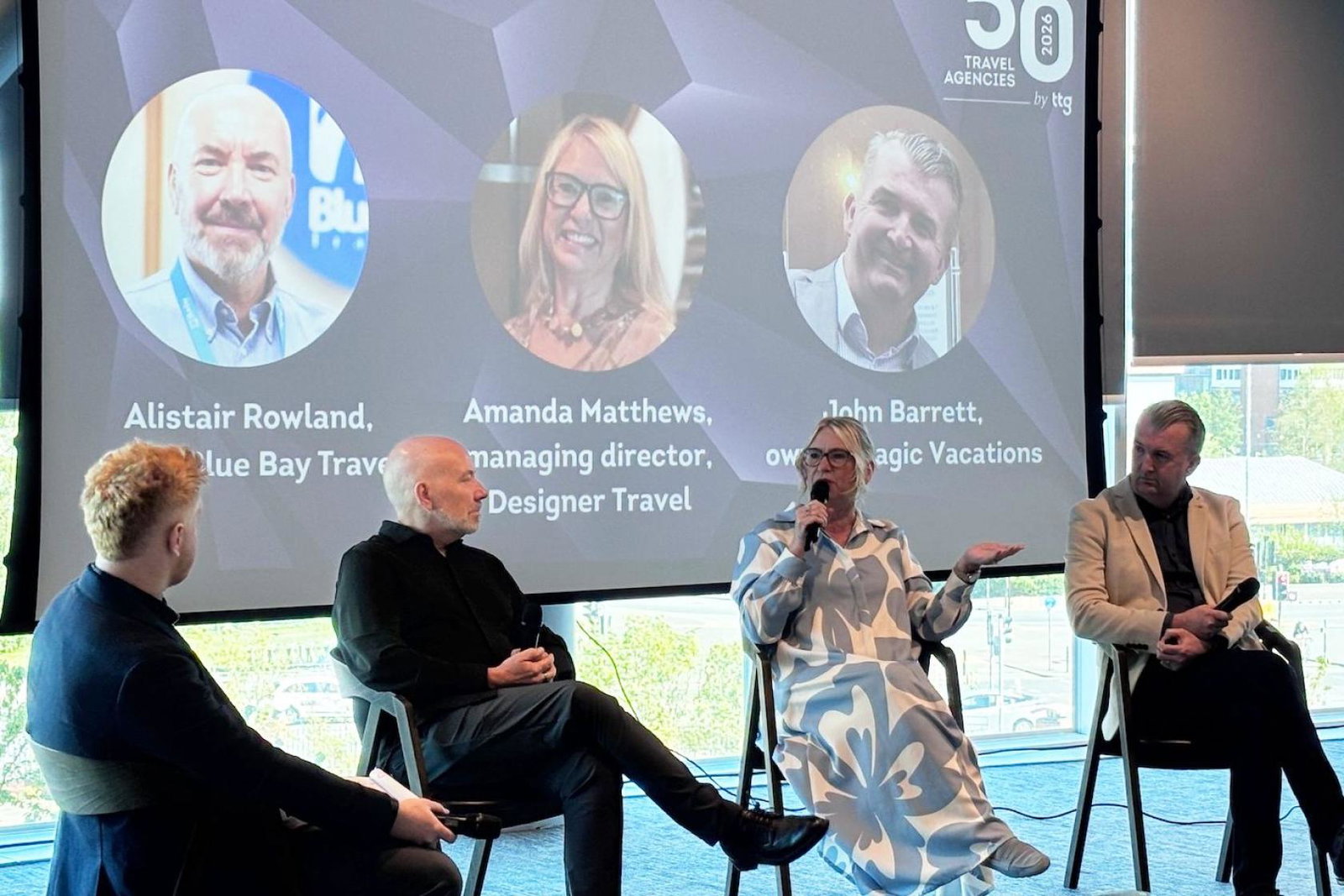
Addressing the TTG Top 50 Insight Brunch in Manchester on Friday (24 April), the morning after the Top 50 Travel Agencies 2026 were revealed, Designer Travel co-owner Amanda Matthews, Blue Bay Travel chief executive Alistair Rowland and Magic Vacations owner John Barrett urged other agencies to get ready for a huge uptick in bookings.
In the meantime, the panel advised agents to sit tight and sell safer destinations; keep in regular contact with clients; challenge misleading media reports; and pursue innovating marketing strategies to get their sales message out into the market.
Find out who made this year's TTG Top 50 – and why
“Around 61% of what we’re booking at the minute is within eight weeks of travel," Matthews revealed. "But we all know when this [war] starts to stabilise, bookings will blow up. We’ll literally be so busy, prices will go up, which is why we want to encourage people to book now.”
Rowland agreed with Matthews. “When it blows up, it’s really going to blow up, like turning on a switch," he said. “Whether you’re a high street agency, contact centre or homeworking brand, try to get some holidays in now, because when it comes back, it will be like peaks – and we’ve never had that in May or June before.”
'Fish where there’s fish'
Matthews revealed both Designer's store staff and its homeworking network have been promoting a wider product mix. “We're really good at 'fishing where there's fish',” she continued. “So, the minute something happens, we totally change what we do to maximise what is selling. We’re very good at being adaptable and flexible.”
Rowland shared how Blue Bay has similarly changed the destinations and the partners it is promoting. “We're still selling Maldives, but we're not selling it until the second half of the year,” he said. “We’re putting more effort into out of date-range flying, things that look right to the consumer right now, and promoting stuff we've never promoted, like the western Med.”
He added third-party tour operator product currently makes up more than half of the agency’s marketing email content when previously Blue Bay Travel’s own direct contracts would dominate. “Greece is doing a lot right,” he argued. “That's where you can send people to their five-star, high-end safely and get a similar sale from the consumer without the 10-hour flight. Promoting things that look safe now augurs well for the future.”
Tap into suppliers' marketing budgets
Barrett, owner of Ireland's new Top Agency, said some suppliers, particularly river cruise and ocean cruise lines, have marketing budgets to invest with agent partners despite the current market challenges. “If their area is down and they’re under pressure from head office, the marketing money is out there – what we’re trying to do is spend as much of it as we can!” he joked.
He urged agencies to consider some more unusual marketing channels for better measurability. “I would say, look at marketing on radio and in local cinema,” he said. “It’s something a bit different – they work incredibly well for us. We’ve found suppliers love that – they jump on it. Local media for us has been a huge driver, and cinema has been fantastic.”
Designer Travel’s Matthews reminded the audience customers themselves are a very effective marketing channel. “Let’s try to encourage everyone, when they have clients travelling, to get them to post everywhere," she urged. "The more [the public] see people getting out there and having a great time the more likely they are to book."
Challenge misleading headlines
Matthews noted the damage headlines can do to customer confidence, stressing agents have “a real job” to do. Citing recent reports about possible fuel shortages impacting summer holidays as an example, Matthews said: “Most of our customers are now worried about the fuel problems.
"If any mainstream tour operators knew they were going to run out of fuel in two weeks, they wouldn't be taking people out to not get them back home. Headlines have zero reality. Just keep positive. What else can we do?”
Barrett lamented the impact of a recent Aer Lingus press release. “There was one line saying they were cancelling seats," he explained. "It was on the main news and all over the web. We’ve spent a lot of time saying it’s just 2% of the entire flight schedule. This happens all the time.”