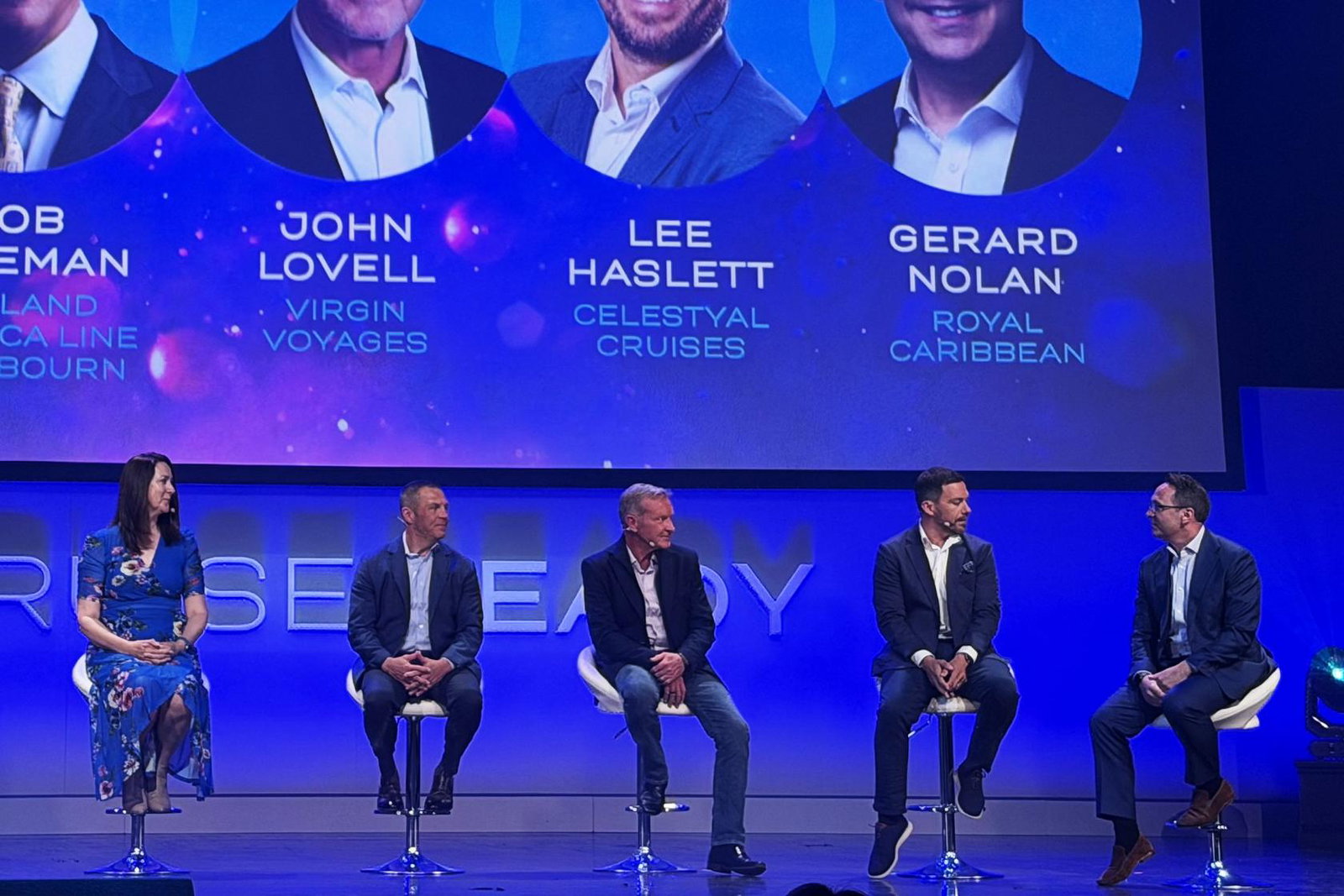
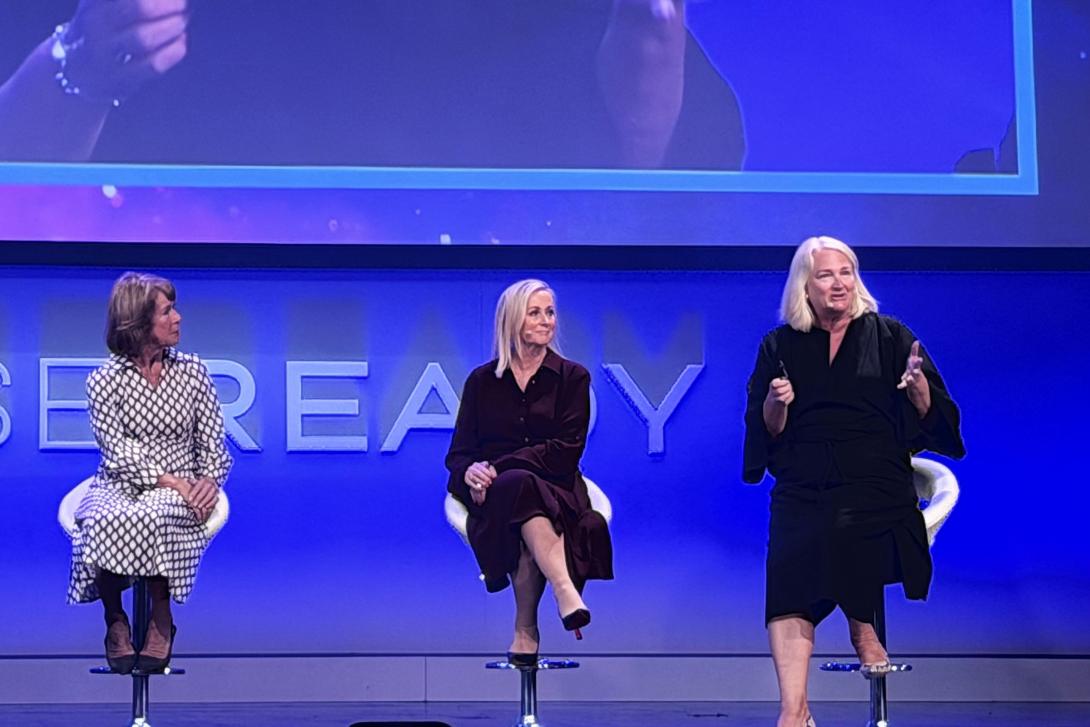
Some 800 delegates gathered in Southampton for sessions with cruise chiefs from the UK and the USA, as well as senior travel agents including Dame Irene Hays, Barrhead Travel Managing Director Nicki Tempest-Mitchell and World Travel Holdings Managing Director Lisa McAuley.
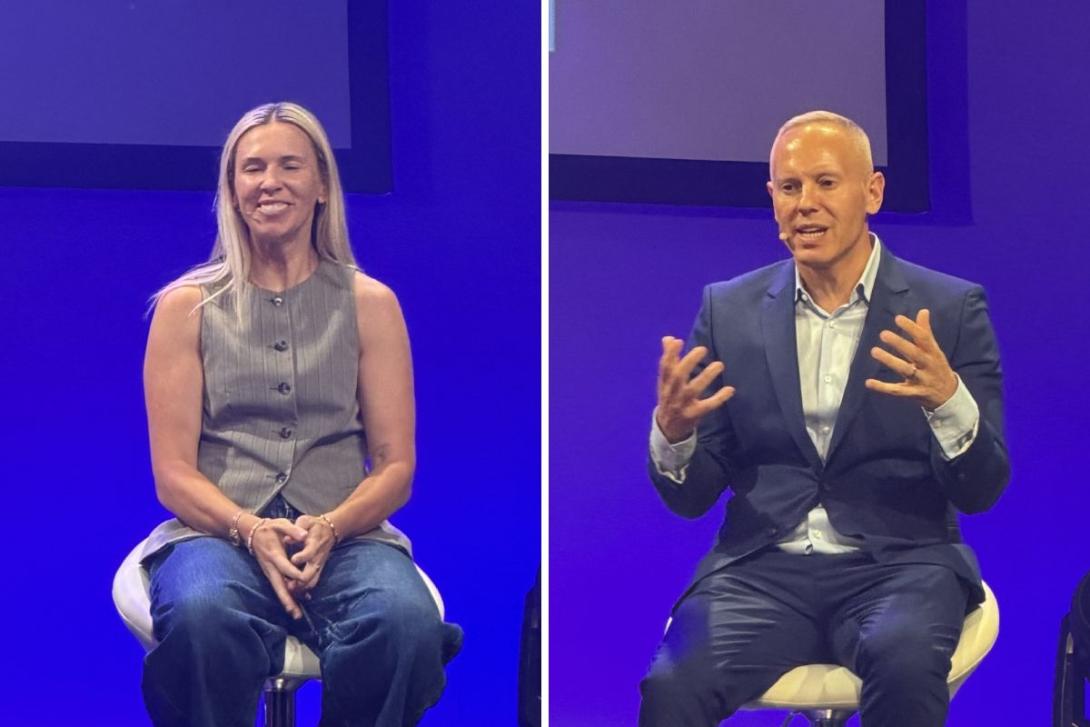
They were also joined by former Lioness Carly Telford and TV personality Rob Rinder, who each had some words of advice for travel agents.
These were TTG's seven key takeaways from this year's conference.
Collaboration between agents and cruise lines has never been more key
Dame Irene urged cruise lines to invite agents to more immersive sessions, which she said were far more educational and informative than simple ship visits, and said Hays Travel had changed its agent training to do exactly this.
She used Cunard as an example, highlighting how the line's President Katie McAlister had personally spent "hours" training Hays agents to describe the brand and its differentiating features. “We believe matching the right customer with the right brand is critical, and that takes more than a ship visit," said Dame Irene. "Katie spent hours describing the brand, we had Q&As with people, opportunities to experience the restaurant, and so on.”
Dame Irene added Hays is planning to spend “a third of a million pounds” this year “on bitesized supercharged sessions” with cruise lines to demonstrate to Hays agents “what the personality and characteristics of each cruise ship is".
Meanwhile, in a separate session, McAlister highlighted Cunard’s renewed focus on agents, pointing out the line has seen 30% more agents involved in its webinars this year. "We're creating the content, you guys are getting involved with that," she said. "And that's really good."
Price matters – but there's something else that matters even more...
Lee Haslett, Celestyal Cruises' Chief Commercial Officer, argued travel agents need to become less transactional and more narrative-driven. "I am a big believer in just don't sell a cruise, sell an experience,” he told delegates.
In a different session, World Travel Holdings UK’s McAuley agreed, insisting a shift away from a transactional relationship to emotional storytelling was key to moving the conversation away from price. "If you talk about price, and you go in with price, it's a transactional relationship," she warned.
"Talk about the experience which can come with a destination, and the hardware. For me, it's storytelling. If you can get better at storytelling, and you can interweave your own personal experiences into that, price becomes secondary – you've got them."
Meanwhile, Rob Coleman, Senior Vice President of Sales across both Holland America Line and Seabourn, urged agents to consider clients personality over age, arguing that looking at a client's age was an outdated way to sell.
"We are often asked [by agents] what is the average age of our guest, as if that’s the gateway to figuring out who they should place on our ships," he said.
"The reality is age can be irrelevant. When you start [to] look at guests and your clients through these different lenses, it will become much easier to match them up with the right cruise experience."
Think differently to attract new audiences and convert 'land travellers'
Cunard’s McAlister revealed how Cunard has focused on trying to attract new customers by partnering with arts and literary groups. "How do you appeal to newcomers? How can you attract audiences?" she said.
"We’ve really looked at different partners who are in the arts, land-based, people who might not necessarily have cruised previously, but actually they love gastronomy, or they love theatre, or they love ballet, and that's a great way of attracting newcomers [to the sector]."
Get the key cruise trade stories, trends and interviews delivered straight to your inbox every Tuesday.
Elsewhere, guest speaker Rob Rinder, reflecting on his hit BBC travel series with Rylan Clark [Rob and Rylan's Grand Tour], explained his mission was to break down the invisible barriers that make everyday people feel like luxury or high culture isn't meant for them.
"People have a very set idea about what a place is, what a product is, what a thing is, what a cruise is going to be like, who's going to be on it – 'it's not for me'. The tyranny of 'it's not for me'. They have these loud assumptions of what things are and why I'm not going to walk through the door because that's for other people."
A plea for less haste from cruise lines, and more time for new campaigns
Barrhead’s Tempest-Mitchell, who previously worked for Celebrity Cruises, made a powerful plea to cruise lines regarding the speed and frequency of modern cruise line promotions as she reflected on the lessons she learnt as an agent that she wished she’d known when working for a cruise line.
"I think my biggest learning being on the retail side versus being on the cruise line side," she told delegates. "Once at the cruise line, we used to develop a lot of campaigns, a lot of messages, almost flash sales. Actually, being on this side knowing retail, it's incredibly difficult to turn around the pace of some of these campaigns."
Instead of panicking and launching 48-hour discount drops, she urged cruise lines to give travel agents a longer window to build value and actually explain the product to the consumer. “I think there's a bit of a lesson that if you really want your brand to accelerate, give us time to embed, give us time to tell the story to our customers through our marketing," she added.
McAuley took a different view. While acknowledging Tempest-Mitchell's "absolutely valid" point, McAuley said World Travel Holdings’ contact centre model made it much easier to react to short-term promotions. "The industry is awash with promotions, cruise angles to a land, and they have to deal with wealth."
However, she added: "The reason I disagree is it's easier for me to communicate via contact centre promotions last month a lot easier. Don't stop them for this."
Those who embrace AI will not be replaced by it
Virgin Voyages Senior Advisor John Lovell discussed the line’s push to become the most “AI-fluent cruise line”, but firmly reassured the room technology cannot – and will not – displace the human element that drives the industry.
"Accept it, embrace it," he said. "It's only going to make you more efficient, [make] more money, but our job is not to displace you. [It's] simple maths, close to $50 billion is what the cruise lines are investing in you in this room to fill the ships. AI is not going to be able to do that."
Celestyal's Haslett agreed, but urged agents to stay ahead of technology. "I absolutely believe travel agents will be disrupted by AI unless they engage with AI.”
He added: “One of the things I've really picked up in the US is that travel agents there are doing content creation really well. When you get the opportunity to go onboard one of these fabulous new world ships, create authentic content you can put in front of your clients, because that would be your point of difference. You can create authentic content that no one else can.”
Azamara CEO Dondra Ritzenthaler also urged agents not to be afraid of AI. She acknowledged many agents may feel anxiety around it, but in a frank and direct session, she stated: "I'm so sick of hearing 'AI is going to take my job'.
"I tell you what – AI will not take your job. But somebody using AI will take your job if you're not on it. Guys, embrace AI. Don't be afraid of it."
The lessons agents can learn from sporting legends
Elsewhere, Ritzenthaler said the Olympics and this year's Winter Olympics should serve as a blueprint for travel agents to become "gold medal winners". “When these Olympic athletes get really, really good, they don't stop. They elevate their game. They have to constantly sharpen their skills.
"If you want to be a gold winner, if you want to be a Clia winner, you need to stay focused on that. How are you going to get it if you don't focus on it every single day? Focus on the goal.”
It came as former Lioness Carly Telford, who was capped 28 times for England, urged agents to consider what makes them special, and to focus on themselves rather than the competition.
“As an athlete or as a footballer or even in business, think about what are you really good at bringing to the party, rather than trying to look what everybody else is doing and actually overshadowing what you're really good at," she said.
"It took me a long time to realise when you're not number one, and you're trying to be number one, you're always looking at what others are doing, and maybe trying to emulate what they're doing. But actually [what makes them special] might not be what you're good at."
Stand out from competitors – and 'charge fees'!
In a passionate address, Ritzenthaler urged agents to consider other ways they can stand out from the crowd. "Don't copy, differentiate," she urged.
"If somebody else is sending a note, do a handwritten note. If somebody else is actually doing a handwritten note, do a gift, do a cruise night. Don't tell me, 'I can't afford it'. Yes you can, because you'll get a lot of business from it," she insisted.
She also told agents they shouldn’t be afraid to charge fees, urging advisors to “face their fear” and just do it. “Charge a fee, face your fear, charge a fee," she implored.