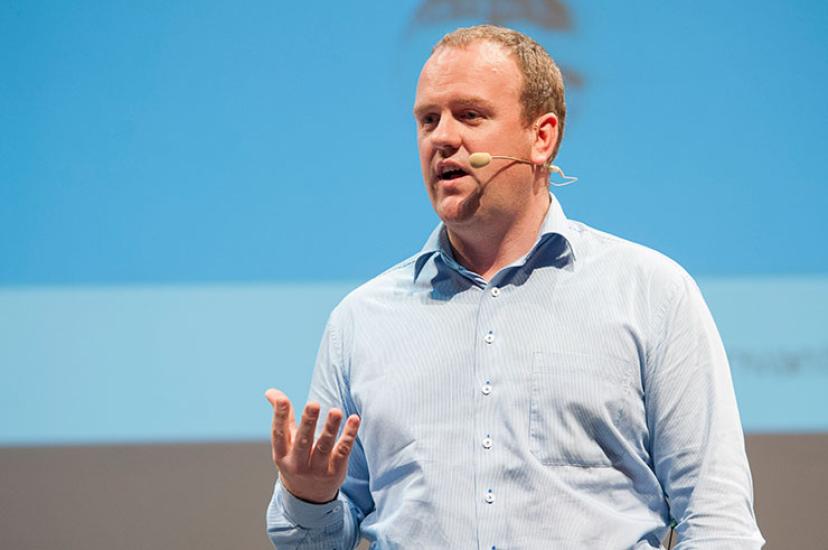
This is a guest comment from author Professor Steven Van Belleghem
At that time, people still needed a lot of convincing about the possibilities offered by “new” platforms such as Facebook and Twitter.
In subsequent years, most major companies invested heavily in developing their service offer through these new channels, and in many ways it has transformed customer relationships in the travel industry.
Even so, seven years on we must now conclude that social media can still only answer a fraction of the questions asked by customers. Social media is much better suited as content channels than as service channels.
The expected shift from dealing with customer queries by telephone to dealing with them via social media never happened. The telephone is still far and away the most important channel for customer contact.
The explanation for this is the relative slowness of social media. KLM is generally regarded as one of the best examples of a travel company providing service through social media, and rightly so. The company answers questions 24/7 within 30 minutes. Which is excellent – except for passengers who have an urgent question about a flight that leaves in less than 30 minutes... In some circumstances, 30 minutes can seem like an eternity.
The symbol of this new age is the dancing dots.
Originally, we thought that speed would be the big advantage of these channels, but that’s not how it turned out. Customers are still helped quicker by telephone than by Facebook. Even if you need to listen to on-hold music for a quarter of an hour, you still get your answer faster than you would with social media.
What’s more, the level of service provided by most telephone call centres is generally good or even very good. In other words, social media is too slow and too limited in quality for most customers.
Real-time is the new minimum
The success of messaging apps such as Facebook Messenger, WeChat and WhatsApp has catapulted us into the real-time world.
And the symbol of this new age is the dancing dots. If you send a message to someone, you hope that you will be rewarded with three dancing dots on your screen, which indicate that the person has received your message and is already typing a reply. The dots are also a good symbol for our increased expectations, because the longer the dots dance, the longer the reply you will receive.
If after 30 seconds you only get a bland “OK” as your answer, it can be a huge disappointment. We live in a real-time world. If you search for a shop in Google, you not only get all the content information you need but can also see how busy the shop is at that particular moment.
If you use Waze as your navigation tool, you not only get a 100% reliable route but also lots of extra and equally reliable real-time information about that route. If Waze tells you that there is a car broken down on the hard shoulder 600 metres ahead, that is exactly where the car will be.
Real-time information is becoming increasingly available and accurate, and your customers will increasingly come to expect it as the standard of service they receive when they book their travel plans.