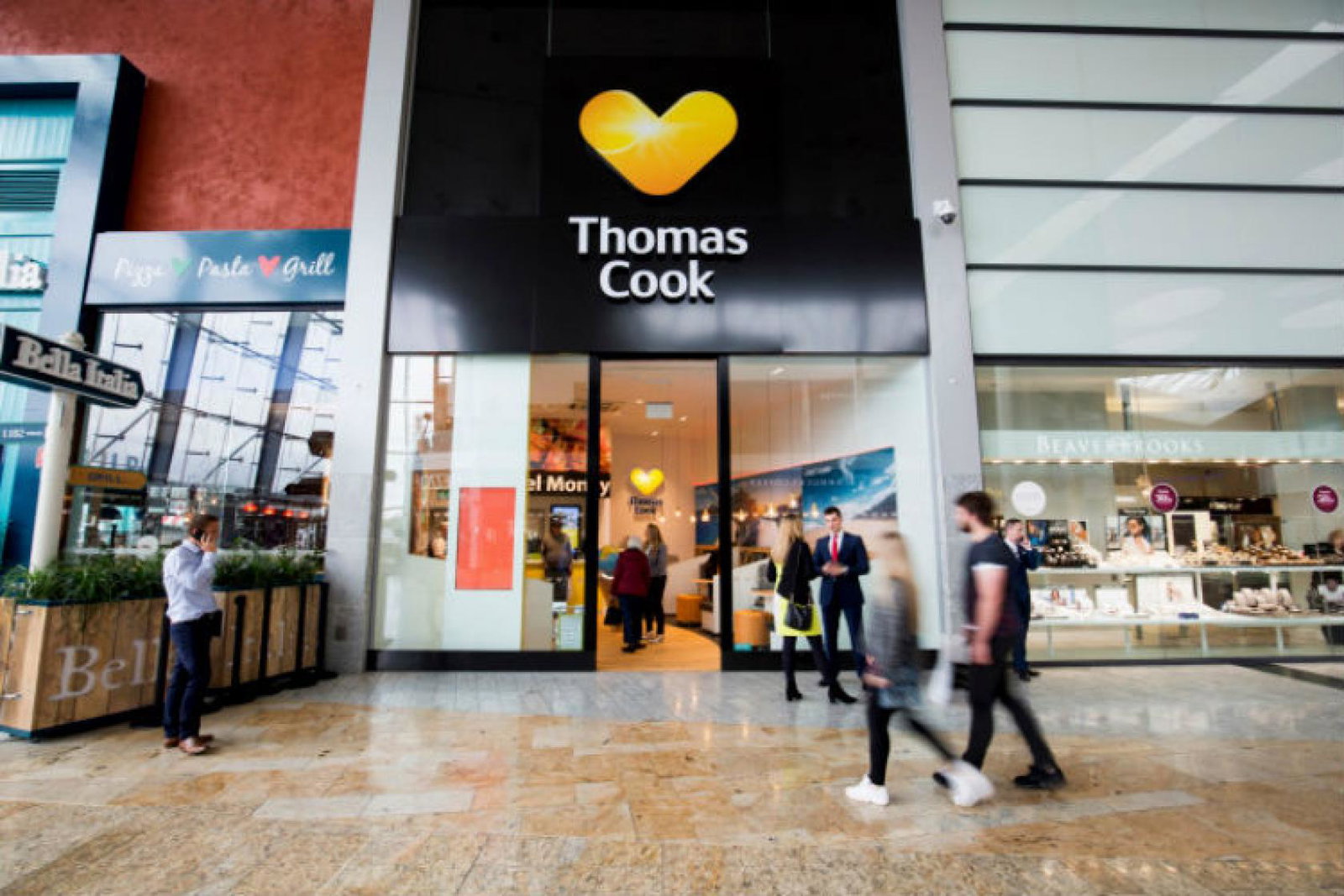
The company on Friday acknowledged a request from its lenders to raise an additional £200 million necessary to secure a rescue deal, led by its largest shareholder.
But after a crunch meeting in the City over the weekend, the CAA confirmed the company’s failure at around 2am today (23 September).
The collapse of the group includes the UK tour operator and the airline. AlixPartners and KPMG have been appointed as special managers to oversee the liquidation.
All Thomas Cook bookings, including flights and holidays, have now been cancelled.

There are currently more than 150,000 Thomas Cook customers abroad, almost twice the number that were repatriated following the failure of Monarch.
A pioneer of escorted tours and package holidays, Thomas Cook had developed across 15 markets, serving more than 20 million customers and employing 22,000 people per year – 9,000 in the UK.
The government has asked the CAA to launch a repatriation programme over the next two weeks, from Monday 23 September to Sunday 6 October, to bring Thomas Cook customers back to the UK.
The CAA added “due to the unprecedented number of UK customers currently overseas who are affected by the situation”, it had secured a fleet of aircraft from around the world to bring passengers back to the UK with return flights.
Passengers in a small number of destinations may return on alternative commercial flights, rather than directly through the CAA’s flying programme. Details and advice for these passengers are available on the dedicated website.
Thomas Cook customers in the UK yet to travel should not go to the airport as all flights leaving the UK have been cancelled.
Richard Moriarty, chief executive of the CAA, said: “News of Thomas Cook’s collapse is deeply saddening for the company’s employees and customers, and we appreciate that more than 150,000 people currently abroad will be anxious about how they will now return to the UK.
“The government has asked us to support Thomas Cook customers on what is the UK’s largest ever peacetime repatriation.
“We have launched, at very short notice, what is effectively one of the UK’s largest airlines, involving a fleet of aircraft secured from around the world. The nature and scale of the operation means that unfortunately some disruption will be inevitable. We ask customers to bear with us as we work around the clock to bring them home.
“We urge anyone affected by this news to check our dedicated website, thomascook.caa.co.uk, for advice and information.”
The CAA will be providing regular updates as our flying programme develops, it said.
The company, founded by its namesake, began operations in 1841 when Cook hosted a successful trip for 500 passengers to travel 12 miles by railway from Leicester to Loughborough for a Temperance meeting.
Cook came perilously close to collapse in 2011 after issuing three profit warnings.
It eventually took out a £200 million emergency loan to stave off bankruptcy.
A refinancing package and strategic review followed in 2012 and the business was able to recover.
Its share prices rose to a high of around £18.80 in February 2014 and remained between £6 to £12 until August last year.
However, the company issued the first of two profit warnings on 24 September 2018, revising its full-year profit forecast down 13% from £323 million to £280 million citing the impact of the summer heatwave.
A second followed in late-November when its full-year earnings came in at £250 million, £30 million lower than its guidance and £58 million lower than earnings achieved during the same period the previous year.
Cook said UK performance was “particularly disappointing” and vowed to address the performance of its UK tour operator business.
The operator announced a “strategic review” of its airline in February 2019 after posting a first-quarter operating loss of £60 million, up from £14 million.
Its losses spiralled to £1.45 billion in May when it adjusted down the value of assets from its 2007 merger with MyTravel by £1.1 billion.
Cook said in July it was in “advanced discussions” with Fosun over a £750 million restructure.
“Under the proposal, the group is targeting an injection of £750 million new money which would provide sufficient liquidity to trade over the winter 2019/20 season and the financial flexibility to invest in the business for the future,” said Cook at the time.