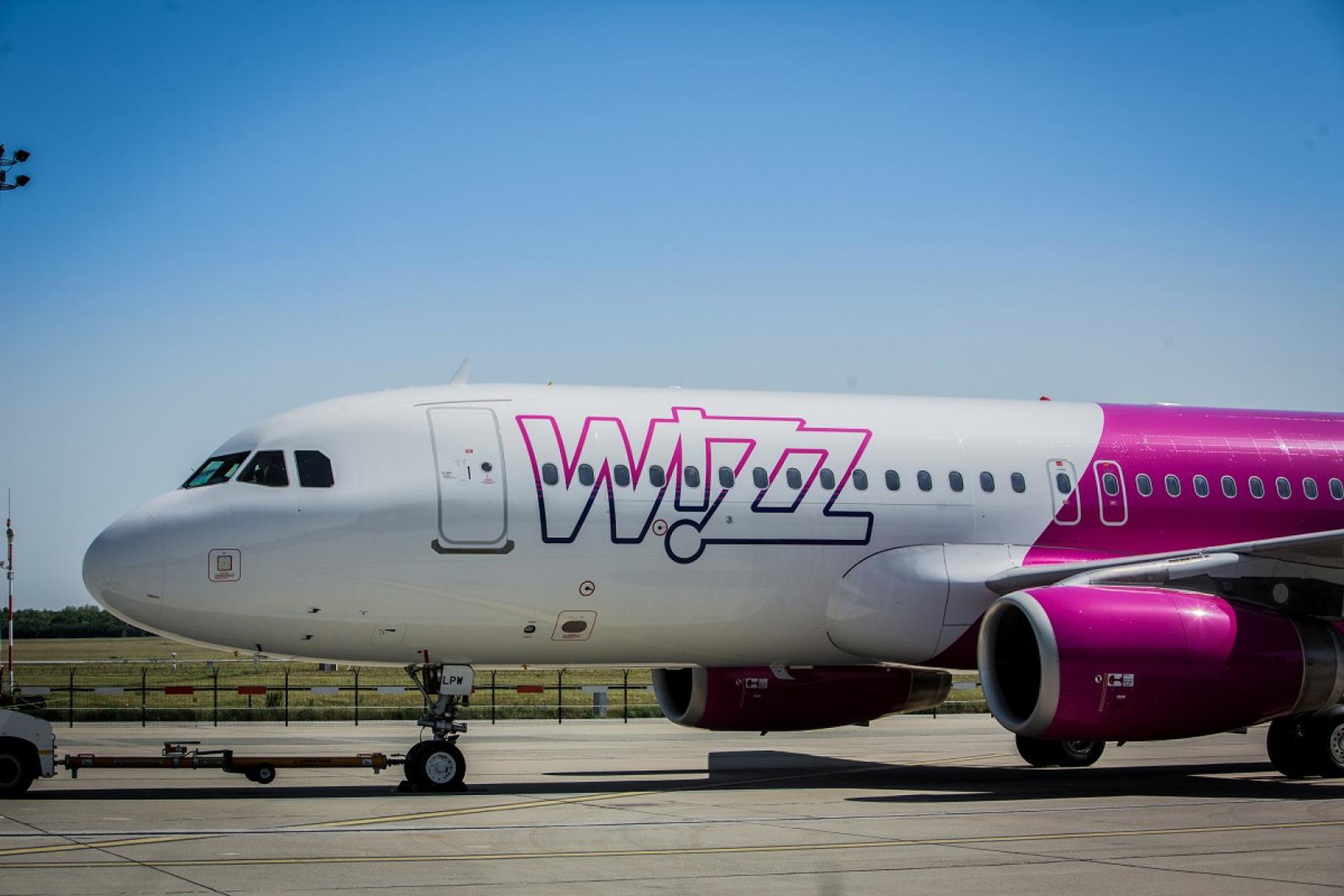
The budget carrier said shortages of staff “in air traffic control, security and other parts of the supply chain are impacting airlines, our employees and our customers directly”.
The situation was “adding to a volatile macro environment”, particularly around the Ukraine war, it said.
In a full-year statement for the 12 months ended March 31 2022, Wizz Air chief executive Jozsef Varadi said it nevertheless stood ready to deliver its “largest-ever summer flying programme” in 2022/23, with “the fastest growth in the industry”.

“Our planned capacity growth for the first two quarters of full year 23 is over 30% and 40% respectively, and for the year we expect even stronger growth versus 2020. This will be enabled by a fleet of 182 aircraft by the end of the fiscal year.”
Wizz Air plans to operate almost 400 aircraft by 2027.
Varadi added bookings were showing “strong performance” in the first fiscal quarter and said: “We see strong consumer demand for summer.”
Wizz Air carried 27 million passengers in 2021/22 and saw losses of €19 million, compared to a deficit of €182.8 million the previous year.
During the 12 months, it acquired 15 daily slot pairs at Gatwick from Norwegian and two additional daily slots pairs from Vueling at Luton airport. It cancelled all Wizz Air UK flying from 10 June at short notice to reallocate capacity.
New bases in Rome, Naples and Venice were opened, bringing the total there to seven, with Wizz now having a 10% market share in Italy.
Wizz Air also has ambitions in the Middle East. Wizz Air Abu Dhabi has now been operating for 18 months. “We believe it can become a 50-aircraft operation towards the end of the decade, serving a potential market of five billion people within five hours’ flying time from Abu Dhabi,” it said.
In addition, the carrier signed a memorandum of understanding with Saudi Arabia last month to explore opportunities.
As a result of the war in Ukraine, Wiz Air cancelled or suspended 2% of its network in February and 7% in March 2022.
Wizz Air has four aircraft in Ukraine, one in Lviv and three in Kiev, worth around €25 million. “They are in good condition and we are looking to repatriate these aircraft at the earliest possible opportunity,” it said.