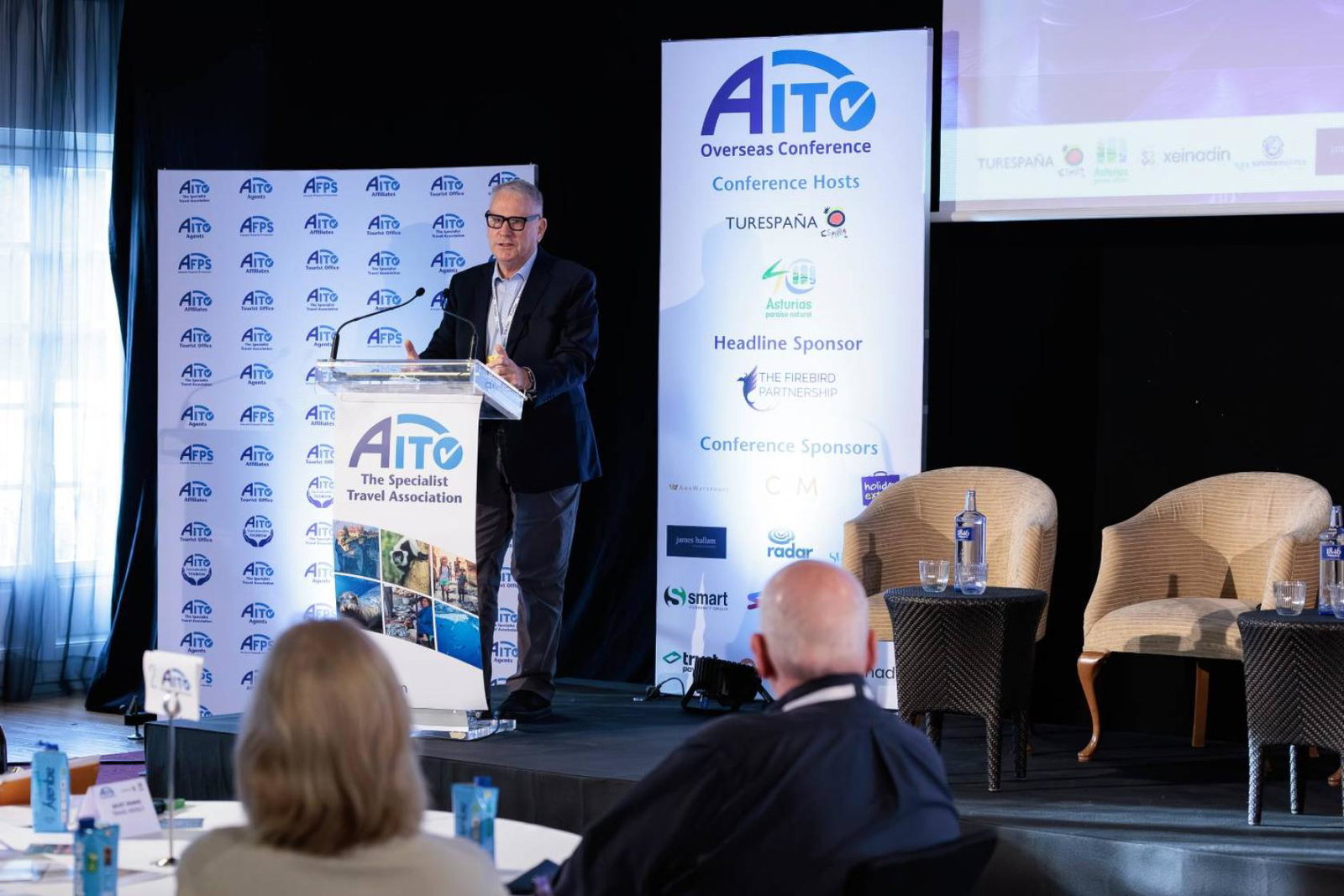
Former British commander Richard Kemp MBE ran delegates through a sobering list of external factors concerning travel, ranging from the threat of cyber attacks to terror attacks on maritime corridors, but was keen to remind attendees the vast majority were unlikely to come to a worst-case scenario – or materialise at all.
He also reminded delegates not to set too much stall by what the world's political leaders say. “Don’t take politicians seriously for predictions on how the world’s going to go,” said Kemp as he started his address.

Kemp cited US president Donald Trump’s suggestion of military intervention in Nigeria, Russian president Vladimir Putin’s nuclear aspirations and Chinese president Xi Jinping's designs on Taiwan as examples of threats that are “unlikely to actually materialise”.
However, he cautioned delegates that current global tensions could still result in unforeseen conflicts and broader “unintended consequences”, which risk being worsened by climate and humanitarian issues such as water scarcity, food insecurity, extreme weather events and disease.
One notable trend Kemp highlighted as a "major concern" for travel businesses and business owners was cybersecurity owing to the vast amount of personal data the industry holds on its clients and their travel plans.
The issue has been in the spotlight following cyber-attacks on the likes of British Airways, LNER and the Co-op this year. But it is increasingly becoming a major part of disruptive conflicts around the world.
"Cyber war has grown enormously in relation to Russian and Ukraine, with Europe and the United States subject to major attacks,” Kemp explained. “This can affect all of us, whether it’s indirectly or directly.”
Another focus for Kemp was the growing risk to maritime and trade corridors. Terror attacks in the Red Sea have prompted a number of cruise lines to re-route or cancel their programmes in the region.
In Europe, Kemp touched on the issue of "mass migration", which he said posed a not "unthinkable" risk of civil war, albeit while adding Europe's importance as a global trade partner and market would naturally ensure the prospect of further warfare would remain low, although he warned delegates to be “mindful of the possibility”.
Kemp added the UK was "in a much better position globally” than ever before, and said there were many reasons to remain optimistic such as the relative stability in the West, technological developments by its Armed Forces and the application of AI, such as to mitigate the risk of future pandemics.
Kemp's address came after an equally sobering economic overview and market update from Travel Trade Consultancy director Martin Alcock, who warned that the rise of Black Friday, combined with later-than-ever lates demand, could drive a permanently discount-led market that risks changing consumer behaviour.