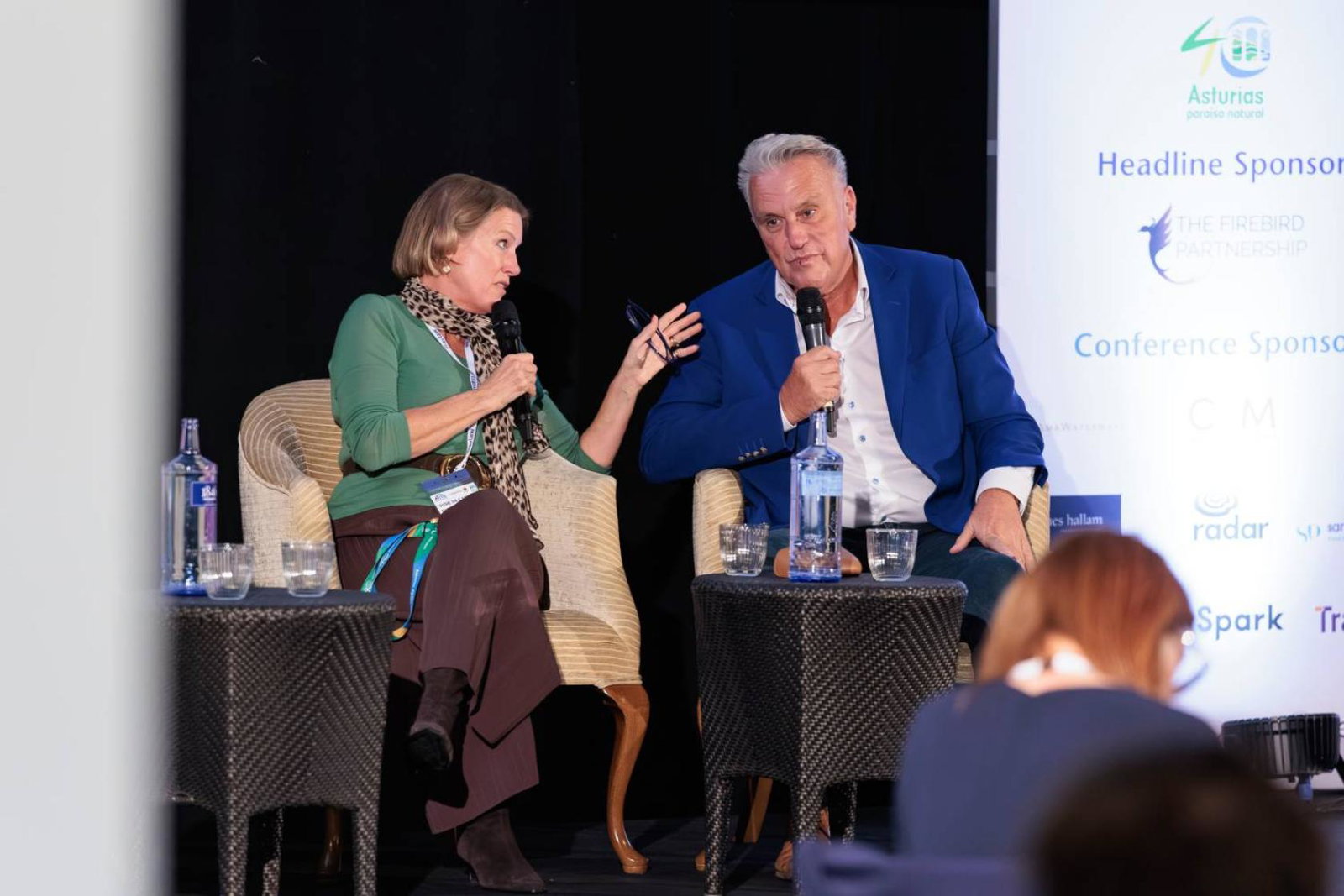
The team at Aito picked themselves a lofty and portentous theme for the association's annual conference in Spain's Asturias region at the weekend, where the focus fell on "The Algorithm versus the Human Side of Travel".
The use of AI in travel is perhaps the great debate of the moment, presenting both vast opportunities for progress and business efficiency while also coming as an existential threat to all the efforts being made to ensure travel remains the people-centric, service-focused industry consumers know and love.

However, with every passing year, travel is becoming more familiar – and comfortable – with AI. And at the conference, sentiments towards advancements were warmer, described as everything from a "useful tool" or "data cruncher" to a friendly "co-pilot" by this year's speakers.
It was far from the only topic on the agenda, though. The conference played host to important discussions about consumer purchasing habits, the commercial value of taking diversity and inclusion seriously, and practical ways to operate and run travel businesses sustainably.
And in a break with tradition, Aito chair Chris Rowles revealed where everyone will be heading for next year's conference, which will also mark the association's 50th anniversary.
TTG was at the conference to help travel agents and the wider travel industry make sense of the key topics and discussion points – and how to apply the content to help build stronger businesses.
Don't be afraid to play with AI
The conference's long-time moderator, Nomadic Thoughts founder Jono Vernon-Powell, set the scene at the outset, reminding delegates that the travel industry has in recent memory weathered a whole host of technological storms and disruptive trends, such as the advent of the internet and low-cost flying.
However, he stressed the operative word was change, and was one of several speakers to encourage delegates to adapt to – and even embrace – AI or risk being left behind. “Whether you like it or not, algorithms shape everything customers see,” said Vernon-Powell.
Industry veteran Steve Endacott, founder of Smarter UK, highlighted AI's impressive language capabilities which could support international expansion, while Spike Insights director Roy Barker said AI could be deployed to streamline "mundane" internal functions.
But over the two days, there was consensus that for all its utility, AI will never fully replace "the human touch". This was neatly illustrated in Aito survey data presented by Barker, which revealed 60% of Aito member clients are not interested in using AI to plan or book their travels. "Their instincts are right,” he said. “The data AI is trained on does not capture the insight, taste and expertise of travel industry specialists.”
Be mindful of regulatory change
Martin Alcock, director of the Travel Trade Consultancy, offered delegates some timely advice in the wake of the chancellor’s Autumn Statement, reaction to which has been lukewarm at best and resigned at worse.
Alcock encouraged delegates to “get ahead” of a changing regulatory landscape following government consultations on reforms to the Atol scheme and the Package Travel Regulations.
He also highlighted the Competition and Markets Authority's recently launched drip price probe, alongside a new requirement to conform with the Financial Reporting Standard, which will take effect from 1 January 2026 and bring the UK more closely in line with international standards.
“The businesses that will thrive going into next year will have their heads up, be clear-headed and [be] all about preparation,” he added.
Remember – DEI is lucrative too
Alessandra LoTufo Alonso, founder of Women in Travel CIC, urged businesses to get comfortable with the fact that representation isn't just an ethical or moral consideration, but a commercial one too. Travel's most underrepresented demographics are among the most lucrative, including the market for accessible travel, which she said was worth a staggering $13 trillion globally. “That’s a lot of money to leave on the table,” she said.
However, Alonso also went on to explain attracting and unlocking these markets would require investment – and a genuine will to serve them with every bit of the same care and attention as others. “Clients will only choose you if they feel represented, whether that is through your staff, marketing or website.”
According to Alonso, fast-growing consumer markets include halal tourism, which is forecast to be worth $300 billion by 2032, and the over-50 female solo traveller market, which she said could generate $519 billion a year by 2035.
Be patient – uncertain times breed business opportunities
“There’s a lot of uncertainty right now, which is a killer for consumer confidence,” said Journey Latin America director Sarah Bradley, who reminded delegates that cost pressures would inevitably inflate clients’ expectations.
“Businesses have to remember that these bookings are often dream holidays,” she explained. “Lots of things get in the way, and if it’s not perfect, it is easy for the client to hold off. But when there is uncertainty, there is a need for trusted businesses and voices on the end of the phone. That’s an opportunity.”
Bradley advised delegates to maintain a dialogue with their clients and maintain these relationships – and accept that some bookings will be “slow burn”.
Stay positive despite geopolitical concerns
Travel should take heart from the UK's position on the global stage – but be mindful of the geopolitical issues that may have "unintended consequences" for business. That was the line taken by former British commander Richard Kemp MBE, who ran delegates through a sobering list of external factors concerning travel at this week's conference.
This ranged from the threat of cyber attacks – described as a "major concern" for travel businesses and business owners – to terror attacks on maritime corridors and even the possibility of civil war in Europe.
In spite of the bleak overview, Kemp concluded the UK was still "in a much better position globally" than ever before, with the vast majority of issues unlikely to come to a worst-case scenario.
Sustainability saves you money
All things sustainability remain a crucial issue in the travel industry. Zoe Savage-Morton, operator Lusso's responsible tourism and sustainability manager, insisted businesses could be eco-conscious without incurring steep costs, adding some measures were even cost-saving. "You’re [all] probably already doing some of the things outlined in our sustainability policy,” Savage-Morton told delegates.
She suggested some operational tweaks, such as managing water and electricity use, as well as outlining clear supplier standards and traveller guidelines. In addition, she said like customers, staff will remain loyal to businesses with transparent values, warning: "We all know how expensive the hiring process is."
Have an endgame (preferably one that makes you redundant!)
Richard Hearn, founder of Inntravel and a former Aito chair, told delegates having an “endgame” as a business owner is crucial to its longevity.
“Totally relying on the principal is a huge mistake when growing [your business],” he said, citing former boss and Canvas Holidays founder Jim Cuthbert as an example. “It’s important to develop your management team so that when the time comes if and when you want to depart you’re not leaving a great hole."
He added: "The aim was, over the years, to make ourselves [Hearn and his wife Linda] redundant.”
See you in Oman
This year's conference drew to a close in dramatic style as Rowles revealed next year's event would be held in Oman's port city capital Muscat. The event will take place in November 2026 with up to 150 member delegates expected to attend. It will also mark Aito's 50th anniversary.
Aito said the decision to head to Oman reflected Muscat's "growing prominence" as a hub for international conferences, and also a leisure destination. The country has more than 3,000km of coastline, as well as mountains and deserts, ensuring there are attractions and activities for all travellers.
Rowles told delegates they could expect a warm welcome and opportunities to explore the country, as well as "captivating" business sessions. Details on how to register and accommodation packages are to follow.
Addressing delegates in a video message, His Excellency Azzan bin Qasim Al Busaidi, tourism under-secretary at Oman's Ministry of Heritage and Tourism, added: "Oman offers a rare blend of natural beauty, deep heritage and genuine hospitality. This conference is an opportunity to share that balance with partners who value thoughtful and responsible travel."