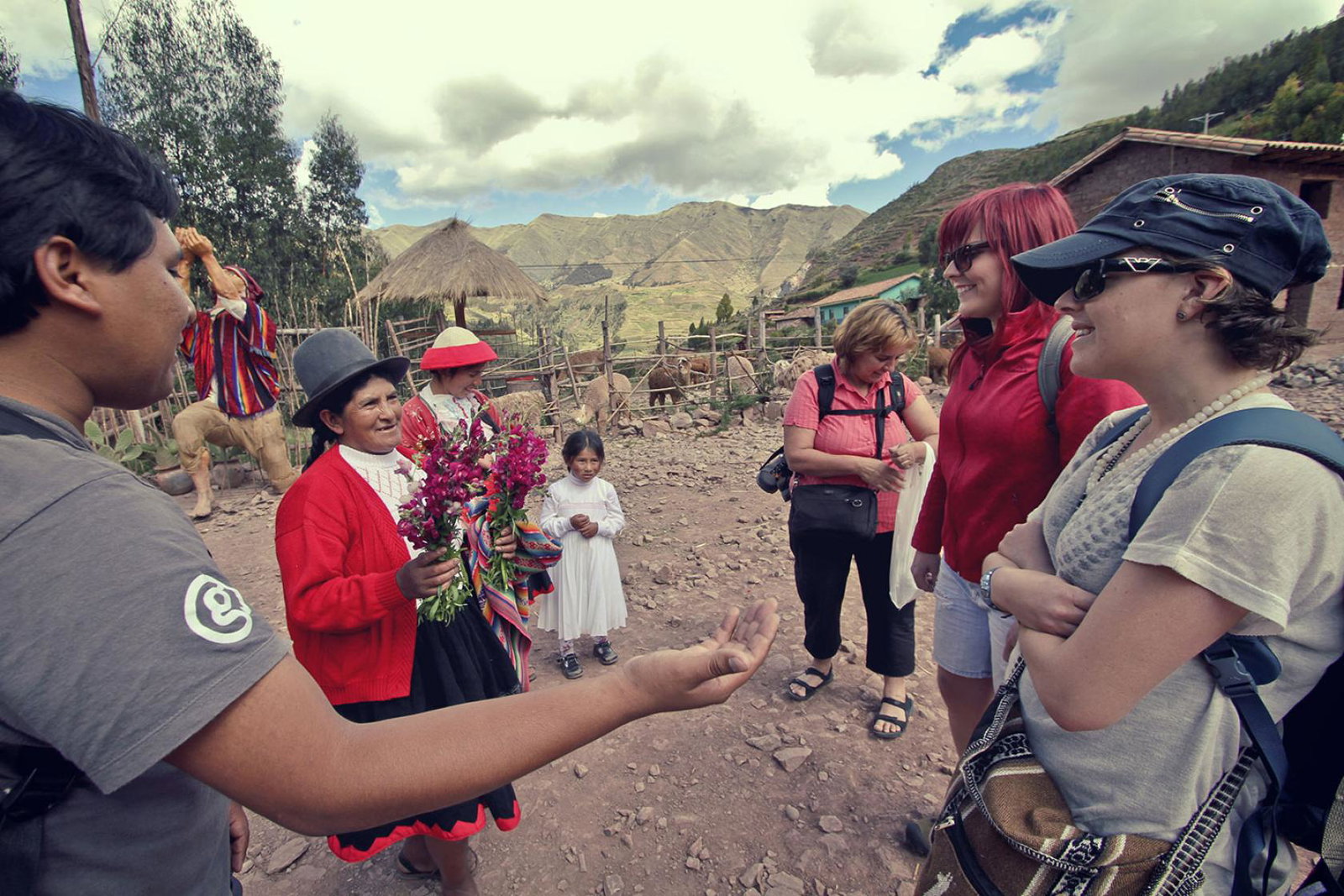
The adventure travel specialist operator said it had published its Indigenous People and The Travel Industry: Global Good Practice Guidelines document as a means of making sure international governments and businesses have “prioritised rapid growth over respect for indigenous people”.
Developed alongside G’s non-profit organisation Planeterra and The George Washington University’s International Institute of Tourism Studies, the 17 guidelines are organised into three categories to be of “maximum relevance” to organisations interacting with indigenous people through tourism: (1) developing tourism experiences, (2) operating tourism experiences, and (3) marketing tourism experiences.
G has produced a 23-page downloadable booklet detailing the guidelines which provides advice for working with indigenous people and ways to help communities directly benefit from responsible tourism.
The guidelines were finalised with input from a panel including the World Indigenous Tourism Alliance, Indigenous Tourism Association of Canada, U.S. Bureau of Indian Affairs, American Indian Alaska Native Tourism Association, Community Based Tourism Institute, and Sustainable Travel & Tourism Agenda.
G partners with and/or contracts the services of 94 different indigenous communities in
44 countries.
The operator’s social enterprise model, which seeks to earn profit while delivering social impact, is built around identifying communities which have been excluded from the tourism economy and bringing them into G Adventures’ supply chain.
Jamie Sweeting, G Adventures’ vice-president of social enterprise and sustainability, said: “The ancestral lands, traditional culture, and legacies of Indigenous communities have been threatened by the pursuit of profit, and sadly tourism has contributed to this. We now have an opportunity to rewrite the story and ensure tourism is a force for Indigenous well-being.
“From the Maasai in East Africa, to the Quechua in Peru, our partnership with Indigenous communities is what makes G Adventures’ tours special for travellers and life-changing for local people. If we can give back further by encouraging the travel industry to do more to help these groups, it will be a sea change for our industry.”